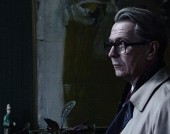
I saw and loved 1992's "Bram Stoker's Dracula." The movie, as its name suggests, was supposed to stay true to the 1897 novel. It's pretty close!
And, still, I was pleasantly surprised recently as I read Dracula for the first time.
Stoker's way of telling the story through letters, diary entries, memos, notes, transcripts, and newspaper articles worked better than I expected. It provides instant insights into the the characters and gives the story a sense of motion and authenticity.
I noted some comparisons between the book and '92 movie.
In the book, Dracula proudly describes to Harker his bloodline's warrior tradition, repelling and
waging insurgencies against invaders over the centuries. Now he seems contemptuous of peace. I enjoyed this part of the novel.
The ’92 film acknowledges Dracula’s identity as a warrior but portrays him as a Crusader (while also inventing a fateful connection to Mina). Very few other depictions of the character ever hint at the Dracula warrior tradition.
I was surprised at how scary the original Dracula is. He makes the Christopher Lee/Hammer films' Draculas look pretty tame. The '92 film captures a lot of what is frightening about the monster. But it also makes him sympathetic—Mina loves him in the movie; in the book, aside from a moment of pity, she hates him.
I also enjoyed some of the prose. The novel has a few exceptionally beautiful descriptions of the outdoors (see below). I really enjoyed reading it.
I once heard that the novel Dracula was comment on a dying aristocracy, offering a kind of critique of the past, whereas Frankenstein expressed a fear of the future and technology. Dracula’s way of conducting business is pretty conspicuous in the novel—Dracula contracts directly with different service providers so that no single office or person knows what other business he has going. His hunters eventually realize this strategy helps Dracula avoid scrutiny. And there is a weird scene in which Harker slashes at Dracula, the vampire jumps back, and the knife rips Dracula’s pocket and he freaks out as a bunch of money and gold falls out. His hunters later even comment about how he must really love and need money.
Notes:
- I re-watched the film. Gary Oldman is perfection—the centuries-old lust that stirs when he scolds, "We Draculs have a right to be proud! What devil or witch was ever so great as Attila, whose blood is in these veins?!" And then the derision when he regains composure, "Blood is too precious a thing in these times. The warlike days are over. The victories of my great race are but a tale to be told. I am the last of my kind."
- I noted that American actors Ryder and Reeves played British, and British actors Hopkins and Oldman played Dutch and Romanian. I also like that Dr. Seward is a secret morphine addict.
- Here are two examples of solid prose:
... I waited with a sick feeling of suspense.
Then a dog began to howl somewhere in a farmhouse far down the road—a long, agonized wailing, as if from fear. The sound was taken up by another dog, and then another and another, till, borne on the wind which now sighed softly through the Pass, a wild howling began, which seemed to come from all over the country, as far as the imagination could grasp it through the gloom of night.
- Second example:
The castle stood as before, reared high above a waste of desolation.