Showing posts with label blues. Show all posts

Saturday, February 01, 2025

a review of Aerosmith's debut

Be a blues-rock band first, and get that right
 
Aerosmith peaked commercially from the late 1980s through the 90s. "Get a Grip," released March 1993, is the band's best-selling album. Joe Perry’s thresher of a guitar and Steven Tyler's highly animated vocals mix with huge pop hits like "Cryin'" and "Crazy." It was Aerosmith's eleventh studio album.

My favorite Aerosmith record, the 1973 self-titled debut, sounds nothing like it.

The music's punch comes not from showmanship—Tyler's yawps and Perry's lavish guitar—but from the sound of good bluesmen vibing.

Compared to other early 70s hard rock bands, the album's dusty production—especially the low gain on Joe Perry's guitar—softens the blow a bit. In his memoir, Perry says, "… because I lacked the studio chops to prescribe a remedy, I kept quiet. It pained me, though, that my guitar was not cutting through."

But compared to Aerosmith's later work, the album sounds raw, and I like it.

Maybe what I like most is Tyler's straight-ahead vocals. They shine more for his timing than his affectations.

I grew up with classic rock radio and heard Aerosmith's hits and how the band's sound changed over the decades. You have the raw, early classics like "Dream On," "Sweet Emotion," and "Walk This Way." Then comes bigger production on hits like "Dude (Looks Like a Lady)," "Angel," "Rag Doll," "Love in an Elevator," and "Janie's Got a Gun." And, finally, the full-on pop hits like "Amazing," "Livin' on the Edge," "Cryin'," and "Crazy."

I always liked the early songs best, so to get past the hits, I went back and listened to Aerosmith's first four albums. The debut is easily my favorite.

Here's "Make It," the first song on the first album.
 

Saturday, April 20, 2013

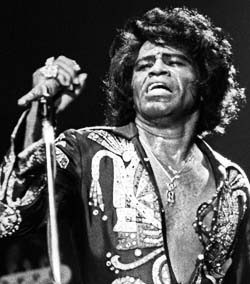
about "The One: The Life and Music of James Brown" by RJ Smith


Through the ups and downs, James Brown commanded an audience. RJ Smith depicts this singular artist's flight out of poverty on the heels of Little Richard, his celebrity-identity bridging the civil rights movement and beyond, and his persistent stumble through the late-stage hard times.

Brown was born, barely, into extreme poverty, and grew up motherless, at the mercy of a hardscrabble father. His affinity for music and singing and his seemingly innate start quality got him followers and fellow musicians from early on. During the first half of his career, James Brown busted ass, working musicians into the tightest band alive, and wielding that band as his own, personal instrument. Year-round, he left it all on the stage.

For different, complicated reasons, some black celebrities' identities are tied to the politics of America's larger black community. Brown's did, but he was wildly inconsistent, veering from black power advocate to Nixon-endorsing spokesman. Brown was mixed up and he was his own man--a complicated soul who gave himself to the public.

Inexplicably--almost--after Brown turned 50 years old, he found himself with money problems, then, after more than half a lifetime working hard and sober, Brown started using PCP. Trouble chased him the rest of his life. Brown died in 2006, still troubled, still a star.


Note: In an afterword, RJ Smith reveals the small gang of thieves most responsible for Brown's financial ruin.