Wednesday, August 31, 2022

something about dynasties and Great Men

A few months ago, former President George W. Bush delivered a speech during an elbow-rubber’s wine-and-cheese event held at his presidential library in Dallas. The occasion should have gone by unnoticed, but W's remarks drew unexpected attention because of a Freudian slip. Intending to condemn Russian President Vladimir Putin's invasion of Ukraine, W instead decried "a wholly unjustified and brutal invasion of Iraq." In 2003, of course, W invaded Iraq on the claim that Iraqi President Saddam Hussein's regime had weapons of mass destruction and was pursuing a nuclear weapon. The claim proved untrue.

But the part of W's remarks that got me came just before that nauseating gaffe, when W noted that “the Ukrainian people elected Volodymyr Zelenskyy, with whom I Zoomed the other day, by the waycool little guy—the Churchill of the 21st century."

President George W. Bush gave people nicknames and made little jokes that sometimes, like this “cool little guy” quip, showed how removed rather than how normal W was. After all, he was a Bush, and a Bush is not like other people. To W, Zelensky, a little man with broken English from a strange land, is just another amusing accident of history. Not like a Bush.

Note: Would a Bush have stayed in Kyiv while most of the world was saying the Russians would conquer in a few days?


Friday, August 12, 2022

and quotes something about movie stars

Marc Maron had George Clooney on his podcast not too long ago and tried to ask Clooney about being the movie-star-style leading man, like a Cary Grant or Humphrey Bogart—actors who are always kind of the same in each role. Clooney says he is always still Clooney-ish in his roles because he lacks the talent to lose himself in a character. Clooney's humility, which Maron called out as bullshit, often produced unsatisfying conversation. (But how do you describe star quality? A star is born.) The unsatisfying interview moved me to reread Truman Capote's short sketch of Humphrey Bogart.

If one listens attentively to any man’s vocabulary, it will be noticed that certain key-to-character words recur. With Bogart, whose pungent personal thesaurus was by and large unspeakably unprintable, “bum” and “professional” were two such verbal signposts. A most moral—by a bit exaggerating you might say “prim”—man, he employed “professional” as a platinum medal to be distributed among persons whose behavior he sanctioned; “bum,” the reverse of an accolade, conveyed, when spoken by him, almost scarifying displeasure. “My old man,” he once remarked of his father, who had been a reputable New York doctor, “died ten thousand dollars in debt, and I had to pay off every cent. A guy who doesn’t leave his wife and kids provided for, he’s a bum.” Bums, too, were guys who cheated on their wives, cheated on their taxes, and all whiners, gossipists, most politicians, most writers, women who Drank, women who were scornful of men who Drank; but the bum true-blue was any fellow who shirked his job, was not, in meticulous style, a “pro” in his work. God knows he was. Never mind that he might play poker until dawn and swallow a brandy before breakfast; he was always on time on the set, in make-up and letter-perfect in his part (forever the same part, to be sure, still there is nothing more difficult to interestingly sustain than repetition). No, there was never a mite of bum-hokum about Bogart; he was an actor without theories (well, one: that he should be highly paid), without temper but not without temperament; and because he understood that discipline was the better part of artistic survival, he lasted, he left his mark.


Saturday, July 30, 2022

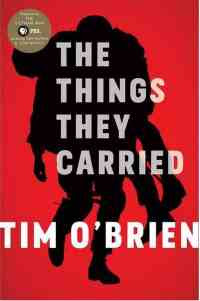
something about Tim O'Brien’s “The Things They Carried”

The Things They Carried is a series of short pieces about a platoon of American soldiers in the Vietnam War. The book, published in 1990, combines nonfiction and fiction drawn from Tim O'Brien’s experiences as a soldier in the 23rd Infantry Division.

I probably most enjoyed "Sweetheart of the Song Tra Bong." An American soldier stationed in an isolated camp arranges to have his hometown girlfriend flown in, but she changes there, and the cheery, small-town girl assimilates a group of guerrillas. This is a good story, but the idea is clearly taken from "Apocalypse Now," which borrows from Heart of Darkness.

The passages of the essay-like titular piece, "The Things They Carried," recounts in detail the variety of supplies and miscellany the soldiers take from camp to camp, supply drop to supply drop. The main character is a lieutenant, a platoon leader, who carries reminders of an unrequited love back home. A soldier in his platoon dies, and the lieutenant blames himself for being distracted by memories. The inventory and weighing of all the objects is effective by itself; the juxtaposing this with the carrying of memories and feelings is okay.

I expected a novel and felt like I was given ideas on scraps of paper.

Note: I had read some or all of The Things They Carried in college but remembered none of it.


Saturday, July 23, 2022

about when LQ Jones was on Columbo


LQ Jones died earlier this month. He played memorable roles in "Casino" and some Peckinpah movies like "The Wild Bunch." He was also on some of the old TV shows.

One of my favorites was when he had a small role on an episode of "Columbo." He played an arms dealer named Jensen. Jensen wears a cowboy hat and Western-style sport coat and bolo, and his cover is that he sells RVs. When you first see him, he’s the RV salesman, out on the lot, pumping handshakes and pumping up the merchandise—“We've got the largest inventory west of Chicago! Super savings on every shape, every make, every model!”

The story involves a gun buyer named Devlin murdering Pauley, the broker of a small-arms deal with Jensen. Jensen eventually comes to Devlin, showing up with an RV, and pitches Devlin about making a deal—he must know Devlin is the murderer. Devlin at first does not believe Jensen is the arms dealer and says he’s not interested.

Jensen: “Brother Devlin? Don't say no before you hear my offer. I've got a sweetheart of a deal. Make your eyes pop. One look'll make you a believer. Just like I made a believer out of brother Pauley.” 

Devlin: “Indeed.”

They step inside the RV, and then Jones’ movements and line delivery take over. Jensen takes off his hat, drops it on a little kitchenette table, and turns to look around at the interior as if to absorb for a moment a bit of its greatness. Then he lets out the vocalized sigh of the weary: “Huh-ho. It's, uh, kinda nice, ain't it?”
 
That “huh-ho” reveals something. I make the sound sometimes when I’m really, really stressed and have to push myself through something I don’t want to do.
 
After the sigh, he turns around with a matter-of-fact look on his thin face, which sticks out from under long gray-white hair swept across his forehead. He says, “Yeah, I can put you in one of these little beauties for, uh—about $150,000.”
 
The price is way, way above market for an RV at the time, but the buyer is unphased.

Jensen: “I've got your merchandise, brother. I was gonna deliver to Pauley, but wouldn't you know?, he turned up dead.” 

Devlin: “Yes. Unfortunate.”

Then Jensen props one butt cheek on the little table, leans forward with a wry, humorless smirk on his face and confesses, “And I'm holding the goods. The deal all made, my middleman out of business, and no cash to feed the bulldog. So the guns are all yours, brother Devlin. Same price, same terms. Cash on the barrel head.” The animated tenor and rhythm of the salesman has softened, and you empathize with his predicament, almost forgetting he’s trying to unload a truckload of sub-machine guns.
 
 
Notes:
  • This episode, "The Conspirators," aired May 13, 1978, in season 7, episode 5. It starred Clive Revill as Joe Devlin with Peter Falk as Columbo. 
  • LQ Jones was born August 19, 1927, and died July 9, 2022.