Showing posts with label Tom Brady. Show all posts

Friday, May 01, 2020

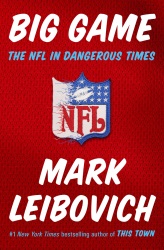
something about "Big Game: The NFL in Dangerous Times" by Mark Leibovich


Mark Leibovich is The New York Times Magazine’s chief national correspondent. I am not a regular reader of his column, but I read his previous book, This Town, which I described as the author wallowing in the networking and social maneuverings.
 

He kids DC's political players about the unseemly side of their work but never condemns them. Leibovich paints an absurd picture and sort of shrugs it off. His easygoing prose makes a shrug seem like the natural reaction. This Town delivers the goods for political junkies—especially if you tracked national politics from 2007 to 2013. Hearing how embedded Washington correspondents are is discomfiting. But if disillusion has already set in, the disappointment in This Town lands softly.

I think the same is true of Big Game, a book about the National Football League (NFL). Leibovich rightly positions professional football as one of America's biggest cultural forces. And he attached himself to the league at a seemingly pivotal time. In 2017, the NFL was more successful than ever, but scandals, such as players protesting during the national anthem and the escalating reality that concussions are destroying players brains in real time, were threatening that success. 

Leibovich does not deny the issues that cause the league's front office anxiety. But he overplays the attention-grabbing distractions, like Deflategate and the eccentricities of the billionaire team-owner class. Leibovich never really reckons with the larger, more serious issues.

I found the book very entertaining. But I never felt like the league and the owners were being confronted with a game-changing sequence of events. I agree with Joe Nocera's assessment in The Washington Post. Nocera says Leibovich "has a book-reporting strategy that consists of attending events (Tim Russert’s funeral; an NFL owners meeting), hanging around the periphery and writing what he sees, with plenty of snark and personal asides for good measure. He’s a good enough writer to keep you from wanting to throw the book against the nearest wall. But if you look closely, you’ll realize he has nothing to say."


Notes:

  • My favorite part was definitely Leibovich getting drunk on Jerry Jones's bus.
One of the drivers in Jerry's employ, an African American gentleman named Emory, opened a back cabinet stocked with $250 bottles of "Blue." No doubt Jones could afford the smooth booze, but he also mentioned a qualifier. "It's the stuff it makes you do after you've had it that you might not be able to afford," he said. I relay this by way of transparency into Jones inhibitions, which after a few more supersized pours from Emory were weakening fast.
Leibovich asks Jones which means more: the Hall of Fame jacket or another Super Bowl ring. Jones, drunk, finally admits the jacket is more important to him.
  • "Are these the last days of the NFL?" by Joe Nocera, The Washington Post, 13 September 2018

Friday, February 15, 2013

Make sure you hear the national anthem.


When you're good at something, you'll tell everyone. When you're great at something, they'll tell you.
    ―Walter Payton

(coming from behind in the Super Bowl)

Michael Jordan might be a jerk and competitive to a fault, but the man knows greatness, and he knows how time distorts the collective memory of greatness. Here is a wonderful excerpt from a new ESPN "Outside the Lines" profile of professional basketball's greatest ever at age 50:
Over the next seven hours, all of it spent watching one basketball game after another, he's (Jordan) again pulled inward, on a Tilt-a-Whirl of emotion, mostly shades of anger, from active screaming to a slow, silent burn. He transforms from a businessman returning from the office -- Honey, I'm home! -- to a man on fire. The first sparks come from a "SportsCenter" debate, one of those impossible, vaguely ridiculous arguments that can, of course, never be won: Who's a better quarterback, Joe Montana or Tom Brady?

"I can't wait to hear this conversation," he says.

He stretches his legs out on the ottoman, wearing sweats and socks, and as one of the guys on television argues for Brady, Jordan laughs.

"They're gonna say Brady because they don't remember Montana," he says. "Isn't that amazing?"

Aging means losing things, and not just eyesight and flexibility. It means watching the accomplishments of your youth be diminished, maybe in your own eyes through perspective, maybe in the eyes of others through cultural amnesia. Most people live anonymous lives, and when they grow old and die, any record of their existence is blown away. They're forgotten, some more slowly than others, but eventually it happens to virtually everyone. Yet for the few people in each generation who reach the very pinnacle of fame and achievement, a mirage flickers: immortality. They come to believe in it. Even after Jordan is gone, he knows people will remember him. Here lies the greatest basketball player of all time. That's his epitaph. When he walked off the court for the last time, he must have believed that nothing could ever diminish what he'd done. That knowledge would be his shield against aging.

There's a fable about returning Roman generals who rode in victory parades through the streets of the capital; a slave stood behind them, whispering in their ears, "All glory is fleeting." Nobody does that for professional athletes. Jordan couldn't have known that the closest he'd get to immortality was during that final walk off the court, the one symbolically preserved in the print in his office. All that can happen in the days and years that follow is for the shining monument he built to be chipped away, eroded. Maybe he realizes that now. Maybe he doesn't. But when he sees Joe Montana joined on the mountaintop by the next generation, he has to realize that someday his picture will be on a screen next to LeBron James as people argue about who was better.

The debaters announce the results of an Internet poll, and 925,000 people voted. There was a tie: 50 percent said Montana and 50 percent said Brady. It doesn't matter that Montana never lost a Super Bowl or that, unlike Brady, he never faded on the biggest stage. Questions of legacy, of greatness, are weighted in favor of youth. Time itself is on Brady's side, for now.

Jordan shakes his head.

"That doesn't make any sense," he says.
That's good writing, and a compelling anecdote, considering it's about a guy sitting, watching TV. And what it says is so Goddamn true.


Notes:

Speaking of basketball and greatness, as the annual stupid NBA All-Star game approaches, let's remember the only rendition of the national anthem that ever mattered: Marvin Gaye at the 1983 game: