Showing posts with label drama. Show all posts

Sunday, January 30, 2022

something about great tennis

The New Yorker published "Without Fans, the Drama of the US Open Came from Within," a great piece, right after the 2020 US Open; the commentary includes this passage:

There were moments when I asked myself what this was all for. So much effort, and such high stakes, for what? The tournament was taking place against the backdrop of tremendous unrest in the United States—the unfathomable spread of a lethal disease, continuing protests against racial injustice, profound civic distrust, and soaring unemployment. What is the U.S. Open when it is sealed off from New York? What does a championship signify, if some of the top contenders don’t come? What does it mean if fans aren’t there to ratify it? What’s the value of sport right now?

Some of those questions are unanswerable, but not all. In most respects, the U.S. Open was a success. It happened safely. Two deserving champions were crowned. The quality of the play was, for the most part, remarkably good. And, by the end, something strange was happening, at least for me: the event seemed to become more meaningful, not less, for being so stripped away.

The New Yorker piece details the men's championship match—the final match of the tournament, the match perspective played the net and won.

I remember agreeing that this match became more meaningful for me than most previous US Open championships.

I had wondered, when the tournament decided to carry on without fans, whether the 2020 results would have an asterisk in people’s memory. Because of how it played out, it doesn't.

Tennis players are not supposed to get coaching or have any communication with the people in their player’s box; the player is out there alone, fighting himself and his opponent, often buoyed or rejected—especially in big matches on big stages—by the crowd. In this match, the isolation, the loneliness, was heightened to an extreme, and I really felt for them, felt the struggle, felt empathy.

Note: The Australian Open concluded today with an instant-classic match between Rafa Nadal and Daniil Medvedev.
 

Friday, July 09, 2021

something about going to Tulsa

Mr. Barnes,

I went to Tulsa once, more than 25 years ago, to visit my sister. She and her husband had just moved there so he could die near where he was born. He was diagnosed with cancer a few months into the marriage. The last time I saw him, he was in a hospital bed in Dallas, and his head was deformed and exploding with his disease. That visit was goodbye.

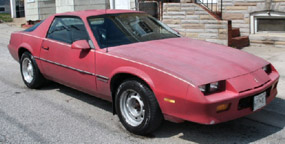
A few weeks later, I was pulled out of Spanish class so my family could join my widowed sister's side. I rode to Tulsa, Oklahoma in the back seat of my other sister's boyfriend's coupe—a Camaro. I felt the giddiness, nervousness, and melancholy one feels when one doesn't know what else to feel. But the mood in the Camaro was fine, with my other sister and her boyfriend magnetically alive and well. They seemed happy. Those two had great chemistry, like cocaine and alcohol.

In Tulsa, we found my parents, who had arrived from Dallas to console the inconsolable. My sister, 22, tragic, had been living with death in a strange city, and now death left her alone in that house. So she grieved, and we offered our presence as comfort. Little did I understand of sadness and grief.

Saturday, January 23, 2021

a plot


I wrote an awesome book about a guy, Johnny Blast, who has to drive a truckload of drugs somewhere to save his hot wife's life. He barely makes the delivery, and then he kills the bad guys and keeps the drugs. His wife dies, though.

Saturday, April 04, 2020

something about "The Easter Parade" by Richard Yates


Richard Yates, sometimes my favorite American writer, drops us into the tragically ordinary lives of two sisters, Emily and Sarah Grimes. Emily is younger and somehow goes her own way; Sarah marries and disappears into a family. Sarah, whose husband is physically abusive, eventually dies of complications from alcoholism (the same fate suffered by her mother). Emily occupies most of the novella's narrative. She confesses, "I'm almost fifty years old and I've never understood anything in my whole life." Yates' fifth book, published in 1976, is characteristically poignant, uncomfortably intimate, and penetrating.

Notes:
  • The Easter Parade opens with, "Neither of the Grimes sisters would have a happy life, and looking back it always seemed that the trouble began with their parents' divorce."
  • Still have not read Revolutionary Road, but it is a damn fine movie.
  • I read The Easter Parade in the Everyman's Library edition, 2009, which includes Revolutionary Road and the short stories from Eleven Kinds of Loneliness.

Saturday, November 02, 2019

something about "The Sweet Hereafter" by Russell Banks


I am a fan of the 1997 film, Affliction. In that film, Nick Nolte and James Coburn deliver rich performances depicting stricken men. The film is based on a book, published in 1989, by Russel Banks. Seeking other works by Banks, I found The Sweet Hereafter, which was published in 1991.

The Sweet Hereafter is divided into a series of first-person narrations of a fatal school bus crash and the devastation it brings on lives in a small town in rural Upstate New York. Most of the children on the bus die, but a few survive, along with the bus driver and a father whose daily commute follows the bus route. Lawyers, news media, and deep pain visit the town in the aftermath. The narratives are focused and contained, and the stories never get entangled. A gritty, emotional realism characterized by resignation imbues the novela feeling that is also prominent in the film adaptation of Affliction. This was a very good read.


Notes: 

The Sweet Hereafter is loosely based on an actual bus crash in Alton, Texas.
 

The film Affliction was directed by Paul Schrader and costarred Sissy Spacek and Willem Dafoe, who, as one would expect, were also great. I have always particularly enjoyed this short exchange in the film:
Rolfe Whitehouse (Dafoe): I was always careful around Pop. I was a careful child. And I'm a careful adult. But at least I was never afflicted with that man's anger.
Wade Whitehouse (Nolte): That's what you think.

Friday, July 26, 2019

about a book he wrote


I wrote an awesome book about a guy, Johnny Blast, who has to drive a truckload of drugs somewhere to save his hot wife's life. He barely makes the delivery, and then he kills the bad guys and keeps the drugs. His wife dies, though.
 

Friday, March 15, 2019

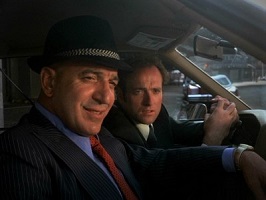
dialog from Kojak, "Tears for All Who Loved Her"


Kojak: You know, in a way, I admire her. A little kid, out of the sewers by her fingernails. No father, a lush for a mother.

Crocker: Why did you walk away from her?

Kojak: (Laughs) You know, I remember seeing a picture once. About this guy, came out of the streets, made it big. When he was a kid, used to have holes in his soles. So now he's got 200 pairs of shoes, he's rich. But he'd still cut a guy's heart out for a pair of shoes. That's why.


Note: 20 November 1977

Thursday, March 02, 2017

something on "Remember How I Love You: Love Letters from an Extraordinary Marriage" by Jerry Orbach, Ken Bloom, and Elaine Orbach


Most people probably know Jerry Orbach as the actor who played NYPD Detective Lennie Briscoe for 12 seasons on the long-running NBC crime drama "Law & Order." Orbach got into the habit of writing (by hand!) a poem to his wife every day. She saved them all and has had them published in this short volume. Looped in among the playful poems are personal anecdotes and biographic material shared by Elaine Orbach. This is a glimpse inside a genuinely affectionate marriage.

Notes:
  • Sam Waterston wrote the book's foreword.
  • Law & Order ran for 20 seasons.
 

Saturday, June 11, 2016

something about female characters and black characters


In the 2014 film Top Five, Chris Rock is Andre, an actor attempting to transition from hammy comedies to drama. Andre played a smart-alec live-action bear in a comedy franchise; now, in a maudlin historical film, he attempts to play a Haitian slave revolting against European colonialists. In this casting, we get the message that black characters in media are often minstrel-like entertainers or suffering caricatures.

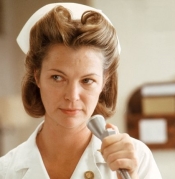
In the 1975 masterpiece One Flew Over the Cuckoo's Nest, a similar point is made (albeit indirectly) about women in media. In this film, Nurse Ratched, played by Louise Fletcher, is contemptible because she appears to be neither of the things women typically are expected to be: sexual or nurturing.


Notes:
Admittedly not a perfect theory, and not a perfect pairing.
Rock also wrote and directed the film.


Saturday, April 16, 2016

something about the film "American Beauty"


American Beauty is a confused but rich film.


The film's narrator and main character is Lester Burnham. Lester begins the film feeling like there is no place for him: he is unnecessary at work and irrelevant and home. But Lester, a reliable narrator, breaks free. He quits his job, blackmails his boss, and secures a cushy severance package. Then he takes a minimum-wage job with little responsibility and buys his dream car. He devotes his recreational time to smoking pot and working out. Lester asks, What do I have to lose?

Lester's compliment in the film is a neighborhood high schooler, Ricky Fitts. Ricky is a successful dealer of expensive high-end pot (Lester becomes a customer). Through interactions with peers and the adults who supposedly run the world, we learn that Ricky transcends common insecurities. Ricky taps into a life force and finds spirituality in his appreciation of "real" beauty.

Lester's foil is his wife, Carolyn--an ambitious but frustrated real estate agent. She values possessions. She crafts and frets over her image. She covets professional success. She is not happy about Lester's reckless disregard for the "normal" path. She has grown too much concerned with projecting the image of well being, and she forgot how to be well. 

Ricky's foil is his father, Col. Frank Fitts, USMC (retired). Colonel Fitts is a hardline and hard-nosed disciplinarian. He is also a bigot and closeted homosexual. He cannot accept being gay because that is not what he thinks a man is supposed to be. His wife is trapped in a world of interiority. She is scared of falling short of her husband's expectations, thereby making him angry. In one scene, she reflexively apologizes to a house guest for the home's appearance even though the place is immaculate.

Subtext Analysis

The Colonel represents structure, rules, and discipline. Disdain for rules and for being normal are themes in American Beauty. However, this disregard is the driving force behind the commercial market. Are Lester and Ricky heroes? Each of their ego indulgences causes destruction. What are they rebelling against? Being normal.

The film ends up promoting traditional values. Lester first rebels from the trappings of suburban American normalcy and lives to indulge his own ego. But then he chooses traditional values, seeking the warm, blissful familiarity of his family in his final moments.


Saturday, April 25, 2015

Saturday, March 14, 2015

will she ever stop talking?


There would have been a time for such a word.
Tomorrow, and tomorrow, and tomorrow,

creeps in this petty pace from day to day
to the last syllable of recorded time,
and all our yesterdays have lighted fools
the way to dusty death. Out, out, brief candle!
Life’s but a walking shadow, a poor player

that struts and frets his hour upon the stage
and then is heard no more: it is a tale
told by an idiot, full of sound and fury,
signifying nothing.


Friday, December 12, 2014

about relative success


You're saved if your father takes no interest in you. You're ruined if you wish he had.

Thursday, March 28, 2013

about American Idol


This umpteenth season is very slowly announcing our newest idol--a woman: probably a woman named Kree.

The show American Idol puts contestants through a few rounds of singing talent and performance competitions. Then the finale crowns a winner--presumably, the best talent and performer who is an American idol. Whether you are watching from the show's judge's panel or from home, you judge the contestant, their talent, their look.

If a contestant sings well but looks unconventional, she can pass the first round. But then comes the problem: you have to be believable; the audience must think you are believable as a pop star, a pop idol. And that believability, no matter your personal preferences, depends on your preconceptions of what a pop star is.

The believability is an extension of the theater of the show--the anticipation, the suspense, the competition, the deployment of sincerity, pain, disadvantage (as advantage), hopes, and dreams and effort. As theater, the contestant has her part, and the momentum of the show's theatricality inevitably leads to a climax demanding the idol be selected.

The selected contestant, the winner, is an idol before she even wins. She is merely crowned by the finale. The judges often claim that this is "a singing competition". No, it certainly isn't that simple. And that the show employs a democratic element makes no difference at all.


Notes:
Nicki Minaj is probably a better judge than she's given credit for being. Unless she is given a lot of credit for this. I wouldn't really know.


Friday, February 15, 2013

Make sure you hear the national anthem.


When you're good at something, you'll tell everyone. When you're great at something, they'll tell you.
    ―Walter Payton

(coming from behind in the Super Bowl)

Michael Jordan might be a jerk and competitive to a fault, but the man knows greatness, and he knows how time distorts the collective memory of greatness. Here is a wonderful excerpt from a new ESPN "Outside the Lines" profile of professional basketball's greatest ever at age 50:
Over the next seven hours, all of it spent watching one basketball game after another, he's (Jordan) again pulled inward, on a Tilt-a-Whirl of emotion, mostly shades of anger, from active screaming to a slow, silent burn. He transforms from a businessman returning from the office -- Honey, I'm home! -- to a man on fire. The first sparks come from a "SportsCenter" debate, one of those impossible, vaguely ridiculous arguments that can, of course, never be won: Who's a better quarterback, Joe Montana or Tom Brady?

"I can't wait to hear this conversation," he says.

He stretches his legs out on the ottoman, wearing sweats and socks, and as one of the guys on television argues for Brady, Jordan laughs.

"They're gonna say Brady because they don't remember Montana," he says. "Isn't that amazing?"

Aging means losing things, and not just eyesight and flexibility. It means watching the accomplishments of your youth be diminished, maybe in your own eyes through perspective, maybe in the eyes of others through cultural amnesia. Most people live anonymous lives, and when they grow old and die, any record of their existence is blown away. They're forgotten, some more slowly than others, but eventually it happens to virtually everyone. Yet for the few people in each generation who reach the very pinnacle of fame and achievement, a mirage flickers: immortality. They come to believe in it. Even after Jordan is gone, he knows people will remember him. Here lies the greatest basketball player of all time. That's his epitaph. When he walked off the court for the last time, he must have believed that nothing could ever diminish what he'd done. That knowledge would be his shield against aging.

There's a fable about returning Roman generals who rode in victory parades through the streets of the capital; a slave stood behind them, whispering in their ears, "All glory is fleeting." Nobody does that for professional athletes. Jordan couldn't have known that the closest he'd get to immortality was during that final walk off the court, the one symbolically preserved in the print in his office. All that can happen in the days and years that follow is for the shining monument he built to be chipped away, eroded. Maybe he realizes that now. Maybe he doesn't. But when he sees Joe Montana joined on the mountaintop by the next generation, he has to realize that someday his picture will be on a screen next to LeBron James as people argue about who was better.

The debaters announce the results of an Internet poll, and 925,000 people voted. There was a tie: 50 percent said Montana and 50 percent said Brady. It doesn't matter that Montana never lost a Super Bowl or that, unlike Brady, he never faded on the biggest stage. Questions of legacy, of greatness, are weighted in favor of youth. Time itself is on Brady's side, for now.

Jordan shakes his head.

"That doesn't make any sense," he says.
That's good writing, and a compelling anecdote, considering it's about a guy sitting, watching TV. And what it says is so Goddamn true.


Notes:

Speaking of basketball and greatness, as the annual stupid NBA All-Star game approaches, let's remember the only rendition of the national anthem that ever mattered: Marvin Gaye at the 1983 game:


Monday, December 31, 2012

The soap opera continues, has only just begun


Last night Dallas Morning News staff photographer Michael Ainsworth captured an anguished Tony Romo pacing the sideline after throwing an interception. This picture is brilliant. Not only does it speak volumes about one man and his pain and feelings of inferiority, but it emphasizes the wonderful drama of sports. The action and athleticism are great but they're icing on the cake. The collective and personal drama is what keeps fans coming back for more, even after their team blows it on the big stage (yet again). The struggle, the triumph, and, here, the tragedy.


Look closely at this picture. That is a tortured look on his face.


Notes:
  • Faith: You don't believe in a proven quarterback--you rely on him; so it is only now that I know he felt loss so acutely, knows loss so intimately, that I can believe in Tony Romo. The team will be worse next year, looks like. But, nevertheless.


Tuesday, May 15, 2012


In The New Yorker piece, "“Death of a Salesman”: A Heartbreaking Work of Staggering Mediocrity", staff writer/blogger Giles Harvey says Arthur Miller's "Death of a Salesman" isn't so hot. True, Miller is no Shakespeare, but rather than defend either Miller or Harvey, I'll just point out one thing in his critique.

Harvey opens with a story about criticism he received as a creative writing student:
I once had a creative-writing teacher who would tactfully condemn a line of student verse by saying, in the long-suffering yet indulgent tone with which a wife might scold her husband for once again forgetting to put the cat out, “It sounds like poetry.” ...
What our teacher was complaining about, it now seems obvious, was the tendency of students to cloak our rather banal thoughts and impressions in a poetical gauze—our tendency, after reading Keats, say, to fill our poems with bowers and nightingales and long, slow vowels.
Then begins Harvey's critique, which argues that the conflicts and issues in Miller's classic are not conveyed with enough subtlety, that "In “Salesman” there is always a straight line leading from a harrowing past event to a present neurosis or failure." Moreover, "Characters are explained, exposed, insisted upon; but Miller rarely allows them to stray into the kind of tantalizing opacity and incoherence that makes the people in, say, Chekhov or Shakespeare seem so real." In other words, Miller failed to cloak his banal thoughts in a poetical gaze.

Note:
  • My criticizing the author's apparent inconsistency might not be spot-on, but his criticism misses (or ignores) some big targets, too.
  • Harvey had just seen Philip Seymour Hoffman as Willy Loman.