Showing posts with label family. Show all posts

Sunday, March 15, 2026

lyrics about Jimmy

Pounds
Silence on the train tracks
Where cousin Jimmy was sitting
His heart full of sorrow
And his head with self-pity
The next train would show
Him the way out of hope

A daughter he loved
But felt himself unfit
No day is enough
So his life gone to shit
The next train would show
Him the way out of hope

Here come that train
Ready and willing
And almost was he
With all the whiskey he's swilling
Train, will you show
Me the way out of hope?

Thursday, November 27, 2025

about Thanksgiving and family

Turkey baked in a bag. Mashed potatoes and green beans. Pie and whipped cream! And the Cowboys. We cook it, we eat and watch the game together. This is how Thanksgiving has been for several years: just us two. And if the game is boring or the turkey is dry—who cares? I enjoy Thanksgiving, this family holiday, because it is not Christmas. Fewer people, no presents, no long buildup, less stress, less drama. What it is is the casual closeness, the informality I used to think defined our family in the best of times.
 

Saturday, September 20, 2025

about what's amazing

For a little while, I often found myself amazedamazed by parts of the physical world around me, by developments in my life, by little moments, by lots of things. I know people have been using the word casually for years now, usually just to pay a compliment or to describe a fun experience, sapping the meaning out of it. But I think my dad's decline and passing and my getting older helped me appreciate more in life, and I was thinking how amazing some things really can be.

Like, I was taking the the subway regularly for work. The infrastructure of a public transit system is incredible. It amazes me. And I thought of how I rode the subway every day to and from work, but each time I rode, I felt like it took me farther and farther from home. This amazed me, too. And although I am often alone, I am amazed when I find myself alone in a given moment, living a life hundreds of miles from nothing, working in a big, complicated system of chaos, and starved. 


Sunday, May 25, 2025

about legal drama "Judge Judy"

The judge stated the facts of the case. The couple had lived together and have one child. The woman also has children from a different relationship. The judge asked how many. In this courtroom built from concrete composite such a shame and brick, finished with mother's defiant girl and wood paneling she tilted her head down in answer, "Two. Two other children." Stain spread wings when life's changes happen in only a few words.

Friday, March 15, 2024

(posts) the poem "Sure"


Sure
 —Arlene Tribbia

I miss my brother sure
he drank Robitussin
washed down with beer
sure he smoked dope
& shot heroin
& went to prison
for selling to
an undercover cop

& sure he robbed
the town’s only hot dog stand,
Gino’s like I overheard
while I laid on my bed
staring up at the stars
under slanted curtains

& sure he used to
leave his two year old
son alone so he could
score on the street

but before all this
my brother sure
used to swing me up
onto his back, run
me around dizzy
through hallways and rooms
& we’d laugh & laugh
fall onto the bed finally
and he’d tickle me
to death sure


Friday, February 16, 2024

about a certain type of reality TV personality

On the show "The Bachelorette," there's always at least one guy, a realtor or medical sales rep or something, who has kids and tells everyone about how he has "sacrificed to be here," implying that he left his kids behind to come on the show. The guy has little to no relationship with his ex-wife and kids except that he probably called the kids the night before he flew to California to start taping. He even got a little emotional as he hung up the phone, his voice thickening as he said goodbye. He tried to savor that feeling and carry it with him on the plane. He felt the feeling grounded him. And it might, if he can summon it again at the right moment, allow him to seem more sincere with the bachelorette woman, Charity or Chastity or whatever her name is. He had a good feeling that this thing might turn into something bigger, turn him into something bigger.


Friday, January 12, 2024

a note about Ms. Kitty

 
One day in second grade, I learned we had a cat. Dad found her or got her for free somewhere, I guess. We called her Ms. Kitty because that was the name a vet put on the paperwork when she was vaccinated. She was mean as hell except to my dad and me. We could pet her and hold her, but nobody else could. She would nap on my bed or sleep on dad's newspapers. When she had kittens, she got even meaner. One day my older sister brought over a boyfriend and his big, dumb German Shepherd. Ms. Kitty ran right out the door to confront the dog on the back patio, springing, claws out. I still remember bright red blood dripping off the stunned dog's rubbery black nose.
 

Friday, August 25, 2023

(posts) a real poem, another good one

Sentimental Moment or Why Did the Baguette Cross the Road?
—Robert Hershon

Don't fill up on bread
I say absent-mindedly
The servings here are huge

My son, whose hair may be
receding a bit, says
Did you really just
say that to me?

What he doesn't know
is that when we're walking
together, when we get
to the curb
I sometimes start to reach
for his hand

Friday, June 30, 2023

something about the David Sedaris book “Calypso”

Calypso is one of many David Sedaris books I read last year. The first books I read were assembled essays and maintained a kind of consistency. But Calypso might have been the most thematic collection. The 21 essays trend toward Sedaris’s family and aging. The book was published in May 2018, and Sedaris has now reached his 60s.

The prose, as always, is fresh and funny. Sedaris tells stories (all semi-autobiographical), and he masterfully balances his thorny wit and criticisms with bits of cottony poignancy.

One of my favorite parts is in “The Silent Treatment.” Sedaris is telling a story about how, at some point in his pre-teen years, he supposedly started flushing empty toilet paper rolls just to be a lil' bastard. His dad, not knowing David was the cause, would then have to plunge or, failing that, pull the toilet and unclog the drainpipe by hand. But dad eventually realizes David is the culprit.

“You are going to reach down into this pipe and pick out that cardboard roll,” my father said. “Then you are never going to flush anything but toilet paper down this toilet again.”

As I backed away, he pounced. Then he wrestled me to the floor, grabbed my hand, and forced it deep into what amounted to my family’s asshole.

And there it was been ever since, sorting through our various shit. It’s like I froze in that moment: with the same interests as that eleven-year-old boy, the same maturity level, the same haircut. The same glasses, even.

“Why Aren’t You Laughing” also hits as Sedaris writes about his mother, who died of cancer in her 60s, and her drinking.

Maybe ours wasn’t the house I’d have chosen had I been in charge of things. It wasn’t as clean as I’d have liked. From the outside, it wasn’t remarkable. We had no view, but still it was the place I held in mind, and proudly, when I thought, Home. It had been a living organism, but by the time I hit my late twenties, it was rotting, a dead tooth in a row of seemingly healthy ones. When I was eleven, my father planted a line of olive bushes in front of the house. They were waist-high and formed a kind of fence. By the mid-eighties they were so overgrown that pedestrians had to quit the sidewalk and take to the street instead. People with trash to drop waited until they reached our yard to drop it, figuring the high grass would cover whatever beer can or plastic bag of dog shit they needed to discard. It was like the Adams Family house, which would have been fine had it still been merry, but it wasn’t anymore. Our mother became the living ghost that haunted it, gaunt now and rattling ice cubes instead of chains.

And then Sedaris writes about his dad, a widower, looking back on his wife’s condition.

“Do you think it was my fault that she drank?” my father asked not long ago. It’s the assumption of an amateur, someone who stops after his second vodka tonic and quits taking his pain medication before the prescription runs out. It’s almost laughable, this insistence on reason. I think my mother was lonely without her children—her fan club. But I think she drank because she was an alcoholic.

I think I was a little stunned by the parts related to his sister Tiffany’s suicide in 2013.


Note: Most of these essays were previously published in magazines.


Saturday, May 13, 2023

character idea number 8

Vain Dad. He dresses trendily. Tailored fits. Wears noticeably thick-rimmed glasses. Head shaved to the part. Tries hip activities with his average, comfortable son, like riding "public" electric scooters and shouting out because it's so fun.


Friday, March 10, 2023

(posts) a Raymond Carver poem: "Deschutes River"


Deschutes River

This sky, for instance:
closed, gray,
but it has stopped snowing
so that is something. I am
so cold I cannot bend
my fingers.
Walking down to the river this morning
we surprised a badger
tearing a rabbit.
Badger had a bloody nose,
blood on its snout up to its sharp eyes:
     prowess is not to be confused
     with grace.

Later, eight mallard ducks fly over
without looking down. On the river
Frank Sandmeyer trolls, trolls
for steelhead. He has fished
this river for years
but February is the best month
he says.
Snarled, mittenless,
I handle a maze of nylon.
Far away —
another man is raising my children,
bedding my wife, bedding my wife.


Note: I liked this the first time I read it; when I revisited it several months later, I liked it less.

Wednesday, November 23, 2022

about this Thanksgiving

I am looking forward to Thanksgiving. I like the turkey in a bag, the mashed potatoes, green beans, pie and whipped cream, and the Cowboys. I am looking forward to eating and watching the game together. It never matters to me if the game is exciting or if the turkey is juicy. I just want to smell the food cooking in the house and know that you are right there.


Saturday, June 25, 2022

something about "Of the Farm" by John Updike

In Of the Farm, a contrived little family engages in some emotional thrust and parry during a weekend on some property in rural Pennsylvania. Joey, a thirty-five-year-old Manhattan executive, his new wife, Peggy, and her smart pre-teen son, Richard, have come to visit Joey's widowed mother, who still lives on the family farmland. Feelings of resentment and self-pity frustrate the gathering.

This slim, 1965 novella by John Updike was the first I have read by the American author. I have mixed feelings about it. Although the emotional scab-picking can seem indulgent in moments, tender feeling comes in the balance—and Updike, with elegant prose, can be forgiven for lingering in anticipation of those little resolutions.


Saturday, September 18, 2021

about when alley driveway gates went up

Jeremy had his big driveway gate installed after someone broke into his car and stole his golf clubs. His wasn’t the first gate in the alley, but it was a little different because his family lived next door to mom and dad. Every time I was around, I would see their SUV pull in and out, the 8-foot fence open and close, grinding the same, coming or going.

The first time I saw a gate like that in the neighborhood was probably 10 years earlier—on one of the houses in the alley opposite the field belonging to the public elementary school. Is that the one that started it all? Today, those alley driveway gates are everywhere. Whatever neighbors value is stored away safely now, along with whatever value neighbors have.


Friday, July 09, 2021

something about going to Tulsa

Mr. Barnes,

I went to Tulsa once, more than 25 years ago, to visit my sister. She and her husband had just moved there so he could die near where he was born. He was diagnosed with cancer a few months into the marriage. The last time I saw him, he was in a hospital bed in Dallas, and his head was deformed and exploding with his disease. That visit was goodbye.

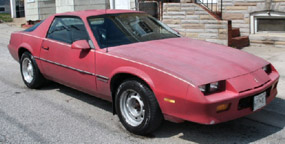
A few weeks later, I was pulled out of Spanish class so my family could join my widowed sister's side. I rode to Tulsa, Oklahoma in the back seat of my other sister's boyfriend's coupe—a Camaro. I felt the giddiness, nervousness, and melancholy one feels when one doesn't know what else to feel. But the mood in the Camaro was fine, with my other sister and her boyfriend magnetically alive and well. They seemed happy. Those two had great chemistry, like cocaine and alcohol.

In Tulsa, we found my parents, who had arrived from Dallas to console the inconsolable. My sister, 22, tragic, had been living with death in a strange city, and now death left her alone in that house. So she grieved, and we offered our presence as comfort. Little did I understand of sadness and grief.