Jim invites you and a few of the other dads on the block to watch Sunday football at his house and eat barbecue. You discuss the importance of a good offensive line with one dad and begin to suspect he has a urinary tract infection. He searches your eyes for recognition, but now you deny him.
Later in life, the doctor, nurse, physician's assistant, medical technician, nurse practitioner, and the patient himself watch his dark urine course through the tubing.
Showing posts with label comedy. Show all posts
Showing posts with label comedy. Show all posts
Saturday, May 24, 2025
a fictional note about the barbecue


Friday, December 08, 2023
a poem from back on Flamingo
Knew they did
The sharp broken sun
by yawning shadow of the valley would hide
their very soul
Rested there and waited
Fawning
O'er one another
Lusted and seeming to grow
Multiply, and all the while unseen
'Til rushing came the score
A thrust from the belly
When felt was the rumble
he cried "Let loose your bowels!"
And loosed the unloosened promise
burned through the ranks
living, in the Sodom of the land's silhouette.
The sharp broken sun
by yawning shadow of the valley would hide
their very soul
Rested there and waited
Fawning
O'er one another
Lusted and seeming to grow
Multiply, and all the while unseen
'Til rushing came the score
A thrust from the belly
When felt was the rumble
he cried "Let loose your bowels!"
And loosed the unloosened promise
burned through the ranks
living, in the Sodom of the land's silhouette.
Saturday, May 13, 2023
character idea number 8
Vain Dad. He dresses trendily. Tailored fits. Wears noticeably thick-rimmed glasses. Head shaved to the part. Tries hip activities with his average, comfortable son, like riding "public" electric scooters and shouting out because it's so fun.
Friday, January 08, 2021
something about "Diary of a Madman" by Nikolai Gogol

"Diary of a Madman," a short story by Nikolai Gogol, documents the warping of thought in an impoverished civil servant. The diary's author is incurably insecure and envious; his entries reveal his deepening delusions. This work, written in 1835, attacks Russia's class structure. I did not enjoy this read. Most of the Russian literature I have read dealt with these themes in some way but with better jokes.
Friday, October 18, 2019
something about "Letterman: The Last Giant of Late Night," by Jason Zinoman

David Letterman remains one of my favorite people ever on TV. So I read with great pleasure Letterman: The Last Giant of Late Night, by Jason Zinoman. Blurbs describe this effort as the definitive work on Letterman—and for good reason. A lot of research, thought, and care went into this account. I found myself remembering Letterman moments I had forgotten or not fully appreciated at the time. Like when the show returned from the night's first commercial break and the camera moved to Letterman as he pulled out a corded phone and dialed. Whatever happened next was good television. Letterman's guest interviews always promised a chance for the unexpected—an unscripted, awkward moment between the host and guest and the camera cutting to an uncomfortable older couple shifting in their seats in the audience.
Directors, writers, producers, and network executives are all accounted for here. Throughout this cohesive, substantive, fluid narrative, Zinoman offers his own judgements on aspects of Letterman's show and character. While I did not always agree with those judgements, they are always reasoned and offered in good faith. This was a very rewarding and enjoyable read.
Note: Zinoman writes comedy criticism for The New York Times.
Saturday, May 11, 2019
something about "The Government Inspector" by Nikolai Gogol
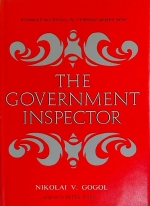 Nikolai Gogol's play, "The Government Inspector," satirizes political corruption in Imperial Russia. Russia is incurably corrupt, so while the play, published in 1836 (and revised in 1842), is presumably set in the mid-19th century, it remains relevant—and not just in Russia. In the play, small-town corrupt local officials receive news that a high-ranking, undercover inspector general will investigate the town's corruption problem. The locals mistake a pathetic, lowly civil servant, Khlestakov, for the inspector. Khlestakov and his servant take full advantage.
I read a version that included stage adaptation notes written by director Michael Langham. Langham's introduction emphasizes, among other things, that the corrupt mayor, rather than Khlestakov, is the central figure. I appreciate book editions that include notes like this. Sure enough, the mayor has the best lines. I found the work a quality read.
Notes: It is understood that corruption threatens all nations. Populist movements are perhaps most susceptible.
Saturday, June 11, 2016
something about female characters and black characters

 In the 2014 film Top Five, Chris Rock is Andre, an actor attempting to transition from hammy comedies to drama. Andre played a smart-alec live-action bear in a comedy franchise; now, in a maudlin historical film, he attempts to play a Haitian slave revolting against European colonialists. In this casting, we get the message that black characters in media are often minstrel-like entertainers or suffering caricatures.
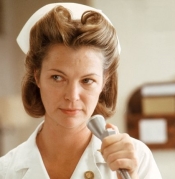
In the 1975 masterpiece One Flew Over the Cuckoo's Nest, a similar point is made (albeit indirectly) about women in media. In this film, Nurse Ratched, played by Louise Fletcher, is contemptible because she appears to be neither of the things women typically are expected to be: sexual or nurturing.
Notes:
Admittedly not a perfect theory, and not a perfect pairing.
Rock also wrote and directed the film.
Saturday, January 17, 2015
Friday, July 18, 2014
about Artie Lange's "Crash and Burn"
 He established himself on the standup circuit, was an original cast member on MADtv, co-starred with Norm MacDonald in the movie "Dirty Work," and sometimes is a guest on late-night talk shows, but most people know Artie Lange from his eight years on Howard Stern's radio show. Too Fat to Fish, Lange's first autobiographical book detailing his (sur)real-life adventures, camped out defiantly on best-seller lists. In Crash and Burn, his latest book, he relives the decent into the drug and alcohol addiction that nearly ruined his career and led him to attempt a violent suicide.
Crash and Burn narrates Artie's debauchery and excess. While this sounds juicy, the repeated confessions of abuse, blackouts, hiding and lying to family and friends makes for a tale that is far more sad than sidesplitting. Though I'm not a Stern/Artie devotee, I'm familiar with some of the characters in the Stern show world, and easily enjoyed this fast read. When the book ends, Artie is sober, engaged, and hosting a sports and entertainment radio show called "The Artie Lange Show" (originally "The Nick & Artie Show" co-hosted by comedian Nick DiPaolo).
Friday, September 06, 2013
Wednesday, July 18, 2012
Apples, Oranges
The thought piece titled "The Joke's on You" argues that the popularity of John Stewart and Stephen
Colbert among progressives "is not evidence of a world gone mad so much
as an audience gone to lard morally, ignorant of the comic impulse’s
more radical virtues." The author of the piece attempts to build his
argument by citing many examples of the satirists
cozying up to the establishment and passing on opportunities to
challenge power.
The
obvious rebuttal to this critique is that Stewart and Colbert simply
aren't trying to be progressive, radical comedic performers like Bill
Hicks.
The author recognizes this objection:
Fans will find this assessment offensive. Stewart and Colbert, they will argue, are comedians, offering late-night entertainment in the vein of David Letterman or Jay Leno, but with a topical twist. To expect them to do anything more than make us laugh is unfair. Besides, Stewart and Colbert do play a vital civic role—they’re a dependable news source for their mostly young viewers, and de facto watchdogs against media hype and political hypocrisy.

But this rebuttal is never addressed. Instead, the author spends the next four pages
offering examples of how Stewart and Colbert do nothing to effectively
further progressivist causes.
Not
addressing the rebuttal makes the whole argument moot. Such thought
pieces, which are all the rage now, should be approached skeptically
because often
their premises, reasoning, and/or conclusions are weak.
Notes:
- The line "Fans will find this assessment offensive"--fandom has nothing to do with questioning the argument offered. But rhetorically the author makes a good move because it subtly casts those who disagree as lackey's for the famed satirists.
Tuesday, June 26, 2012
About "The Kids in the Hall" TV show

Re-watching
this series, I'm reminded it wasn't that funny. But the show's
not-being-funny is an acceptable risk--acceptable because its
value for me lie in its ethos. "The Kids in the Hall" cast consisted of comedic
performers more so than comedy actors; they were creatives rather than
laugh-getters, and their schtick was absurdity. Any given sketch might (1) focus on the orthodoxy of their having
to have a premise or be funny or be likeable or act famous, (2) have no premise and instead start in the middle of a scene, or (3) be a monologue. "The Kids in the Hall"
was more like "Monty Python" than "Saturday Night Live", but shared
properties of both, combining them and re-interpreting them as something pretty unique. Some credit for the show's willingness to take
risks belongs undoubtedly to Lorne Michaels. But despite this, it
doesn't make for a lot of entertaining television.
Notes
Notes
- I can only watch in very small doses.
Saturday, April 28, 2012
About "I Love Lucy"

I have never been able to watch more than four minutes of "I Love Lucy" and I think this is why: the show never tells a story; instead, Lucy puts on a show. This inevitably leads to her acting out, hamming it up, taking the production over the top. There is no arch, no moral, no lesson learning; there is no character development, no growth in the show, its production or its talents. There is nobody to sympathize with or relate to. All you see is a comedienne trying to meet expectations or out-do herself comically with exaggerated crying and bumbling, facing the camera all the while.
All this is to state the obvious: that how you feel about the show hinges on taste, one's expectation and preference. If Lucy isn't funny, she's just pulling gags.
Notes:
- Television was still young.
- This means nothing.
Friday, September 16, 2011
Jon Stewart's rhetorical situation


I agree that his modesty borders on false, but when Stewart denies his power I interpret this as his assessment not so much of himself but of his rhetorical situation: His audience consists of young, self-imagined dissidents and slackers who ultimately don't mobilize well as a group. Stewart can't mobilize them the way Beck can appear to mobilize his audience--a block of voters already energized thanks to a dedicated media and powerful political machine. Despite mainstream media's claims to the contrary, the Tea Party is not a "state of mind" or unaffiliated multiplicity of citizenry; they are an easily identified demographic with shared values and an agenda. By comparison, Progressives can stand for almost anything--gay marriage, worker's rights, the environment, anti-globalization, minority achievement, tax policy, gun control, prison reform, entitlement improvements, education, peace, and so on--and getting them to the polls as individuals is challenging enough. Stewart's power lies solely in his popularity as a smart Liberal media critic, a face appearing not on reputable stages like CNN or even MSNBC, but on Comedy Central for a few minutes a night, four nights a week during part of the year. The matter is not that Stewart won't be a force for change; it's that he can't be.
The author implies that Stewart is a coward because he stands for nothing; he only satirizes while acting as the Liberal conscience. But then the piece ends with Stewart dreaming up a network based on media reform. Isn't that standing for something? (If it is true.) If Stewart does nothing more than The Daily Show the rest of his life, then No, he isn't politically useful to Progressives. He merely provides a venue for people who think popular news is a joke.
But as a media attraction (as opposed to a political force), Stewart does have power. So I don't follow the criticism that Stewart takes himself too seriously. So what if he does? The author's cited examples include his behavior during appearances on Charlie Rose, Rachel Maddow, or on various FOX programs. Look, when Stewart is given a serious platform such as a guest spot on Charlie Rose, he acts like a guest on Charlie Rose. He takes advantage and shows another other side of himself. As for switching between Stewart the TV personality and Stewart the man, entertainment has a long history of performers trying to reach through the wall separating performer from audience in an attempt to connect. When the run of a show ends, like when Conan had to leave his show or when Carson retired from his, the man opts for sincerity as sincerity is called for.
In the peripheral sits an interesting issue: What to make of Stephen Colbert? Right now, neither man has a cause or larger vision with which to rally voters. But among his other achievements, Colbert formed a super PAC and gave a scathing, high-profile performance at the White House Correspondents Dinner. In criticizing Stewart, is the author alternately congratulating Colbert? Is Colbert still funny?
Tuesday, February 15, 2011
Love Liza
 The film Love Liza depicts the struggles of a new widower, his name is Wilson, played flawlessly by Phillip Seymour Hoffman. Watching, I wondered if the film's use of comedy was aimed at emotionally rattling viewers. By letting me voyeuristically watch Wilson's most vulnerable moments, the film made me vigilantly aware of his intense loss, sadness, and isolation. But in and between tragic scenes, I often found myself laughing. The laughing always felt inappropriate, and quickly gave way to the uneasy silence after the laugh. Uneasy silence and inappropriateness are two grand understatements of what I imagine Wilson felt: This feels wrong, I feel wrong, I should not be feeling this. The film has one pivotal scene that speaks to this interpretation: In it, Wilson is seated with co-workers at the office where he works, and one co-worker is sharing an anecdote. A few co-workers chuckle when she finishes, but then Wilson lets go a long, uninterrupted laugh that continues after his tense co-workers have silently excused themselves. It is a laugh over a cry. Love Liza very powerfully relates that feeling and mania.
Subscribe to:
Posts (Atom)