Showing posts with label African Americans. Show all posts

Saturday, June 11, 2016

something about female characters and black characters


In the 2014 film Top Five, Chris Rock is Andre, an actor attempting to transition from hammy comedies to drama. Andre played a smart-alec live-action bear in a comedy franchise; now, in a maudlin historical film, he attempts to play a Haitian slave revolting against European colonialists. In this casting, we get the message that black characters in media are often minstrel-like entertainers or suffering caricatures.

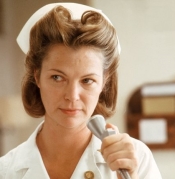
In the 1975 masterpiece One Flew Over the Cuckoo's Nest, a similar point is made (albeit indirectly) about women in media. In this film, Nurse Ratched, played by Louise Fletcher, is contemptible because she appears to be neither of the things women typically are expected to be: sexual or nurturing.


Notes:
Admittedly not a perfect theory, and not a perfect pairing.
Rock also wrote and directed the film.


Wednesday, February 27, 2013

about 2012 films: I see black people


At the Oscars, Daniel Day-Lewis won Best Actor.

Both the films "Lincoln" and "Django Unchained" concern African American slavery in the US--an issue that in ways big and small plagues the US still. But "Lincoln" portrays and conveys black people differently--I think with a greater truth, the kind of truth only realized in art.

How so?

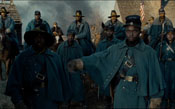
"Lincoln" doesn't have any main black characters. It has hardly any black people at all. Sure, it's about that President at a specific moment, and not about slaves. But what and who is Lincoln? Why do we honor him today? States' rights were at stake, but the civil war was fought over slavery, and that is Lincoln's legacy.

All during the film, black people are peripheral, somewhere on the edges, rarely seen, rarely on screen. And aside from gentle scenes of dialog at the beginning and end of the film, they are never confronted. Their captivity and freedom is debated with a little input from those most affected.

But though they are invisible, black Americans are everywhere in the themes and culture and gravity of the moments being enacted. They are the thing referred to but never spoken of; they are exchangeed but never valued. They are marginalized in the film, reflecting their existence in America, and the racially collective experience of their existence here for some time.


Notes:
* The only other film I saw is "Flight".


(Also, the President now is black.)