Showing posts with label history. Show all posts

Saturday, September 05, 2026

about “The Sleepwalkers: How Europe Went to War in 1914” by Christopher Clark

Why did World War I start? I did not think I cared much about the answer until reading The Sleepwalkers.

It is a big book—over 550 pages—but it is so well written and organized that I read it all, even though my interest in the subject was passing and my appetite for reading in-depth long-form non-fiction on my own time had dwindled. Every page shares colorful details.

The reasons for The Great War go far beyond the assassination of Archduke Franz Ferdinand, heir to the shrinking Austria-Hungary throne.

The Sleepwalkers is a deep study of the communications and documented thoughts, the sequencing of events and decisions, and the pressures on European statesmen—the kings, prime ministers, diplomats, and generals—as they footed through the years and through their assumptions into one of the deadliest conflicts in history—a war in which about 9 million soldiers died, with 23 million more wounded along with 5 million civilian casualties.

I was interested to learn about the boiling tensions in the Balkans—especially Serbia and the violent streak of nationalism that organized the conspiratorial network, The Black Hand. Serbia was independent, but Slavic populations lived within Hapsburg land, and the plotters imagined the assassination could lead to a united Serbia.

I was also interested to learn about how the colonial interests of the major powers affected their relationships on the continent. In addition to the Balkans, colonial considerations included far east Asia (although Japan was rising as a major regional power), North Africa, South Africa, areas around the Aegean, Mediterranean, and Black seas, and more options opening up with the decline of the Ottoman Empire.

Christopher Clark depicts decision-makers going to war as if it were inevitable, as if narratively driven and somehow unable to imagine the death and destruction that would follow.

The Sleepwalkers impressed the hell out of me—a masterful treatment of a difficult and complex subject. Here are some quotes.

On explaining why Serbian nationalists assassinated Franz Ferdinand:

The archduke made no secret of the fact that he intended to restructure the imperial system after his accession to the throne. The key objective was to break or diminish the Hungarian hegemony in the eastern part of the monarchy. For a time, Franz Ferdinand favoured strengthening the Slavic element in the monarchy by creating a Croat (and, thus, Catholic-) dominated ‘Yugoslavia’ within the empire. It was his association with this idea that so aroused the hatred of his orthodox Serbian enemies. By 1914, however, it appears he had dropped this plan in favour of a far-reaching transformation by which the empire would become a ‘United States of Great Austria,’ comprising fifteen member states, many of which would have Slav majorities. [108, British styling in the book]

On some of the pressures facing the men in charge of Europe:

The press entered into the calculations of policy-makers in many different ways. It was never under their control, and they were never under its control. We should speak rather of reciprocity between public opinion and public life, a process of constant interaction, in which policy-makers sought intermittently to guide public opinion in a congenial direction, but were careful to shield their own autonomy and to protect the integrity of decision-making processes. On the other hand, statesmen continued to view the foreign press as an indicator not just of public opinion but of official views and intentions, and this meant that uncertainties about who was inspiring or licensing which utterances could further complicate communications between states. More fundamental—and more difficult to measure—were shifts in mentality that articulated themselves not in the calls of chauvinists for firmness or confrontation, but in a deep widespread readiness to accept war, conceived as a certainty imposed by the nature of international relations. The weight of this accumulated readiness would manifest itself during the July Crisis of 1914 not in the form of aggressive programmatic statements, but through the eloquent silence of those civilian leaders who, in a better world, might have been expected to point out that a war between great powers would be the very worst of things. [238-9, British styling in the book]

A book recommendation:

In a brilliant study of the US entry into the Vietnam War, Andrew Preston shows that while Presidents Lyndon B. Johnson and John F. Kennedy were reluctant to wage war and the State Department was largely opposed to intervention, the smaller and more nimble National Security Council, which strongly favoured war and operated beyond congressional oversight, narrowed down the president’s options on Vietnam until war was virtually unavoidable. (240, British styling in the book)

And the book’s excellent final words:

... the protagonists of 1914 were sleepwalkers, watchful but unseeing, haunted by dreams, yet blind to the reality of the horror they were about to bring into the world. (562)


Notes:

- Sophie Chotek, the Archduke’s wife, was assassinated along with her husband. She was a Czech noblewoman. Prague was part of Austria-Hungary. Their marriage was unlike many other marriages among royalty and power—Ferdinand loved Chotek, and his marriage to her cost him favor in Austria, and cost him favor with his uncle, the King.

-Christopher Clark is a professor and historian.


Saturday, January 20, 2024

a response to prayerless hopes


I knew you were high when I read your writing diminish, diminish us. I still thought what we had was chaos, chaotic, but it birthed our new world coherent. I read your destruction when you contacted me again, writing me high so it could be compartmented, so, ignored. But I resumed living the drudgery and feeling the defeated stench of black saltwater lapping our necks. I didn't care what you felt now, and I had nothing to say to you, so I could not write back.
 

Saturday, February 25, 2023

about feelings couples have

 
There were a lot of people like her and a lot of people like me, but still we felt nobody was like us.
 

Friday, July 27, 2018

something about "Potomac Landings" by Paul Wilstach


Paul Wilstach shares with us the life of the the lands pinning in the Potomac River. The encyclopedic Potomac Landings is written with care and traces of affection. Much of national importance in America is rooted in the D.C., Maryland, and Virginia area (also known as the DMV) along the river. Bits that I found particularly interesting include how many wealthy people settled the area, the plantations, the way children of rich men established estates near each other, and the way those estates became counties.

Covering little bits of everything, Wilstach gives us a book to leaf through. He occasionally indulges in details about, for example, oil lamps. But the bulk of the text traces plantation and estate operations, well-heeled families, social conventions, the landscape, agriculture, architecture, and legal developments.
 

I especially enjoyed stumbling upon brief passages in which the author reveals his talent for literary writing. For example:
So, in brief, civilization came to the Potomac, seated itself at the river's mouth, and began its slow sweep up the shores from point to point, and from creek to creek. It came upward like the tide whose ebb and flow had for ages been as the river's respiration and life. If however, the flow of this tide was slow as centuries, its ebb was eventually just as inevitable as the ebb that twice daily perpetually bares the sandy beaches and the landing piles along its way.
Notes:
-Potomac Landings was published in 1920. I read a 1937 edition.
-The book is somewhat Maryland-centric.


Saturday, February 17, 2018

about a sunny winter day in St. Louis


Try to recognize the city's constancy. Mortar, red brick; work, manufacturing, beer; centered, unswept; the seam of the nation's identity. (Blight, represented by vacant, deteriorating husks in some sections, yes; but, even there, where history has paused, one can identify with the condemned.) Remember driving down Chouteau one February morning, old red-brick buildings on your right, and how rusted-out gutters, flecked in sea green, plunged down from the rooftops to lie shedding in time's gardens of grit and debris.


Note: Also remember the colors of the changing Maples on X Street, next to the house; Broadway's beautiful industry buildings (never could figure out if people were actually working there); mothers walking kids to the school buses on Chippewa; and smelling bread while walking to the front gate on a chilly day.


Saturday, July 01, 2017

about being attached still at the roots


The blonde-headed young man slides self-consciously into frame. His eyes are pulled twice to the camera, furtively each time; he nods hair away from his face. He knows he is being seen but denies the seer. Finally, a casually intentioned look toward the camera's eye--mutually frank, unwise, and uninvested.

Recording themselves downtown, the boys were making memories, however forgettable in the grand scheme. It is that association between memory and place, time and space, that now leaves me missing home. My hometown: flawed but well planned grids of city streets; tree-heavy suburban neighborhoods where kids get excited about spending the night at friends'; where the beginning and the ending last until I die.


Saturday, April 22, 2017

something about "I Should Be Dead: My Life Surviving Politics, TV, and Addiction" by Bob Beckel


Bob Beckel's long political career included holding office as Deputy Assistant Secretary of State during the Carter Administration and managing Walter Mondale's presidential campaign. In the years since, he has gained a little more recognizability through his frequent appearances as a political analyst on the news networks. The confessional I Should Be Dead relays some difficult sequences from Beckel's youth and then efficiently details his professional life and recovery. His father's alcoholism is a defining phenomenon, and since childhood Beckel has lived his life as a survivor. Even though it is the book's selling point, Beckel's own debauchery does not occupy a lot of time in the narrative. The man was a functional addict, so you read about campaigns, and now and again Beckel reminds you that this narrator was working with generous amounts of cocaine and alcohol in his bloodstream. It is a painfully personal tale, but Beckel forgoes emotional depth and tells it with a genial directness that makes for an easy read.


Note: I was hoping for more of a political memoir.


Friday, September 30, 2016

about being attached still at the roots


The blonde-headed young man slides self-consciously into frame. His eyes twice pulled to the camera, furtively each time, he nods hair away from his face. Knowing being seen but not acknowledging the seer. Until he does acknowledge with a casually intentioned look toward the camera's eye--mutually frank, unwise, and uninvested eyes.

Recording themselves downtown, the boys were making memories, however forgettable in the grand scheme. It is that association between memory and place, time and space, that now leaves me missing home. My hometown: flawed grids of city streets; tree-heavy suburban neighborhoods where kids get excited about spending the night at friends'; where it began and the ending lasts until I die.


Friday, January 01, 2016

something about "Dangling Man" by Saul Bellow

 
Our Dangling Man keeps a journal in which he agonizes over the gaps between his past and present selves. His encounters with people sound largely antagonistic.

The voice of the journal belongs to Joseph, a young man living in Chicago. At this moment in his life, Joseph is unemployed, and
1942 America is at war. Joseph's voice captures truths that are universal (or, at least national), temporal, and personal. Frustration over his compulsion to drill and drill himself for value taint Joseph's reflections. Although determined to unleash these thoughts, Joseph is an unwilling participant in a culture that increasingly casts every self in the lead role.

At the time of his writings, Joseph, Canadian by birth, has been waiting for word on his acceptance into the American army during World War II. He surrenders his personal freedom to end this suffering. He closes his journal with the words,

Hurray for regular hours!
And for the supervision of the spirit!
Long live regimentation!

Notes:
Dangling Man, written in 1944, is Saul Bellow's first published work. I thought
Dangling Man had interesting moments, but I did not enjoy reading it.

Saturday, March 21, 2015

bloody roots


Some people talk a lot about their humble beginnings so that when you see how they act now, you won't despise them; you'll admire them.


Monday, November 03, 2014

about "Travels in Siberia" Ian Frazier


Ian Frazier, humor contributor to The New Yorker, developed a Russia fetish traveling there and, in 2010, published Travels in Siberia. This hefty travel log relays all kinds of details about Frazier's experiences with his guides, with locals, the climate, terrain, and culture. As made clear by the title, this book focuses on his times in Siberia, the massive symbol that accounts for the bulk of Russian territory (about three quarters of it). The travel-log part that makes for most of the book plodded aimlessly, and the narrative's pace stalled; the best parts relate some fascinating history lessons.

Saturday, September 20, 2014

about Ken Burns' film "The Roosevelts"


Ken Burns' most recent entry in the American encyclopedia is "The Roosevelts: An Intimate History." This film constructs a narrative of Theodore and Franklin and Eleanor Roosevelt. Teddy, a Republican, served as 26th President of the United States, and Franklin, a Democrat, the 32nd. The documentary film begins with the birth of Theodore in 1858 and ends with the death of Eleanor in 1962. The production is superior, fueled with solid writing, crisp pacing, and sharp editing.

The film relies on loose eye-witness accounts from the Roosevelt's family and friends and the speculation and psychoanalysis of historical writers, such as Doris Kearns Goodwin and David McCullough, whose work sells because they dramatize history. The first episode inscribes an origin story for each future President. The narrative willingly indulges the Great Man theory, that idea that history is the result of the charisma, intelligence, and skill of the heroes and giants of the age. In the case of the Roosevelt Presidents as depicted in this documentary, both are born sickly and, merely by living, miraculously defy death. Describing baby Franklin in the arms of his mother, the narration quotes a family member who likens the pair to a Madonna with child. Rather than simply say that the family was proud of their kin, this testimony is treated as bearing some deeper insight and truth. In another segment, the narrative depicts Teddy's time in the badlands as a trial from which he emerged transformed, like Jesus returning from the desert.


Friday, August 29, 2014

about "The Course of French History" by Pierre Goubert


In this tidy one-volume history, Pierre Goubert fairly encapsulates the social, political, and economic evolution of France, from the blurry edges of the monarchy in 987 to the present (about 1980). More fluid and narratively organized than a textbook, but too sweeping to fit neatly with most modern nonfiction historical works, The Course of French History maintains enough momentum to avoid drying out, but never approaches being a page-turner. Goubert, who has done his research, tempers and delivers his own informed judgements passively. This volume suits anyone doing independent study of French, European, or even World History, giving you all the basics with just a taste of the details.


Note
Recounting the contents here would be pointless.


Friday, May 02, 2014

something about "The French Revolution and Napoleon"


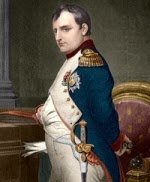
The French Revolution and Napoleon distills with flourish the fiery, priority years of French, Western, and arguably world history from about 1789 to 1815. The bulk of those years encompass the reign of Emperor Napoleon Bonaparte; but in his book, Charles Downer Hazen gives equal time to the relatively brief epochal years of the French Revolution.

When this history begins, monarchies exercised feudal rulership over Europe, mostly. Francenine-tenths of which was peasantswas suffering the mismanagement of Louis XVI and massive class inequalities of wealth, privileges, rights, and justice. By 1789, the treasury runs dry and a series of national assemblies, constitutional conventions, and emergency committees gather in Paris. Political factions spring up, feuds begin, and revolutionaries quarrel with each other and with the keepers of the status quo. At one point, a draft of the constitution incorporates the Catholic Church with the State, sparking another feud, this time between the elected clergy and the old faithful. This is how the French Revolution begins.

King Louis XVI, of course, is an immediate underdog. But before the revolution reaches his doorstep, France finds itself at war with a Europe full of worried kings and French expatriate clergy and nobles agitating abroad for counter-revolution. Despite a bad start, France somehow manages to fend off and actually beat the primary aggressors, Austria and Prussia.

Fighting this war keeps France from total dissolution and buys King Louis XVI some time. But the war also spurs some of the first ultra-violence, as panicking nationalists find and kill any suspected domestic traitors and terrorists. From here, the feuds between political factions bring France to a boil. As the balance of power tips, the majority at once begins imprisoning and executing its enemies. This so-called Reign of Terror (also known as simply The Terror) ultimately discredits the radical majority, allowing some sense to emerge from the bloody chaos enough so that a functional, albeit ultimately temporary government and constitution are established.

Meanwhile, having fended off domestic mobs from the convention halls at home and then leading French soldiers to victory abroad, Napoleon steps up center stage. He makes use of any time he gets in Paris, networking and then organizing a coup d'etat. Of course, his version of the constitution makes Napoleon Emperor of France. Now head of the state, Napoleon establishes a new norm and order. This order honors the revolutionary principle of equality, more or less, but not liberty, and for the people this is enough for awhile.

But the temporary peace that allowed Napoleon to take the throne dissipates, and France is once again at war with everyone in Europe and Russia. Under Napoleon's direction, France somehow keeps winning against them all except for England, whose Navy has the definite edge. Napoleon feuds with the Pope in Rome, but forms an alliance with Czar Alexander I in Russia, with whom some of France's spoils are shared. Trying a different tactic, Napoleon aims to bleed England of its wealth by declaring a boycott of English goods across the expanded French Empire. But ultimately this causes as much or more hardship for France's subordinate kingdoms, whose peasant class needs the English trade.

So the relative peace in the expanded French Empire withers under this hardship, and again the French expatriate clergy and nobles agitate abroadincluding those in Russiaagainst Emperor Napoleon. Czar Alexander I violates the boycott and Napoleon invades Russia. The Russian military retreats but the Russian climate fights the battle with France and Napoleon, his forces decimated, is forced to withdraw and then struggle to maintain control of rebelling occupied German states. Russia and England join Austria and Prussia in the fight, and Napoleon loses Germany. His determination to keep the remainder of his empire proves hopeless, however, and Napoleon abdicates rule of France and is banished to the island of Elba.

All that, Napoleon's rule from 1804 to 1814, would be a great enough story. But Napoleon authors a powerful final chapter when he raises an army on Elba and embarks on a sequel. Evading the English Navy, the ousted Emperor sails to France and marches to Paris where he is welcomed a hero. The order established in his absence, headed by the installed King Louis XVII, dissatisfies the people. The European alliance that defeated him last time, feuding amongst themselves over how to split up the defeated French Empire, resolve to put a stop to Napoleon once and for all. Napoleon rushes an army to Belgium to beat the allies to the punch, but there he is met by the Duke of Wellington, who defeats Napoleon at Waterloo. Napoleon is banished this time to the island of St. Helena in the South Atlantic where he dies six years later.

The French Revolution and Napoleon was published in 1917 when European rivals were still burying millions in World War I. Author Charles Downer Hazen uses his preface to recognize this, urging that "there is much instruction to be gained from the study of a similar crisis." Of course, in its way, WWI begot WWII so, if there were any lessons to learn at all, nobody learned them.


Notes:
At one point, King Louis XVI's attempt to flee the palace in Versailles turns into a freakish parade, the heads of his guards hoisted high on pikes by mocking crowds.