Showing posts with label France. Show all posts

Saturday, September 02, 2023

about another hardcore band's debut

French hardcore band Cleaver wreaks havoc on debut

The chaotic and crude-sounding "No More Must Crawl" debuts the hard-shove hardcore of Cleaver. Songs grind and scrape by in an Adderall-fueled turn, switching impatiently between sludge, choppy heavy metal, dissonant sidesteps, and chord-rolling hardcore.

The sound is a spasming relapse of American hardcore from the late 90s, like Botch and maybe early Converge at a time when Converge's epic album "Jane Doe" floated still on the hazy horizon.

The title track of "No More Must Crawl" echoes the eponymous closer of "Jane Doe." I liked “The Plight,” which opens with loud, dissonant detonations amid chunky power chords before slowing to a bleary slog. And the album’s eruptions of grindcore, like on “Thudding Stares” and “Kyg,” add vitality to these hastily stitched-together episodes of frustrated sonic violence.

Cleaver formed in France in 2018 and consists of Franck Fortina (bass and vocals) and brothers Mathis Garelli (guitar and vocals) and Léo-Paul Garelli (drums). The music shows a lot of promise amid the debut’s rough edges.

Note: This is from a while back.

Friday, January 20, 2023

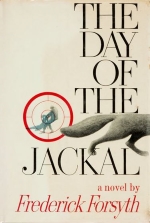
something about Frederick Forsyth’s “The Day of the Jackal”

I watched “Carlos,” an excellent movie about the infamous international terrorist for hire, Carlos the Jackal. Carlos was a Venezuelan Marxist named Ilich Ramirez Sanchez; the recruiter in the Popular Front for the Liberation of Palestine code-named Ramirez Sanchez "Carlos" because of his South American roots; then The Guardian began referring to him as Carlos the Jackal after one of its correspondents supposedly saw the fugitive with a copy of the novel, The Day of the Jackal.

So the movie led me to read that 1971 fictional thriller. The novel, written by English author and journalist Frederick Forsyth, is about a professional assassin contracted by a French dissident paramilitary organization to kill Charles de Gaulle, the President of France. The book covers the organization’s history of failed attempts; its subsequent activities and hiring of the assassin; the assassin’s meticulous planning and preparations; and the Government of France’s work to protect the President, foil the dissident organization, and identify and catch the assassin. Forsyth trusts his reader and includes a lot of wonderful details and characters. The result is an especially satisfying read.

Notes:

  • Carlos the Jackal is now serving a life sentence in France. One of his most notorious crimes was his 1975 raid on the Organization of the Petroleum Exporting Countries headquarters in Vienna; three people died during that attack and several OPEC oil ministers were kidnapped.
  • The 2010 film “Carlos” has a good soundtrack and an excellent performance by Edgar Ramírez, who plays Carlos as a man whose reputation precedes and probably exceeds him.


Sunday, February 20, 2022

something about a new album by a French noise-rock band

Biographic details on Salo, the noise-rock band responsible for this punchy new release, are hard to come by. But the album, From Melmac With Hate, makes a fine statement on its own.

The first of these 11 confrontational songs is “Guillotine,” which zigzags a trail of noise buoyed by a hairy bass guitar tone under crashing cymbals and a vocal that seeks abandon. Salo’s musicianship comes through especially on “Jay” and “Speed Missile,” two of the most energetic performances on the album. The tremolo effect on the guitar breaks through at 1:35 on “Jay”—the notes cut noise like the bent, serrated edge of the junk-drawer knife. And the swinging drumming style, accompanied by that hairy bass, propels a lot of this album. “Jay” and “Speed Missile” exude a punk-inspired sound that is confrontational, spiteful, and desperate for attention.

Salo is a trio based in Lyon, France. Funny how small bands can make such big sounds. Social media suggests Salo is about five years old. The band cites as influences The Fall, Thee Oh Sees, and METZ—the last band being the most directly comparable. Halfway through From Melmac With Hate comes “Bring Back Medieval Plague.” This song, with its provoked vocal and damaging low-end rhythm section, approaches a blend of The Jesus Lizard and Young Widows. It is a clawing scramble up a mountain.

Salo slow the pace later in the album with “Tasmanian Tiger (for Nikita).” The bass guitar remains imposing, but the drums, especially the hi-hat, become stilted and self-conscious, almost uncomfortable. Arpeggio-style guitar notes smolder. The measured cadence of the vocal sounds borrowed from the tune of some Scottish folk pub song. The tone on the opening and closing guitar figure is a change-up, too. It is a stadium-ready sound from a guitar that spends the rest of the album cutting through back alleys.


Saturday, June 06, 2020

"Selected Short Stories" by Guy De Maupassant


I do not remember how or when I added the French writer, Guy De Maupassant, to my reading list, but I am thankful for the suggestion. The short stories in this collection are flirtatious and efficiently satisfying. Maupassant captured very human episodes that are water-ringed by vague taboos and unseemliness. This collection, translated with an introduction by Roger Colet, was published by Penguin Books in 1971.

From Maupassant's masterpiece, "Boule De Suif":

The others ordered wine, except for Cornudet, who demanded beer. He had his own special way of opening the bottle, giving the liquid a good head, and examining it, first tilting the glass and then holding it up between the lamp and his eyes to appreciate the colour. When he drank, his great beard, which was the colour of his favorite beverage, seemed to quiver with emotion, and he squinted so as not to lose sight of his mug; he looked as if he were performing the one function for which he had been born. It was as though he were establishing in his mind a connexion, or even an affinity, between the two ruling passions of his life—Pale Ale and Revolution—and he certainly never drank the one without thinking of the other.
I enjoyed every word of these 30 stories, but "Boule De Suif" is easily my favorite. 

Maupassant, a French writer and protégé of Gustave Flaubert, is considered a member of the naturalist school and wrote much of his work in the 1870s and 1880s. He wrote, according to Wikipedia, hundreds of short stories, six novels, three travel books, and one volume of verse.

Saturday, June 30, 2018

(posts) Jacques Brel singing "Dans le port d'Amsterdam"


Notes: Janet Morgan Rasmusen died Friday, November 12, 2010, in Dallas. She was 84.


Friday, August 25, 2017

about being dull

 
A knifeman forces an 84-year-old priest to his knees at the altar and slits his throat. Why is it that this horrific episode did nothing for the imagination? Is it because it is situated within the shapeless war on terror instead of the short rash of violence wrought during the early Norwegian black metal scene?

Friday, July 28, 2017

something about "Democracy in America" by Alexis de Tocqueville


In 1831, the French government sent Alexis de Tocqueville and Gustave de Beaumont to study the American prison system and American society in general to inform political developments in France. Tocqueville saw virtue in an aristocracy and was skeptical of the egalitarianism preached in the United States.

Tocqueville published his findings, De La Démocratie en Amérique, in two parts (1835 and 1840). His commentary, translated today as Democracy in America, is a staggering read. It is at least as insightful as any other wide-scope religious, political, and economic study of American culture (which are all prone to hasty generalizations) produced before or since. Given the fact that Tocqueville spent only nine months in the United States, this is an especially remarkable achievement. 

Friday, September 02, 2016

something about "Napoleon: A Life" by Andrew Roberts


The conventional title of Andrew Roberts' Napoleon: A Life underscores the unconventional greatness of its subject. Napoleon's was not just any life.

With this, Roberts takes a stab at claiming the privilege of having written the definitive Napoleon biography. And though it weighs in at 800 pages, this is an efficient document. Napoleon's rise and fall are chronicled with context. The French political landscape; the international theater; and the military maneuvers of Napoleon, his collaborators, and his adversaries--all of this is included. (The only supplemental reading I would suggest is a decent book on the entirety of the French Revolution.)

I especially enjoyed reading about Napoleon's leadership. I had always assumed that leadership was about the makeup of the leader: his charisma, confidence, courage, and competence. Napoleon had all of that in spades, to be sure. But after reading about how Napoleon treated his men, it seems clear that one can demonstrate leadership by recognizing and celebrating the personality of the team (as opposed to drawing on his own personality and character).

Friday, May 13, 2016

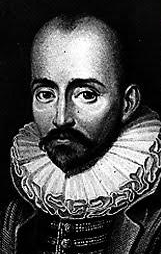
Something about "The Complete Essays" (Penguin Classics) of Michel de Montaigne


Penguin Classics' The Complete Essays gathers presumably all essays by Renaissance-era writer Michel de Montaigne. Born in France in 1533 and writing mostly after 1570, Montaigne is credited with having made the essay into a literary form. An army of classic famous essay writers have emerged in the years since: Bacon, Rousseau, and Ralph Waldo Emerson to name a few. The essay, as fashioned by Montaigne, can stretch from the personal to the universal, and relate history, autobiography, and theory. Montaigne was equal parts lawyer, counselor, philosopher, and statesman; but in these essays, its Montaigne the scholar that impresses me most. He appears to have had a seemingly inexhaustible supply of historical facts and trivia at the ready. However, Montaigne's occasional flair for the seemingly mundane* was slightly more entertaining. My favorite example of this is his essay "On smells":

... I am myself very fond of living amongst good smells and I immeasurably loathe bad ones, which I sense at a greater distance than anyone else... A concern for smells is chiefly a matter for the ladies.

These volumes--the essays are organized into three parts within this one paperback--are dutifully translated by M.A. Screech.


*I have to remind myself that what seems mundane now was possibly part of a larger discussion or issue of the time.


Saturday, July 18, 2015

something about "The Great Debate" by Yuval Levin


Politics makes for especially caustic conversation in America these days. We discuss political polarization because we wonder if honest bipartisanship is dead and if we are headed for a point of no return. We sometimes seem violently rabid in our views; then we wonder if we have always been like this.

Whatever the case, Yuval Levin lays down some historical context for today's American Left-Right binary. Representing the founder of conservatism, Levin shows us Edmund Burke (1729-1797), widely credited as the founding philosophical Conservative. Levin briefly introduces the Dublin-born author, politician, and philosopher, then paraphrases Burke's political ideology, drawing largely from Burke's writings on the American and French Revolutions.

Representing the modern American Left is Thomas Paine (1737-1736). Steeped in both the American and French revolutions, the English-born Paine authored the (in)famous pamphlet "Common Sense," which, to many, inspired the rebels' declaration of independence from Britain in 1776. Levin paraphrases Paine, drawing from his American Revolution writings and his defense of the bloody French Revolution.

In The Great Debate: Edmund Burke, Thomas Paine, and the Birth of Left and Right, Levin devotes more time to Burke, largely using Paine to further refine an explanation of Burke's views. But Levin does not misrepresent Paine, exactly, so no real harm done. And Pain's shortchange comes as no suprise--Yuval Levin is a conservative intellectual born in Israel who founded National Affairs.

By the end of The Great Debate, Burke's and Paine's stances were so qualified, excepted, and nuanced as to be ripe for accusations of inconsistency and flip-flopping. Same old, same old.


Friday, August 29, 2014

about "The Course of French History" by Pierre Goubert


In this tidy one-volume history, Pierre Goubert fairly encapsulates the social, political, and economic evolution of France, from the blurry edges of the monarchy in 987 to the present (about 1980). More fluid and narratively organized than a textbook, but too sweeping to fit neatly with most modern nonfiction historical works, The Course of French History maintains enough momentum to avoid drying out, but never approaches being a page-turner. Goubert, who has done his research, tempers and delivers his own informed judgements passively. This volume suits anyone doing independent study of French, European, or even World History, giving you all the basics with just a taste of the details.


Note
Recounting the contents here would be pointless.


Saturday, June 28, 2014

about "Candide" by Voltaire


Candide is a novella by Enlightenment writer, historian, and philosopher Voltaire (1694–1778). The witty, outspoken Voltaire was often at odds with the laws, customs, and institutions of his day. Despite--or perhaps because of--his controversies, Voltaire achieved great fame in his lifetime.

First published in 1759, Candide unfolds the adventures of a naive but bright young man who optimistically emerges from an idyllic upbringing only to meet painfully with a world burdened with wrongs, hardships, and evils that invite his disillusionment.
 

Initially taught that "all is for the best in the best of all possible worlds," the young Candide concludes after contending with the problem of evil that, in life, one should "cultivate our garden." What this philosophical riddle means is much debated.

Voltaire is posing our dilemma: How do we respond faced with the problem of evil? Now, as adults, far, far away from any Garden of Eden, how do we approach the world? This absurd allegory encourages us to be clear-eyed, tireless reformers working toward the good. 


Saturday, November 09, 2013

something about "The Elementary Particles" by Michel Houellebecq


Michel Houellebecq's "The Elementary Particles" diagnosis society with irreversible decline brought on by failing social values and an addiction to the promises of technology and positivism. The social-sexual revolutions of the 1960s implanted an unwavering allegiance to individuality, and this in turn cost us community and the possibility of intimacy among friends and lovers. This trend coupled with cold, hard science pushed us all apart, leaving a developed world of lonely, desperate, frustrated people. Isolation, depression prevail.

This tale of shifting value systems is played out in the lives of half-brothers Michel and Bruno. Their mother was a sexually liberated woman who had no time or interest for children. Being an easy target for bullies, Bruno led a difficult childhood; Michel fared better, being brilliant but clearly withdrawn and romantically oblivious. Bruno grows into a sexually frustrated and obsessed adult, Michel into a molecular biologist. Late in life they each find a sad but redeeming relationship with women but even this last hurrah only underscores our doom--both women die, leaving the half-brothers half whole and forced to recollect the pieces of their already broken lives. Bruno finds not-unhappiness medicated in a sanitarium while Michel goes on to ensure the death of humanity by pioneering asexual reproduction.

Not a bad book. But I wouldn't call it good.

Saturday, August 24, 2013

about the book "Suite française" by Irène Némirovsky


Suite française pushes us gently, more or less, into Occupied France, 1940. We shuffle around with members of the upper, middle, and lower classes trying to escape and then settle under the Germans.

This book--alternatively titled Dolce and Captivité--is an incomplete draft of two parts of a war-time epic that the author, Irène Némirovsky, wanted to write. She would never finish.

Born in 1903 in the Russian Empire, Némirovsky fled the Russian Revolution in 1917 and eventually settled in Paris, France. She soon began writing, published a couple books, and achieved wide recognition as an author. But her Jewish ancestry remained an issue--enough so that French citizenship was denied the Némirovskys in 1938. Némirovsky, born Russian-Jewish,  converted to Catholicism in 1939; with the pressure on, she wrote for Candide and Gringoire, two magazines with antisemitic tendencies.

Nevertheless, by 1940, Némirovsky's books could no longer be published under the spreading occupation. She fled with her husband and two daughters to Burgundy; but in July 1942, Némirovsky, then 39, was arrested by French police under German authority. She ended up in Auschwitz and died a month later of typhus. Later that year, her husband, Michel Epstein, was gassed at Auschwitz.

So, given this backstory, the flaws in the draft Suite française are unimportant. I enjoyed most the domestic drama between a formidable woman named Madame Angellier, a young maiden, Lucile, and Bruno, a German soldier bunking with the women. This is the most developed thread of multiple story lines that Némirovsky never got to tie together. Lucile and the soldier kindle a romance that disgusts Madame Angellier, a proud woman already embittered by loss of family and national pride. In the final pages, the soldier bids the women adieu as he and the other occupying German soldiers are called away to the horrible war on the Eastern Front. Lucile makes her last pathetic request of the soldier:
"... I'm asking you, if you have any feelings for me, to be as careful as possible with your life."
"Because it is precious to you?" he asked nervously.
"Yes, Because it is precious to me."
And Suite française's narration considers,
How many Germans in the village--in cafés, in the comfortable houses they had occupied--were now writing to their wives, their fiancée's, leaving behind their worldly possessions, as if they were about to die?
In two appendices full of the author's notes and letters from various others in her life at the time, Némirovsky reveals herself to be a very complicated person, veering between philosophical musings, harsh political judgements, vain self-assessments, and composed fear. Némirovsky perhaps intended to indict the French for their lack of answers to the occupation, but what I read is far less localized, and quietly emotes on several universal themes. This is a worthy read.


Wednesday, July 04, 2012

About "A Very Easy Death" by Simone De Beauvoir


In A Very Easy Death, Simone de Beauvoir chronicles her dying, bedridden mother's last few weeks, and through writing reconciles the difficulties of the relationship they shared. This doesn't feel quite like grieving; it's more like making sense of something elusive and mysterious, sketching the likeness of a stranger who passes in the dark. Sadness is a gentle undercurrent, never threatening to pull us under. Likewise, de Beauvoir's distaste for the medicalized experience of death is rather clear, but this is no polemic.

For an intellectual known more for her political and philosophical works--topics given to lofty abstraction--I was interested to read this very human and immediate, emotional work.

Note:
  • In her telling, de Beauvoir's mother was dying, suffering death, for weeks. At the moment of passing, there was a brief, choked struggle by the patient. After the official pronouncement of death, the nurse called it an easy death, wanting de Beauvoir to take comfort in its brevity.


Monday, May 07, 2012

Francois Hollande


In covering Francois Hollande's victory over Nicolas Sarkozy, American and British mainstream media discussed market reaction. The headlines were different variations of Markets to Drop on Fears of European Elections. What the market does, how it reacts, is now one of the main angles for any news item. Investment is the domain of the wealthy, and these headlines emphasize their interests and opinions. From now on, who you elect, how you regulate, what you earn, what you pay, when and where you war--everything you do should satisfy those interests.

Something about "Whatever" by Michel Houellebecq


This novella begs comparison to Camus' The Stranger. But the 21st century is a subject in Whatever. Contrary to reviewer consensus, I imagine the story making a temporal statement more so than a generational one. In this reading, the hypothesis that unfolds is that Camus' mid-20th century model French Existentialist would today be a Nihilist, his banner of authenticity battered, beaten to shreds by the perceived ceaseless normalization of personalities and scripting of roles, the sweeping away of the work-life balance, the abandonment of intellectuality in favor of "being informed," and the overall digitizing of experience and of perspective.*

Whereas Camus' man suffered the conditions of Absurdity and Freedom and the indifference of the Universe, Houellebecq's suffers needlessness, minor inconvenience, and isolation (that is self-imposed to a degree). Here, the main character, almost subconsciously, and unconsciously, articulates in writing the need for human connection:
Early on certain individuals experience the frightening impossibility of living by themselves; basically they cannot bear to see their own life before them, to see it in its entirety without areas of shadow, without substance...It is sometimes enough to place another individual before them, provided he is taken to be as pure, as transparent as they are themselves, for this insupportable fracture to resolve itself as a luminous, tense and permanent aspiration towards the absolute inaccessible. Thus, while day after day a mirror only returns the same desperate image, two parallel mirrors elaborate and edify a clear and dense system which draws the human eye into an infinite, unbounded trajectory, infinite in its geometrical purity, beyond all suffering and beyond the world.
Camus' The Stranger is, to my mind, a work of literature, then a work of philosophy. Houellebecq's Whatever is literature, and secondly a work of social or cultural commentary. This was thoroughly enjoyable.

Notes:
  • * My describing those trends doesn't quite capture the totality (or maybe lack of totality) of the Modern that Houellebecq cynically evokes.
  • I felt considerable empathy reading this book.
  • The prose isn't elegantnot in the traditional sense, anyway, but this is nice:
    Doubtless I have some vague existence today in a doctoral dissertation, alongside other real-life cases. The thought of having become an item in a file calms me. I imagine the volume, its cloth binding, its slightly sad cover; I gently flatten myself between the pages; I am squashed.