Showing posts with label election. Show all posts

Friday, February 07, 2025

about the storm in the distance

Every act is one of intimidation and threat. If that was all, that would be fine. But it intends to act—to act, then push the limits. Just a matter of how far it will go before it declares victory. 
 

Friday, April 17, 2020

something about the Leave It to Beaver episode, "Wally's Election"


In the Leave It to Beaver episode, "Wally's Election," a reluctant Wally Cleaver is nominated to run for sophomore class president against the oafish school bully, Lumpy Rutherford. Wally's and Lumpy's fathers, Ward and Fred, respectively, push their sons to campaign aggressively. The fathers are motivated, it turns out, by their own selfish ambitions. The episode's moral comes during Ward's confession to his sons in the final act.
Ward Cleaver: Oh, I guess its just all part of being a father, Beaver. Your boy makes the football team and you visualize him scoring touchdowns all over the place. He gets an A in mathematics, and you see him as an atomic scientist landing on the moon. Maybe you even picture him marrying the banker's daughter.

Theodore "Beaver" Cleaver: Gee, dad. I thought only kids had goofy dreams like that.

Ward: No, Beaver. Nope. Parents have their share, too. You see, as you grow older, you come to realize that some of the ambitions and dreams you had are just not going to come true. So, you begin to dream through your children.
Wally Cleaver: You mean Mr. Rutherford dreams through Lumpy?

Ward: Of course he does. I don't guess there's a father around anywhere who doesn't want things to be a little better for his children than they were for him.
When actor Hugh Beaumont, as Ward, says, "you come to realize that some of the ambitions and dreams you had are just not going to come true," Beaumont's delivery includes a slight, magnificent quiver. It is an efficient but effective line readnot a surprise from the ultimate and classic TV dad-actor.


Note: "Wally's Election" was the 19th episode of season 3 of the famous American TV series, Leave It to Beaver. It aired 6 February 1960.

Saturday, December 29, 2018

about "This Town: Two Parties and a Funeral (Plus, Plenty of Valet Parking!) in America's Gilded Capital" by Mark Leibovich

 
Mark Leibovich wallows in the networking and social maneuverings in This Townwhich is, of course, Washington, DC. He kids DC's political players about the unseemly side of their work but never condemns them. Leibovich paints an absurd picture and sort of shrugs it off. His easygoing prose makes a shrug seem like the natural reaction. This Town delivers the goods for political junkiesespecially if you tracked national politics from 2007 to 2013. Hearing how embedded Washington correspondents are is discomfiting. But if disillusion has already set in, the disappointment in This Town lands softly.


Saturday, October 15, 2016

about how "words matter" (part 1)

 
In August 2016, presidential candidate Donald Trump said the following at a campaign rally:
Hillary wants to essentially abolish the Second Amendment. If she gets to pick her judges, there's nothing you can do, folks. Although the Second Amendment people--maybe there is. I don't know.
Many people accused Trump of implying that "Second Amendment people" could react with violence if Hillary Clinton, the Democratic Party candidate, won the election. Clinton acknowledged and condemned the allegedly veiled threat, using the phrase "words matter." (Trump, of course, denied he was making any allusion to violence; he claimed he was referring to the National Rifle Association's considerable lobbying power.)
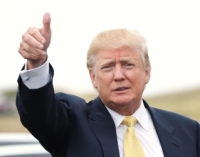
In August Trump accused President Barack Obama of being the founder of ISIS. These words drew criticism because they were, interpreted literally, untrue. Trump later said that if Obama had not mishandled foreign policy in the Middle East, then ISIS would not exist. So, for Trump, calling Obama the founder of ISIS is an incendiary way of saying the President, because he withdrew American forces and left a vacuum in the region, bears responsibility for the terrorist group's genesis.

In the second example, the problem seems to be that others might only hear what Trump said and would not infer any meaning beyond his words. In the first example, the problem seems to be that the language Trump used was too open to interpretation. What mattered was the words he did not use but others possibly could hear.

In one example, words matter because people take Trump literally. In the other, words matter because people might not take Trump literally enough.


Notes:
  • This post is sophistry.
  • The phrase "words matter" seems to be popping up a lot lately. Is it?
  • The bit about Hillary wanting to abolish the Second Amendment drew no criticism even though that statement, interpreted literally, is also untrue.
  • Explore how the phrase "words matter" relates to the concept of "political correctness." 
  • Explore the example of using the term "illegal" versus "undocumented immigrant" when discussing immigration.

Friday, September 23, 2016

about something completely different


The political divide in America is frustrating the public and hurting the already low approval ratings of most politicians. Instead of wading into the bog of partisanship, Donald Trump should have adopted some version of the following pitch:

Yes, by some measures we are a little better off now than we were eight years ago after the great recession hit. We are worse off by some measures, too. So, now, if you want the economy to keep moving incrementally, vote for Hillary Clinton. And if you want to remain a tentative actor on the world stage, vote for Hillary Clinton. But if you want change, if you want bold action on the economy and decisive leadership abroad, vote for Donald Trump. I am the bold candidate, and together we will make America great again.

Friday, September 16, 2016

about regret


In January 2016, US presidential candidate Donald Trump famously boasted that he could shoot someone in the middle of 5th Avenue (a major thoroughfare in Manhattan, New York City) and not lose any voters. Whatever one thinks of his phrasing, the realization he was expressing was powerful: he was a candidate who could take chances. His detractors should view Donald Trump as a missed opportunity rather than a political black swan.


Saturday, August 06, 2016

about the impossibility of drawing different conclusions


A conclusion many pundits draw and share is that the plurality of votes for Donald Trump--and the groundswell of support for Bernie Sanders--is a reaction from people who are sick of politics as usual. In other words, most people probably do not actually understand and support the views, ideology, and policy positions of these candidates; people just opt for these guys because they do not like anything else.


Friday, July 29, 2016

about kicking gruffly


Donald Trump's success in these months leading up to the 2016 US presidential election has inspired lots of journalistic hand-wringing. This hand-wringing has taken form in more than a few articles as an analysis of Trump supporters. The unstated premise of these articles is that supporting Trump is beyond the norm, a phenomenon in need of explanation. This leaves Trump support nearly in the category of a neuroses. George Saunders wrote one such piece for The New Yorker. This one features the following keen description of the confounding candidate:
His right shoulder thrusts out as he makes the pinched-finger mudra with downswinging arm. His trademark double-eye squint evokes that group of beanie-hatted street-tough Munchkin kids; you expect him to kick gruffly at an imaginary stone.

Notes:
David Axelrod has a theory about presidential elections. In his own words:
Open-seat presidential elections are shaped by perceptions of the style and personality of the outgoing incumbent. Voters rarely seek the replica of what they have. They almost always seek the remedy, the candidate who has the personal qualities the public finds lacking in the departing executive.
It's a good theory. But I would suggest that Trump is not the anti-Barrack Obama so much as he is the anti-John Kerry.


Saturday, July 23, 2016

about the illusion of conversation


Pundits often refer to a national conversation. However, the dominant voices in that conversation still come out of the mouths of elites who codify the perspectives that ultimately form the conventions of American thought. For the most part, the public is only listening in on conversations recorded and aired during news radio and television shows and podcasts. Aren't you sick of hearing yourself talk?

Note:
This may be a tiny note that is part of a larger story, which is still under investigation.


Friday, May 06, 2016

A leap of faith connects a Trump supporter with his vote


Donald Trump presents himself as not only a success, but a winner. And by all appearances, Trump is a winner--a winner whose toughness earns victory, a champion boardroom arm wrestler who leaves only fractured elbows on the negotiating table. Indeed, to win, someone must lose. The Trump campaign has left behind a trail of losers. As a candidate, he has been vicious: willing to say anything to keep or grow his support base while taking down his competitors.

Trump supporters like what he says about building the border wall, about Muslims, about renegotiating trade deals to bring back jobs and keep companies in America. They support Trump because of his positions; but they vote for him because they believe he really is the winner who can achieve these policy goals.

There is tension within the concept of a winner running for public office. A winner's success comes at the expense of others, not in service to them. But we are to choose Trump because he wants to serve, not because he wants to win.


Saturday, January 30, 2016

something about "What It Takes: The Way to the White House," by Richard Ben Cramer


What It Takes is a fascinating look into an American presidential campaign season.

Author Richard Ben Cramer was a journalist at The Philadelphia Inquirer, The Baltimore Sun, Esquire, and Rolling Stone. But What It Takes: The Way to the White House, the document of the 1988 presidential election, is his nadir. Here, we learn how George Bush collects contacts; how Dukakis masters state politics but flies too close to the sun; how Bob Dole tirelessly meets and greets everyone; how Joe Biden morphs into a salesman; how Gary Hart studies, and how his studiousness lifts his political career. Cramer also covers the decline of these political animals--most dramatically, the psychology and the mind-spinning that leads to Biden's plagiarism and Hart's infidelity.
 

Cramer delivers breathless, compelling coverage as he follows the action and tries to get inside the head of each candidate.

My favorite part comes early, when Cramer peers a little deeper into the Bush family operation. When Barbara Bush learns Oliver North, stained by the Iran-Contra scandal, will attend the Christmas party, she cringes. But, to George Bush's mind,

Ollie was a guy he knew, he'd worked with...The point was, that was all politics. Bush couldn't let it change the way he was. They were friends. Shouldn't be shunned...

The funny thing was, everybody heard Bush use that word, "friend," a hundred times a day, but they never could see what it meant to him.

By what extravagance of need and will did a man try to make thirty thousand friends?

By what steely discipline did he strive to keep them--with notes, cards, letters, gifts, invitations, visits, calls, and silent kindnesses, hundreds every week, every one demanding some measure of his energy and attention?

And by what catholicity (or absence) of taste could he think well of every one of them?

He could not.

But they would never know that.
The funny thing was, the friendship depended not on what Bush thought of them, but what they thought of him, or what he wanted them to think. If they thought well of him, then, they were friends.
So what does it take? Whatever it takes.


Note:
  • I could only read a bite at a time, and since the book exceeds 1,000 pages, this read took a while.
 

Thursday, November 08, 2012

This you already know


Pre-election coverage foregrounds and makes estimations. The pundit sits in the middle of a mass of cross-talk, intercepting, expounding and proliferating meanings within the discourse that flows between and among candidates and the audience. In this analysis, the audience is parsed, filtered, separated out into segments that each have their own traits and values that call for individualized treatment from the candidates.

Then, after the big night, post-election coverage sets about interpreting new, limited sets of meanings, and projects them into the near and distant future. This analysis diagnoses the population using the tools of cohesion and normalization. The segments of people are recognized as key segments, but their numbers add up to a whole.

All this coverage depicts a scene in which, prior to election day, the candidates' message descends and swirls down within the electorate. Post-election, the message is sent from below, up to the risers on which sit the podiums and punditry chairs.

Who is the pundit? Who is qualified to be a pundit? Generally, a pundit must be someone who either (1) practices journalism for a publication of certain status, (2) someone who previously held a high-ish public office, or (3) someone who attained some celebrity while incorporated in a political campaign or party. As currently used, the word "pundit" appears to be a term of soft derision that depersonalizes the speaker, and casts them as coincidentally filling a seat that could be filled by so many. To call someone a pundit is to say, "Take their words with a grain of salt". In effect, this can serve to disqualify them while situating them within a dysfunctional machine.


But we have different kinds of pundits who serve different functions. Some speak for voters and are allegiant to one side. Others attempt to refocus, summarize, and speak of political events, trends, and developments when prompted. And now there is an elite.

First in 2008 but more so in 2012, Nate Silver of 538 emerged from the pundit crowd. The left has endowed him with a version of the Author function. His predictions (which cannot account for the unpredictable) draw credibility both from his name and from the nameless science purportedly behind him. The author name means nothing on a scientific paper; but Silver's work has his name, and seems to live on the weight of his name and on the namelessness of his numbers.

Notes:


In the middle of his victory speech, Obama, in his general,
high rhetorical way, espoused a a key principal and belief that undergirds whatever his political philosophy is:
America’s never been about what can be done for us. It’s about what can be done by us together through the hard and frustrating, but necessary work of self-government. That’s the principle we were founded on.

This country has more wealth than any nation, but that’s not what makes us rich. We have the most powerful military in history, but that’s not what makes us strong. Our universities, our culture are all the envy of the world, but that’s not what keeps the world coming to our shores.

What makes America exceptional are the bonds that hold together the most diverse nation on earth. The belief that our destiny is shared; that this country only works when we accept certain obligations to one another and to future generations. The freedom which so many Americans have fought for and died for come with responsibilities as well as rights. And among those are love and charity and duty and patriotism. That’s what makes America great.


Sunday, October 28, 2012

Teaching the controversy


We have two theories being proposed to addressed unemployment.

The first is Job Creationism. This theory holds that a motivated elite creates jobs: low taxes motivate the elite to start businesses that will need employees. Jobs come from above.

The second is Job Evolution. This theory says that when conditions are right and the raw materials are there, jobs come: invest in education, infrastructure, and environment-friendly technologies, and jobs will emerge and evolve from within.

Friday, October 19, 2012

Inconsequential


People who follow politics and political coverage often criticize the media for not explicating policy proposals and instead focusing on polls and swing states. Such critics see the media as too focused on distractions. Now, following Tuesday's Presidential debate, an online public hears Romney's "binders full of women" comment and amplifies it, silencing other discussions for a day or so.

Maybe the "binders full of women" is sort of amusing, and within that amusement is the sense that some things are odd about Romney. Some things are, but nothing evidenced in his comment is revelatory unless you've never thought about who Mitt Romney is beyond his brand, "successful businessman".

The larger discourse on women voters and women's issues seems far more revealing about what we're like, and how we perceive ourselves and those around us. Women are sort of treated as a political g-spot in need of some serious finessing. This gender-oriented political discourse seems to say that a candidate needs to understand and address things women "care about" without appearing to stereotype women or lock them in the home. This CNN article on Romney's women-talk during the debate cites a political science professor voicing such a concern:

"His discussion of work-life balance appeared condescending to some because of the reference to women cooking dinner."
So the candidate must embrace gender difference but frame his embrace in terms of equality. Maybe most or all political discourse aimed at a specific segment of the voting public includes some version of outlining that segment, then erasing those lines, of conjuring their image, then making them disappear, but women are a good, current example of this, I think. The finessing and specific, pointed targeting of women leaves an impression that women are both foreign and essential to political discourse. A political writer in The New Yorker touched on all this when addressing political ads aimed at "women voters":
... that ad, like every ad targeted to women voters for the last half century, including those made by both campaigns this election season, assumes that women are wholly different species of citizen than men. The political imagination of American women, at least according to American political advertisers, begins with our cervixes and ends at the kitchen door.

Notes:
  • The "binders full of women" meme nearly obscured the best bit of political gamesmanship by anybody of either party in years: Obama's "Proceed, Governor".
  • Embracing gender difference while seeking equality is sort of similar to how feminist theory works in academia, I'd say, from my very limited experience with it.


Thursday, October 11, 2012

A working class hero is something to be


The Onion has a lot of fun portraying Joe Biden as a free spirit whose working class roots and uncensored attitude clash comically with peoples' concept of groomed, self-preserving politicians. The political right casts him as an idiot, and mainstream media coverage comments on his penchant for "gaffes", but The Onion writers heroize Biden through their satire.

The Onion writers (and, by extension, members of their audience) who love Biden value in him a rebellious streak
, his individuality, and his "authenticity" or sincerity, all of which is located in his being uncensored (Biden says what Biden thinks when Biden wants). The justification behind this reverence, however, lies in his being powerful and famous. Ordinarily, The Onion would mock disdainfully a blue collar, working class white who might wash his Trans Am shirtless in the driveway or resort to hitchhiking for transportation. Such a character would be portrayed as too dumb to know which party to vote for or what music to listen to or shows to watch on TV. His wife might even enter their white trash daughter in a child beauty pageant.

Notes:

  • Biden, of course, is more competent and astute than one might think after reading about him, and The Onion writers and their audience knows this, which is why the satire works in two ways: it taps into (1) our concept of politicians and (2) our experience with press coverage of Biden.

Saturday, September 08, 2012

Angry Chair


Having watched both the (American) Democratic and Republican conventions a little each night, I found Clint Eastwood's improvised moment with the empty chair during the Republican convention to be the most compelling and meaningful part of the whole charade. But the pundits and critics, who claim to be ready for something authentic and substantive, finally got something that was just that, and they immediately rejected it.

Eastwood said he had cried when Obama was elected (presumably because it was such a powerful moment for a nation with a long history of racism). I take him at his word, and believe he was moved like so many others that night. So what was this moment with the chair all about?

Here's what: The chair was empty, signifying an absence, and speaking silence. This prompts the audience to wonder, Where is the Barack Obama I voted for? Because I don't see him anywhere.

Eastwood begins a sort of pitiful dialog with the missing Obama. He is attempting to recreate a ghost, the faded remains of the projection of his own hopes and dreams from four years ago: "So, Mr. President, how do you handle promises that you have made when you were running for election, and how do you handle them? I mean, what do you say to people? Do you just, you know--I know people were wondering. You don't handle that. OK."

Soon the projection lashes out, judging by Eastwood's reactions: "But, I thought maybe as an excuse--what do you mean shut up?" Here, the projection has taken on a life of its own, and is no longer merely a canvas. The candidate Obama from 2008 is no longer a willing, cooperative partner in this game of imagination. The exercise dissolves, leading Eastwood to his moment of resignation: "And I think it's that time. And I think if you just step aside and Mr. Romney can kind of take over."

Eastwood is hardly a champion for Romney, though: "A stellar businessman. Quote, unquote, a stellar businessman." His talking points covered, sarcastically. Finally, in a turn away from the chair to the listening audience, Eastwood delivers his real message, one of disappointment and disillusion with the whole process: "And, so, they (the candidates) are just going to come around and beg for votes every few years. It is the same old deal." And then, "We don't have to be--what I'm saying, we do not have to be metal masochists and vote for somebody that we don't really even want in office just because they seem to be nice guys or maybe not so nice guys ... "

It's a shame the whole exchange was written off as crazy talk by a misguided old man. Eastwood attempted to inject a moment of truth and sincerity into an obscene display of delusion and dishonesty, but instead he was rejected and held up as proof that the rest of the display is coherent and the system works.

Notes:
  • Eastwood badly misread or misunderstood his audience, who they were, and where they were coming from. He may have been misguided in several other ways, too, arguably, but his main point stands.
  • His means of communicating was a little unorthodox, so for this reason, too, he was rejected.


Friday, June 01, 2012

About the jobs report


For a couple years now, every month has opened news-wise with reaction to the so-called "jobs report" or "jobs numbers", which indicate whether employment has eeked up, down, or stayed the same. This month's coverage includes the very predictable article "Bleak jobs report spells trouble for Obama re-election" via Reuters. Sure, most of the jobs report-related news refers to its impact on the election (as opposed to its impact on common welfare or anything else). No surprise there--we're going for the story.

More interestingly, the jobs report is a ritual now. For the press and its readers, the numbers stir the election season waters. But that is what you read on the surface. Systematically speaking, the the report is more importantly a function of security. It shows the Labor Department keeping tabs on employment--the extent to which the time of the populace is productively occupied with wealth generation; and through the report we live a shared experience, relating to each other on economic terms, as subjects of the economy, as economic constructs built into the economy--that complicated system of freedom and security-minded, neoliberal artificial market constructions.

Fluctuations are almost reassuring in this sense. The reporter asks, What will the Fed do? The economist answers, What can the Fed do?

Nobody does anything without first consulting the overall trend in the numbers. Has it been going down for six months? or up for six months? This discussion--and here the other mechanisms of security kick in--feeds an even larger discourse on the economy, composes and comprises its truths, truths which are repeated, amplified, and re-enforced via media in the minds of the economic subject. Too much bad news and the economic subject becomes electoral subject and modifies the leadership; and/or leadership modifies rates or removes barriers to commerce or flushes sectors with cash to stimulate commerce; tariffs are raised or lowered; immigration is encouraged or denied and on and on. Fluctuation and its many counter and co-fluctuations are part of a healthy, secured system. After all, there will always be something. What matters to the economic technocrat is not the something but how the various mechanisms of security relate within the "reality" of an economy prone to fluctuate.

(The real mother this time though is Europe, so I hear. And therein lies the way out.)