Showing posts with label policy. Show all posts

Friday, September 23, 2016

about something completely different


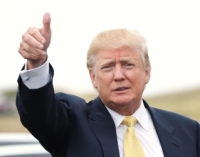
The political divide in America is frustrating the public and hurting the already low approval ratings of most politicians. Instead of wading into the bog of partisanship, Donald Trump should have adopted some version of the following pitch:

Yes, by some measures we are a little better off now than we were eight years ago after the great recession hit. We are worse off by some measures, too. So, now, if you want the economy to keep moving incrementally, vote for Hillary Clinton. And if you want to remain a tentative actor on the world stage, vote for Hillary Clinton. But if you want change, if you want bold action on the economy and decisive leadership abroad, vote for Donald Trump. I am the bold candidate, and together we will make America great again.

Thursday, February 14, 2013

about the State of the Union address, 12 February 2013


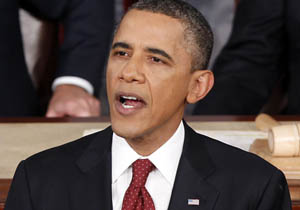
Fervent Obama critics cast him as, among other things, un-American for transforming the country into something it has never been and was never meant to be. If he was that, he would be a revolutionary. Of all the policies and ideas he has articulated, somehow his State of the Union invocation of citizenship sounded unprecedented, like little else I've heard from Washington for at least the last 25 years. The concept of citizenship he speaks of goes beyond one's residence in a country; it is the duties and responsibilities that come with being a member of a community.

No, in these addresses we are usually referred to as taxpayers, consumers, or, simply (and vaguely) Americans.

Obama called out our citizenship as an argument for the big Federal socio-economic policies of a social democracy. Here is the key relevant excerpt from his State of the Union address, delivered 12 February 2013:
We may do different jobs, and wear different uniforms, and hold different views than the person beside us. But as Americans, we all share the same proud title:
We are citizens. It’s a word that doesn’t just describe our nationality or legal status. It describes the way we’re made. It describes what we believe. It captures the enduring idea that this country only works when we accept certain obligations to one another and to future generations; that our rights are wrapped up in the rights of others; and that well into our third century as a nation, it remains the task of us all, as citizens of these United States, to be the authors of the next great chapter in our American story.


Notes:
The above quote came at the conclusion of Obama's argument for more restrictive gun control laws, and at the conclusion to his entire address. Many pundits complimented the gun control-related content of his speech--here it is:
... Overwhelming majorities of Americans – Americans who believe in the 2nd Amendment – have come together around commonsense reform – like background checks that will make it harder for criminals to get their hands on a gun. Senators of both parties are working together on tough new laws to prevent anyone from buying guns for resale to criminals. Police chiefs are asking our help to get weapons of war and massive ammunition magazines off our streets, because they are tired of being outgunned.

Each of these proposals deserves a vote in Congress. If you want to vote no, that’s your choice. But these proposals deserve a vote ...

One of those we lost was a young girl named Hadiya Pendleton. She was 15 years old. She loved Fig Newtons and lip gloss ...

Hadiya’s parents, Nate and Cleo, are in this chamber tonight, along with more than two dozen Americans whose lives have been torn apart by gun violence. They deserve a vote.

Gabby Giffords deserves a vote.

The families of Newtown deserve a vote.

The families of Aurora deserve a vote.

The families of Oak Creek, and Tucson, and Blacksburg, and the countless other communities ripped open by gun violence – they deserve a simple vote.


Saturday, December 22, 2012

Obama's speech at the service in Newtown


The President's December 16, 2012, address in Newtown is one of the more compelling, well-written editions of recent Obama speeches, which is pretty weird considering it argues for a policy he doesn't totally agree with, on an issue he doesn't care much about.

First Obama obligatorily memorializes the occasion by redescribing the tragic events and the redeeming moments within them. Then he says,
We can’t tolerate this anymore. These tragedies must end. And to end them, we must change.
This change he refers to is a fundamental one concerning our culture and its relation to guns, individualism, and violence--something not easily changed. So how does a President / lawyer / legislator start us on the road towards such a change? Through legislation:
We will be told that the causes of such violence are complex, and that is true. No single law, no set of laws can eliminate evil from the world or prevent every senseless act of violence in our society, but that can’t be an excuse for inaction. Surely we can do better than this.
The kind of legislation he has in mind, gun control, was not previously on his agenda, so to him it isn't the most appealing option, and he seems to doubt that it will even be all that effective; but he sees it as a means, the most obvious place to begin effecting a cultural change immediately:
If there’s even one step we can take to save another child or another parent or another town from the grief that’s visited Tucson and Aurora and Oak Creek and Newtown and communities from Columbine to Blacksburg before that, then surely we have an obligation to try.
... We know that, no matter how good our intentions, we’ll all stumble sometimes in some way.
We’ll make mistakes, we’ll experience hardships and even when we’re trying to do the right thing, we know that much of our time will be spent groping through the darkness, so often unable to discern God’s heavenly plans.
There you have it: although it may not work as intended, new gun control legislation is something he thinks he can start on now, but he hopes other, better options will be revealed in the days ahead. Of course, though he's not the first, last, or only person to ever float such a message, Obama's talk of cultural change fuels his many detractors, those Conservatives whose ideological allegiance grows with their sense that policies traditionally deemed Liberal are now destroying their way of life.


Notes:
  • It does seem strange that he would be arguing policy at a memorial service.
  • My favorite part of this is far and away the following:
You know, someone once described the joy and anxiety of parenthood as the equivalent of having your heart outside of your body all the time, walking around.

With their very first cry, this most precious, vital part of ourselves, our child, is suddenly exposed to the world, to possible mishap or malice, and every parent knows there’s nothing we will not do to shield our children from harm. And yet we also know that with that child’s very first step and each step after that, they are separating from us, that we won’t -- that we can’t always be there for them.

They will suffer sickness and setbacks and broken hearts and disappointments, and we learn that our most important job is to give them what they need to become self-reliant and capable and resilient, ready to face the world without fear.

Thursday, February 09, 2012

A thing on "The Spirit of Terrorism", essays by Jean Baudrillard

Was disappointed with these essays. Baudrillard alternates between skin-deep pontifications on the symbolic meaning of terror and basic leftist moralizing against the methods and consequences of US hegemony. Too bad: despite the volumes of writing on the attacks, I expect there's a real dearth of good literature on the subject.

Baudrillard doesn't argue points so much as reflect on them, so his writing is loosely structured. The edition I read was translated by Chris Turner.

Wednesday, January 25, 2012

President Obama's State of the Union address, January 24, 2012

President Obama put a lot on our plate with this SOTU speech. The highlights were (1) the forceful, almost impassioned delivery early in the speech, during his invocation of the optimism and teamwork of America's post-war years, and (2) his pointed remarks at his rivals, including the following:
  • "But I intend to fight obstruction with action, and I will oppose any effort to return to the very same policies that brought on this economic crisis in the first place."
  • "Now, you can call this class warfare all you want. But asking a billionaire to pay at least as much as his secretary in taxes? Most Americans would call that common sense."
  • "The greatest blow to confidence in our economy last year didn't come from events beyond our control. It came from a debate in Washington over whether the United States would pay its bills or not. Who benefited from that fiasco?"
  • "The differences in this chamber may be too deep right now to pass a comprehensive plan to fight climate change. But there's no reason why Congress shouldn't at least set a clean energy standard that creates a market for innovation. So far, you haven't acted. Well tonight, I will."
The themes were Destiny and Teamwork and Fairness, all of which he anchored in the nation's past accomplishments. Since becoming President, Obama has summoned the past time and again in his speeches, which serves multiple ends: (1) this situates himself within American history, minimizing the foreignness and otherness attributed to him by his detractors; (2) the past offers comfort, the future is scary and unknown; (3) the past is a canvas on which he can depict values he wants to promote and call on; (4) the past also inspires confidence in our ability to achieve (largely through living and acting on the aforementioned values). In 2008, of course, he encouraged us to look ahead and, using the language of transformation to make himself a change agent in our eyes. No more of that.

Anyway, the play-by-play:
  1. President Obama opened by acknowledging military troops and the end of full engagement in Iraq; this also drew attention to his foreign policy success. Then, the first major theme: the military is exemplary, he said, because of their teamwork. He then invoked the optimism of America's post-war years, framing that generation's successes as a product of teamwork. Here he also introduced the concept of fairness, coupled by a reference to the income gap.
  2. But he left this theme for a while as he hit a litany of program initiatives: manufacturing, high tech, job training, education, higher education tuition, immigration, gender equality, and small, new businesses. This allowed him to say at least one thing that resonates with almost every listener in the audience. Here he also appeared ambitious, confident in himself and in the country's ability to meet any challenge. Optimism is key. However, he also risked losing the momentum he built early, leaving his audience restless and overwhelmed--a feeling that may ultimately have left them underwhelmed.
  3. Next, his major policy points: on energy, he touted an "all of the above" strategy; for infrastructure, he recalled America's greatest engineering achievements (Hoover dam), using them as inspiration for the troubled construction industry; he endorsed a mortgage relief plan and stronger financial regulations, mentioning the consumer watchdog he recently appointed; then on to tax policy where the hook was his "Buffet Rule", essentially providing some tax relief to lower income brackets and raising taxes for the very wealthy.
  4. Although by now he'd probably already cowed, wowed, or disgusted you, depending on your POV, he here switched gears by almost launching into his Republican rivals. But before it registered, before he risked attracting the pundits' criticism for being overly-partisan, he generalized the problem of government intransigence, offering support for an insider trading ban tailored to members of Congress. He then chastised Congress for doing nothing before, almost in the same breath, appealing to Conservatives by touting his policy initiatives that encourage "competition", less regulation, and streamlined government.
  5. Finally, he returned to foreign policy, fashioning his conclusion out of the military strike on bin Laden, the bi-partisan Executive team that ordered it, and the American flag given to him by the soldiers who carried out the mission.
Teamwork and cooperation have remained themes in his speeches as stratagems for contrasting himself with the partisanship of his rivals. Selling these themes has not gotten easier, however; Americans are used to self-identifying as independent, as individuals.

Tuesday, January 17, 2012

Blackout

Communities plan to protest passage of PIPA and SOPA by staging web site blackouts. Wikipedia and Reddit, for example. Presumably a blackout shows the result of the bills' passage, which could force such sites offline. The black screen represents an electronic abyss, which metaphorically is apt as a symbol of what the internet post-PIPA/SOPA might be.

But this method, instituting a blackout, feels like negative reinforcement: If you don't protest, this will happen! A more productive tactic might have been, for example, replacing the site's usual content with a simple search that allows a user to quickly find his representative's contact info so that he can call or email his opposition to the person most capable of stopping passage.

Note:
  • Wikipedia's message to its users states "But although Wikipedia’s articles are neutral, its existence is not."
  • Links: Press release and message to users

Thursday, December 29, 2011

The current fascination: Cult of Personality

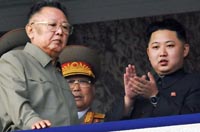
I read articles like today's Time magazine piece "NKorea Calls Kim Jong Un 'Supreme Leader'" and can't help but think all the analysts, pundits, and other talking heads delight in using the word "Leader" in this context. One the one hand, I guess it respects the practice of the North Koreans, but, on the other, it seems only to emphasize their otherness.

Tuesday, December 20, 2011

On the helpfulness of health news

The New York Times article "Journals Asked To Cut Details Of Flu Studies" reports that
a government advisory board is asking scientific journals not to publish details of certain biomedical experiments, for fear that the information could be used by terrorists to create deadly viruses and touch off epidemics.
At first I read this as the story of an unserious government response to a serious problem: the threat of bioterrorism. But more likely it's just bad reporting--unhelpful and uninformative at best, borderline alarmist at worst. The reason is that by emphasizing this one advisory board request, the reporting (similarly appearing in other publications) de-emphasizes other government-coordinated efforts at preventing and monitoring bioterror threats. As a result, the reader comes away thinking that the editors of a few scientific journals play a larger role in the drama of national security than they actually do, and that bioterror is a more imminent threat than it actually is.

Tuesday, March 29, 2011

The official story

I watched President Obama's speech on Libya last night. On ABC, Stephanopoulos et al. claimed the major theme was success. I thought it was that due process had been followed, and I felt this message was aimed at the critics who charged that he'd acted without the consent of Congress. In his response he announced that " ... nine days ago, after consulting the bipartisan leadership of Congress, I authorized military action ... ". This was where the speech got rolling.

Now, Yes, his response was aimed at critics, but not only the Conservative and Progressive leadership who pitch sound bytes all week; he was also addressing a voiceless group with no articulated criticism to offer: The American public confronted with foreign events that are too ambiguous and dynamic to reach conclusions about.

Of course, most Presidential speeches of this sort address the public, and the public is typically composed of critics, both approving and disapproving. But in this case the public's role as critic is highly unusual. We ordinarily have our minds made up about things; not this time.

I think that, as a collective, people are not sure who our allies are right now, not sure democracy is for everyone, not sure what our country's role should be, given our problems at home and ongoing engagements abroad. Mainstream media has done a fine job portraying dissidents in Libya as victims, and the violence as one-sided. But the air of civil war hangs over this story, and the ink from Sunday's paper hasn't covered that smell completely. Large swaths of the public feel ambivalent about populations in other countries, especially the Middle East and Africa. So, last night, for the first time in a long time, the American President faced a population of critics with more questions than preformed opinions. His strategy?: Frame events within our claimed value system, and tell us how the winners will write history.
Sunday, March 06, 2011

This American Life

This week I was surprised to read Senator Jim DeMint's op-ed about defunding NPR. I like some of the podcasts and shows from NPR and PRI but their news I can barely stomach. Anyhow, DeMint sums up his argument against continued funding:


Public broadcasting can pay its presidents half-million and million dollar salaries. Its children's programs are making hundreds of millions in sales. Liberal financiers are willing to write million-dollar checks to help these organizations. There's no reason taxpayers need to subsidize them anymore.

Fortunately or unfortunately taxpayers subsidize many other fairly successful industries, which probably includes tobacco grown in DeMint's South Carolina. Moreover, his argument implies that the wealthy neither need nor deserve assistance--this is an argument DeMint probably does not want to extend to other areas of policy, such as taxes.


DeMint's Op-ed: http://online.wsj.com/article/SB10001424052748703559604576176663789314074.html