
Showing posts with label party. Show all posts
Showing posts with label party. Show all posts
Saturday, February 03, 2018


Friday, February 17, 2017
about the politcal landscape after Trump's first month
Instead of building their local networks and promoting policy positions to win voters back, Democrats are banking on a Trump administration implosion. Presumption and inference will not do it, though. A Bangladeshi factory is standing by, ready for orders to produce t-shirts emblazoned with "Four More Years."
Friday, September 23, 2016
about something completely different
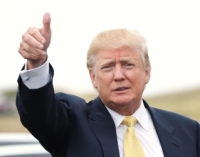
The political divide in America is frustrating the public and hurting the already low approval ratings of most politicians. Instead of wading into the bog of partisanship, Donald Trump should have adopted some version of the following pitch:
Yes, by some measures we are a little better off now than we were eight years ago after the great recession hit. We are worse off by some measures, too. So, now, if you want the economy to keep moving incrementally, vote for Hillary Clinton. And if you want to remain a tentative actor on the world stage, vote for Hillary Clinton. But if you want change, if you want bold action on the economy and decisive leadership abroad, vote for Donald Trump. I am the bold candidate, and together we will make America great again.
Friday, September 16, 2016
about regret

In January 2016, US presidential candidate Donald Trump famously boasted that he could shoot someone in the middle of 5th Avenue (a major thoroughfare in Manhattan, New York City) and not lose any voters. Whatever one thinks of his phrasing, the realization he was expressing was powerful: he was a candidate who could take chances. His detractors should view Donald Trump as a missed opportunity rather than a political black swan.
Sunday, October 16, 2011
Current narrative on Occupy Wallstreet

Occupy Wall Street's thematic conceptual equivalent to "smaller government" and "less taxes" is probably "inequality" because this key word holds much meaning for the protestors: Inequality of wealth distribution (the poor get poorer and the rich get mega-rich), inequality of bailout-giving (big banks get 'em, homeowners and college loanees don't), inequality of criminal prosecutions (white collar crimes are often ignored, crimes of the poor cause prisons to spill over), and so on.
If the narrative is true that Occupy Wall Street lacks a cohesive, meaningful message, then it is equally true of the Tea Party. In fact, as the Tea Party grew in number, its aims became even more diverse, including Obama citizenship-deniers, health care reform opponents, social conservatives, fiscal conservatives, veterans, seniors, libertarians, the rich and the poor. Yet they were celebrated in the media for allegedly lacking leadership and being a true-blue grass roots movement. The same benefit of the doubt is denied Occupy Wall Street.
Subscribe to:
Posts (Atom)