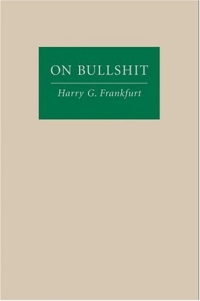
 Frankfurt begins this meditation on bullshit by examining the definition offered in Max Black's 1985 essay, "The Prevalence of Humbug": bullshit is the "deceptive misrepresentation, short of lying, especially by pretentious word or deed, of somebody's own thoughts, feelings, or attitudes." Frankfurt gets his footing here, but says this definition fails to adequately capture "the essential character of bullshit." Frankfurt next mines a few bullshit-related anecdotes and quotes to uncover his theoretical understanding of bullshit. The somewhat oversimplified synopsis of that understanding is that what is essential about bullshit is that (1) the bullshitter cares not for what is true or false, like the liar and the honest man (in fact, the bullshitter could be saying things that are more or less true and still be bullshitting) and (2) the bullshitter says whatever suits him at the moment in an attempt to deceive his audience about what he is up to and who he is.
The prose in "On Bullshit" is crisp and graciously plain; Frankfurt's essay, an exploratory philosophical analysis, manages to avoid philosophy jargon and name dropping.
Note: This is good:
One who is concerned to report or to conceal the facts assumes that there are indeed facts that are in some way both determinate and knowable. His interest in telling the truth or in lying presupposes that there is a difference between getting things wrong and getting them right, and that it is at least occasionally possible to tell the difference. Someone who ceases to believe in the possibility of identifying certain statements as true and others as false can have only two alternatives. The first is to desist both from efforts to tell the truth and from efforts to deceive. This would mean refraining from making any assertion whatever about the facts. The second alternative is to continue making assertions that purport to describe the way things are but that cannot be anything except bullshit.
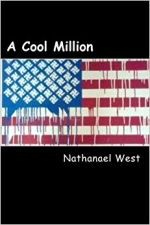 With A Cool Million, Nathanael West mocks and perverts the Horatio Alger myth. The novella unravels the sad story of Lemuel Pitkin, a poor 17-year-old kid from rural New England. When creditors threaten to foreclose on his family home, young Pitkin seeks the advice of the local banker, Shagpoke Whipple, an opportunistic former president of the United States. At Whipple's urging, Pitkin heads out into the world to make his way. But the world thoroughly abuses and victimizes Pitkin: he is robbed, arrested, and beaten; he loses limbs and teeth; even his naive sweetheart is raped and prostituted. Pitkin learns nothing for his trouble and soon dies a humiliated failure. As if that was not enough, Pitkin's death is exploited by Shagpoke Whipple in his political comeback as head of the National Revolutionary Party.
Whipple, embarking on his second act, attributes his initial downfall to conspiring outsiders:
With A Cool Million, Nathanael West mocks and perverts the Horatio Alger myth. The novella unravels the sad story of Lemuel Pitkin, a poor 17-year-old kid from rural New England. When creditors threaten to foreclose on his family home, young Pitkin seeks the advice of the local banker, Shagpoke Whipple, an opportunistic former president of the United States. At Whipple's urging, Pitkin heads out into the world to make his way. But the world thoroughly abuses and victimizes Pitkin: he is robbed, arrested, and beaten; he loses limbs and teeth; even his naive sweetheart is raped and prostituted. Pitkin learns nothing for his trouble and soon dies a humiliated failure. As if that was not enough, Pitkin's death is exploited by Shagpoke Whipple in his political comeback as head of the National Revolutionary Party.
Whipple, embarking on his second act, attributes his initial downfall to conspiring outsiders:
I blame Wall Street and the Jewish international bankers. They loaded me up with a lot of European and South American bonds, then they forced me to the wall. It was Wall Street working hand in hand with the Communists that caused my downfall. The bankers broke me, and the Communists circulated lying rumors about my bank in Doc Slack's barber shop. I was the victim of an un-American conspiracy.
At his nationalist rallies, Whipple evokes Pitkin's story to stoke popular fear and animosity toward immigrants, intellectuals, international capitalists, and political opponents.
With this conclusion, West suggests that belief in the Horatio Alger myth inevitably leads to a second myth that explains the failure of the first. The second myth, the Lemuel Pitkin myth, reinforces in the minds of the struggling, embittered white population the idea that they have been cheated out of the American dream by un-American and international forces. The two myths inform a reactionary movement of hostility, fear, and dangerous nationalism.
Note: Can a perception of the past serve as a vision for the future?
Megyn Kelly and NBC faced a lot of criticism last week ahead of their decision to air a piece on controversial conspiracist Alex Jones during Kelly's new Sunday night show. Why give Jones a platform for his odious views? The guy claims the Sandy Hook Elementary School shooting was staged or faked to undermine private gun ownership rights.
But after the interview aired, media critics grudgingly formed a consensus that the segment was a success. The Washington Post piece "Facing Alex Jones, NBC's Megyn Kelly manages to avoid a worst-case outcome" is typical:
Rather than let Jones run away with it, "Sunday Night" let
him show himself to be an impertinent, ill-informed, foulmouthed,
possibly deranged egomaniac with a forehead constantly beaded in sweat.
It showed viewers how Infowars grew and sustains itself by peddling
right-wing merchandise and Jones-endorsed dietary supplements. It looked
briefly back at Jones's early days as just another cable-access kook in
Austin, and revealed the flimsy, almost nonexistent definition of "research" (articles he and his staff find online) that sets the Infowars agenda.
... Good night and good
luck, in a "Sunday Night With Megyn Kelly" kind of world, has been
replaced with the cold, hard stare. Which, as it happens, remains
Kelly's surest and perhaps only journalistic asset.
This piece withholds journalistic credit from Kelly, arguing that Alex Jones revealed himself to be a sweaty, crackpot buffoon. The Post just gives Kelly credit for her icy stare. She deserves more. Jones counterattacked with accusations of media liberal bias. But Kelly refused to engage on Jones's terms. A lot of other journalists would have been baited. By remaining on the offensive, Kelly allowed her righteous narrative to prevail. And Jones, as the Post points out, looked crazy--with a lot of help from Kelly.
Instead of building their local networks and promoting policy positions to win voters back, Democrats are banking on a Trump administration implosion. Presumption and inference will not do it, though. A Bangladeshi factory is standing by, ready for orders to produce t-shirts emblazoned with "Four More Years."
Under the guise of a supercoalition, the US can outsource to Russia some of the intervention grunt work in the Middle East; this would permit more US time and resource investment in Asia. The oil-rich lands of Russia and the Middle East represent the past; Asia will be a larger part of the future.
Note: Not the actual reasoning behind President Donald Trump's pick for Secretary of State, Rex Tillerson.
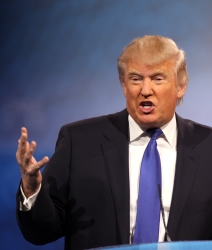 In August 2016, presidential candidate Donald Trump said the following at a campaign rally:
Hillary wants to essentially abolish the Second Amendment. If she gets to pick her judges, there's nothing you can do, folks. Although the Second Amendment people--maybe there is. I don't know.
Many people accused Trump of implying that "Second Amendment people" could react with violence if Hillary Clinton, the Democratic Party candidate, won the election. Clinton acknowledged and condemned the allegedly veiled threat, using the phrase "words matter." (Trump, of course, denied he was making any allusion to violence; he claimed he was referring to the National Rifle Association's considerable lobbying power.)
In August Trump accused President Barack Obama of being the founder of ISIS. These words drew criticism because they were, interpreted literally, untrue. Trump later said that if Obama had not mishandled foreign policy in the Middle East, then ISIS would not exist. So, for Trump, calling Obama the founder of ISIS is an incendiary way of saying the President, because he withdrew American forces and left a vacuum in the region, bears responsibility for the terrorist group's genesis.
In the second example, the problem seems to be that others might only hear what Trump said and would not infer any meaning beyond his words. In the first example, the problem seems to be that the language Trump used was too open to interpretation. What mattered was the words he did not use but others possibly could hear.
In one example, words matter because people take Trump literally. In the other, words matter because people might not take Trump literally enough.
Notes:
-
This post is sophistry.
- The phrase "words matter" seems to be popping up a lot lately. Is it?
- The bit about Hillary wanting to abolish the Second Amendment drew no criticism even though that statement, interpreted literally, is also untrue.
- Explore how the phrase "words matter" relates to the concept of "political correctness."
- Explore the example of using the term "illegal" versus "undocumented immigrant" when discussing immigration.
The political divide in America is frustrating the public and hurting the already low approval ratings of most politicians. Instead of wading into the bog of partisanship, Donald Trump should have adopted some version of the following pitch:
Yes, by some measures we are a little better off now than we were eight years ago after the great recession hit. We are worse off by some measures, too. So, now, if you want the economy to keep moving incrementally, vote for Hillary Clinton. And if you want to remain a tentative actor on the world stage, vote for Hillary Clinton. But if you want change, if you want bold action on the economy and decisive leadership abroad, vote for Donald Trump. I am the bold candidate, and together we will make America great again.
A conclusion many pundits draw and share is that the plurality of votes for Donald Trump--and the groundswell of support for Bernie Sanders--is a reaction from people who are sick of politics as usual. In other words, most people probably do not actually understand and support the views, ideology, and policy positions of these candidates; people just opt for these guys because they do not like anything else.
Donald Trump's success in these months leading up to the 2016 US presidential election has inspired lots of journalistic hand-wringing. This hand-wringing has taken form in more than a few articles as an analysis of Trump supporters. The unstated premise of these articles is that supporting Trump is beyond the norm, a phenomenon in need of explanation. This leaves Trump support nearly in the category of a neuroses. George Saunders wrote one such piece for The New Yorker. This one features the following keen description of the confounding candidate:
His right shoulder thrusts out as he makes the pinched-finger mudra with downswinging arm. His trademark double-eye squint evokes that group of beanie-hatted street-tough Munchkin kids; you expect him to kick gruffly at an imaginary stone.
Notes:
David Axelrod has a theory about presidential elections. In his own words:
Open-seat presidential elections are shaped by perceptions of the style
and personality of the outgoing incumbent. Voters rarely seek the
replica of what they have. They almost always seek the remedy, the
candidate who has the personal qualities the public finds lacking in the
departing executive.
It's a good theory. But I would suggest that Trump is not the anti-Barrack Obama so much as he is the anti-John Kerry.
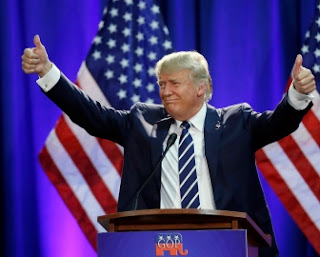 Donald Trump presents himself as not only a success, but a winner. And by all appearances, Trump is a winner--a winner whose toughness earns victory, a champion boardroom arm wrestler who leaves only fractured elbows on the negotiating table. Indeed, to win, someone must lose. The Trump campaign has left behind a trail of losers. As a candidate, he has been vicious: willing to say anything to keep or grow his support base while taking down his competitors.
Trump supporters like what he says about building the border wall, about Muslims, about renegotiating trade deals to bring back jobs and keep companies in America. They support Trump because of his positions; but they vote for him because they believe he really is the winner who can achieve these policy goals.
There is tension within the concept of a winner running for public office. A winner's success comes at the expense of others, not in service to them. But we are to choose Trump because he wants to serve, not because he wants to win.
Donald Trump presents himself as not only a success, but a winner. And by all appearances, Trump is a winner--a winner whose toughness earns victory, a champion boardroom arm wrestler who leaves only fractured elbows on the negotiating table. Indeed, to win, someone must lose. The Trump campaign has left behind a trail of losers. As a candidate, he has been vicious: willing to say anything to keep or grow his support base while taking down his competitors.
Trump supporters like what he says about building the border wall, about Muslims, about renegotiating trade deals to bring back jobs and keep companies in America. They support Trump because of his positions; but they vote for him because they believe he really is the winner who can achieve these policy goals.
There is tension within the concept of a winner running for public office. A winner's success comes at the expense of others, not in service to them. But we are to choose Trump because he wants to serve, not because he wants to win.


