Showing posts with label crime. Show all posts

Saturday, May 10, 2025

something about “A Clockwork Orange”

A violent young hoodlum is caught, imprisoned, and behaviorally conditioned to be sickened by violence. He changes from a living thing into a machine—a clockwork orange.

I watched Stanley Kubrick’s “A Clockwork Orange” in my teens. It stays with you: Kubrick’s striking scenery and artful shots, Malcolm McDowell’s boiling performance, and the characters’ affected speech.
 
The story and the speech—supposedly a mix of Russian-derived slang terms, cockney constructions, and archaic English—are the creation of author Anthony Burgess. I read A Clockwork Orange after seeing the movie, though, and now I have reread it. I love it.

The end of Kubrick’s movie, released in 1971, famously differs from Burgess’s book, published in 1962. The movie ends with Alex, the young hoodlum and protagonist, cured, so to speak, of his behavioral conditioning and once again aspiring to violence and criminality. Kubrick’s version follows the American edition of the book, which omitted the book's original final chapter in which Alex begins to lose interest in the wanton violence he pursued aggressively in youth, instead thinking more and more of relaxing and making something—a family, maybe.

The rest of the world had that chapter, yet Kubrick’s film is probably still the seminal version of the story. Burgess explains his take on the omitted ending in a new introduction he wrote in 1986:

When a fictional work fails to show a change, when it merely indicates that human character is set, stony, unregenerable, then you are out of the field of the novel and into that of the fable or the allegory. The American or Kubrickian Orange is a fable; the British or word one is a novel.

One of several nice passages in the book and not in the movie comes after P.R. Deltoid, the Post-Corrective Adviser from Alex’s time in a reform school, leaves Alex’s house the morning after one of Alex’s late nights of destruction. Alex is reflecting on society’s efforts to improve the behavior of young people like him. He shrugs his shoulders at the idea of getting arrested again and locked up in some jail or reform institution.

So if I get loveted and its three months in this mesto and another six in that, and then, as P.R. Deltoid so kindly warns, next time, in spite of the great tenderness of my summers, brothers, it’s the great unearthly zoo itself, well, I say: “Fair, but a pity, my lords, because I just cannot bear to be shut in. My endeavor shall be, in such future as stretches out its snowy and lilywhite arms to me before the nosh overtakes or the blood spatters its final chorus in twisted metal and shattered glass on the highroad, to not get loveted again.” Which is fair speeching. But, brothers, this biting of their toe-nails over what is the cause of badness is what turns me into a fine laughing malchick. They don’t go into what is the cause of goodness, so why of the other shop? If lewdies are good that’s because they like it, and I wouldn’t ever interfere with their pleasures, and so of the other shop. More, badness is of the self, the one, the you or me on our oddy knockies, and that self is made by Bog or God and in his great pride and rodasty. But the not-self cannot have the bad, meaning they of the government and the judges and the schools cannot allow the bad because they cannot allow the self. And is not our modern history, my brothers, the story of brave malenky selves fighting these big machines? I am serious with you, bothers, over this. But what I do I do because I like to do.

 
Notes:

"A Clockwork Orange" seems subversive even now, and in 1962 it must have been nuts.

In the same introduction mentioned above, Burgess suggests the term clockwork orange was first Cockney slang for a gay.

I read this in the website The Ringer (which is taking this part probably from the New York Post):

When McDowell improvised a version of “Singin’ in the Rain” on set during the scene in which Alex paralyzes the reclusive writer Mr. Alexander (Patrick Magee), he unlocked a contemporary, Hollywood-aimed variation on Burgess’s point, which Kubrick then wove brilliantly into the overall design of the film. Alex uses “Singin’ in the Rain” to express his joy at inflicting pain. In the process, Kubrick “taints” the music in a manner that foreshadows the methodology of the evil scientists’ brainwashing Ludovico Technique (not to mention the pale imitation of Quentin Tarantino, whose use of “Stuck in the Middle With You” in Reservoir Dogs as Mr. Blonde’s own private ode to joy is a tribute). 


Saturday, April 26, 2025

someone else's *good* poem

Bringing My Son to the Police Station to be Fingerprinted
—Shoshauna Shy

My lemon-colored
whisper-weight blouse
with keyhole closure
and sweetheart neckline is tucked
into a pastel silhouette skirt
with side-slit vents
and triplicate pleats
when I realize in the sunlight
through the windshield
that the cool yellow of this blouse clashes
with the buttermilk heather in my skirt
which makes me slightly queasy
however

the periwinkle in the pattern on the sash
is sufficiently echoed by the twill uppers
of my buckle-snug sandals
while the accents on my purse
pick up the pink
in the button stitches

and then as we pass
through Weapons Check
it's reassuring to note
how the yellows momentarily mesh
and make an overall pleasing
composite

Saturday, January 01, 2022

something about “Standoff: Race, Policing, and a Deadly Assault That Gripped a Nation,” a nonfiction book by Jamie Thompson

Standoff counts down the minutes of July 7, 2016, the punishing summer night when a lone gunman waged war on police amid a Black Lives Matter rally in downtown Dallas. That night, protesters, moved by the recent murders by police of Philando Castile and Alton Sterling, marched in cities across the nation to demand policing reforms and accountability. Dallas police were monitoring the city’s peaceful protest when a black, young man in a bulletproof vest, armed for battle, murdered five officers and wounded eleven other people.

A chaotic gun battle in the streets moved into a downtown community college, where police cornered the shooter. As a negotiator tried to talk down the gunman, whose cause was sick vengeance for racial injustice in America, the SWAT team armed a robot with a bomb, directed it to the gunman, and blew him to bits.

The author of Standoff, Jamie Thompson, cycles chapters through perspectives—on events and on the issues—from the officers, from family, protesters, a doctor, and the police chief and mayor—people whose lives changed that night.

Aside from the negotiator, who is black, the officers, in Thompson’s telling, all have the colorless view that police decisions should not be questionedand the officers’ views are the ones most frequently expressed in Standoff. The officers are also portrayed as heroic or tragic. They were.


Note: Jamie Thompson won an Edward R. Murrow Award for excellence in writing for her coverage of the gunman’s ambush of Dallas police in July 2016. Thompson originally covered the shooting for The Washington Post and later wrote about it for The Dallas Morning News. She has also contributed to D Magazine, Texas Monthly, and the Tampa Bay Times.


Saturday, January 23, 2021

a plot


I wrote an awesome book about a guy, Johnny Blast, who has to drive a truckload of drugs somewhere to save his hot wife's life. He barely makes the delivery, and then he kills the bad guys and keeps the drugs. His wife dies, though.

Friday, March 15, 2019

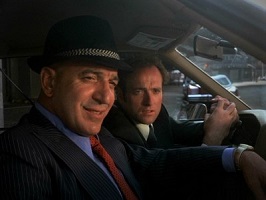
dialog from Kojak, "Tears for All Who Loved Her"


Kojak: You know, in a way, I admire her. A little kid, out of the sewers by her fingernails. No father, a lush for a mother.

Crocker: Why did you walk away from her?

Kojak: (Laughs) You know, I remember seeing a picture once. About this guy, came out of the streets, made it big. When he was a kid, used to have holes in his soles. So now he's got 200 pairs of shoes, he's rich. But he'd still cut a guy's heart out for a pair of shoes. That's why.


Note: 20 November 1977

Saturday, March 25, 2017

about the payoff


The knowing tone he artfully employed signaled to me what a wise guy he was. He always had this tone. His emails practically winked at me from the screen. And, in person, well, he winked sometimes. When I discovered his scheme--a discovery made completely by chance--I was unsettled. But when next I went into his office the knowing tone artfully employed was heard in my voice. "I was finishing my edit on the contract addendum and had to verify the effective dates against that budget report you processed."

"Oh?" he said (with a most interrogative inflection).

"Yes!" And I told him about how the contract award announcement date, the comment by the guest technology company executive on Charlie Rose, and our work on drafting the requirements all played out in such a curious little drama. And about how if a body didn't know better, he might get curious about it all.

"How much?" he asked. (This question lacked the exaggerated inflection of his last.)

I winked and pulled the door shut.

Saturday, November 15, 2014

nothing (inf.)


I missed the exit and ended up having to loop around the collision course.


Saturday, June 07, 2014

about "Crime and Punishment" by Fyodor Dostoyevsky


In a Russian a literary journal in 1866, Fyodor Dostoyevsky published Crime and Punishment, a  novel that follows a young man named Rodion Raskolnikov immediately before and after he murders an unscrupulous pawnbroker and her feeble sister. The motive, which does not seem fully and explicitly formed even for our protagonist, develops through Dostoyevsky's narrative. It seems altogether an act of desperate poverty, self-empowerment, and destiny.

In those forlorn, guilt-infected postmurder days spent adrift among a diverse cast of emotional string-pulling supporting characters, Raskolnikov remains under suspicion but not arrest. The action turns when a coy police inspector reminds Raskolnikov of an essay the would-be murderer wrote as a college student; the essay suggests a slight perversion of the Great Man theory--that great men use their power, be it charisma, intelligence, political and military wits, what have you, to transcend conventions and change the world. So, we come to understand, Raskolnikov's act of murder is a test of his own greatness (though he simultaneously thinks himself a slug). But, ultimately, crushed with guilt, self-doubt, and facing inevitable arrest, Raskolnikov confesses and begins his sentence in Siberia.

Among other things, Crime and Punishment dives into Dostoyevsky's personal philosophy that suffering and degradation bring salvation. The novel turns on our ideas of law, crime, morality, reason, and society and the individual. It asks, What is the difference between the man who transgresses boundaries to achieve his ambitions and the man who defies conventions to achieve greatness?


Notes:
  • One of the most noted events in Fyodor Dostoyevsky's biography is his 1849 arrest for his association with some liberal utopians; he was condemned to death, but then spared moments before his execution and re-sentenced to four years' hard labour in Siberia. He later traveled through Europe, but developed epilepsy and a nasty gambling addiction. Hard times followed, but also some great literature.
  • Besides exploring universal themes, Fyodor Dostoyevsky's novels are also very Russian, set in 19th-century Russia during the nation's never-ending, clumsy push to modernize.


Friday, January 03, 2014

something about the documentary film "Into the Abyss" by Werner Herzog


In his review of "Into the Abyss," Roger Ebert starts off with this:
"Into the Abyss" may be the saddest film Werner Herzog has ever made. It regards a group of miserable lives, and in finding a few faint glimmers of hope only underlines the sadness.
And here, at this cross-stitch of crime and poverty, the value of life runs threadbare.

Herzog documents the people and events surrounding a triple homicide in the small city of Conroe, Texas. The crime is violent and pointless, the sentences inconsistent and accidental. We hear from the convicted suspects, the families, investigators, and prison staff. With this crowd, Herzog has stumbled into a special kind of poor--a subculture of white, angry desperation that doesn't seem to know any other way. Herzog's approach is distanced, and he rations his usual pithy but insightful commentary.

When I think of an abyss, I think of a space in which blackness persists where the eye looks for light. The film's most glaring abyss is death row inmate Michael Perry: Seeing his youthful face, we expect--almost demand--him to show us something redeeming, something innocent. But it never comes. He is incapable probably of redemption or innocence.

But an abyss is also marked by its limitlessness, and even in this senseless loss, the victims' family attempts to salvage something. And another glimmer of hope (for those opposed to capital punishment) comes from a Death Row guard's turn away from death in favor of a universal right to life.

This is a very fine documentary, an effective and subtly powerful example of the form. Through Herzog's lens, overarching pointlessness and defeat lie naked. Presented with the abyss of the human soul, we find two thoughts juxtaposed: (1) No one has the right to take a life, and (2) some people don't deserve to live. There is no answer. Just traces of a spirit deeply buried within flaws and sad stories.


Saturday, October 12, 2013

about no authority


Maybe you heard that the Sandy Hook Elementary School shooting sparked a national conversation on gun ownership. Or maybe you heard that George Zimmerman's jury trial for killing Trayvon Martin prompted a national conversation on race. Or, with young Americans Bradley Manning and Edward Snowden being accused of espionage, perhaps you heard that we're conversating nationally about privacy and surveillance, or about freedom and safety. Amid any controversy now, pundits and the public readily declare or call for a national conversation about the issue.

What's more, these "national conversations" are often fueled by "competing narratives" of rhetors who, in the public debate, project certain "optics". We hear this kind of language in political news coverage more and more--language that implies open questions with no shared sense of answers, truths, or appeals to objectivity. This talk signals a shift or further slide in our worldview toward a wider, freer recognition of relativism and subjectivity as opposed to a shared sense of culture and identity. The news has never been totally neutral as it is vulnerable to a number of institutional biases (visual bias, narrative bias, fairness bias, etc.), but now it seems to be inching even further away from its attempt to describe one reality.

The declaration that we're having a national conversation waylays news coverage of polarizing issues. Having a national conversation about an issue defuses and mutes the controversy by invoking the illusion of thoughtful, productive dialog held around America's dinner tables and water coolers. The declaration that we're engaged in conversation substitutes for real dialog or conflict resolution. We talk about problems; we do not solve them. We air grievances and arguments, but all for naught because the discussion and coverage of it simply exhaust themselves, and we're left with nothing but the next thing to talk about.

Using the word narratives invokes the idea of a story, a version of events. This is obviously wholly different from the truth. The reader can decide to accept it or reject it. There are dominant narratives and prevailing narratives, but no truth.

Another new term in political news coverage is the word optics. Optics refers to the perspective of the viewer, how things look, and the first surface-level impression a given issue or person(s) makes on the news consumer. A check for patterns is basic first-level analysis. This is something people with a even a passing interest in a given object do anyway, without the help of experts. At best, what is seen is equal parts wall and window, a distraction and glimpse inside. Here, the truth is traded for appearances. The truth or reality is a nonconcern. The impression is stated, and its ephemerality and inconclusiveness is informally recognized and sanctioned.

If this argument is valid, and if it signals anything, it would signal the further disintegration of shared sense of culture and identity.


Notes:
Or maybe this has always been the case.

Update:
Some historians say that, in the Progressive Era, journalism could unite public opinion which would push Congress to pass legislation fixing some problem. This is precisely what a national conversation prevents.


Wednesday, February 29, 2012

On Denis Johnson's novel "Nobody Move"


Apparently out of luck, compulsive gambler Jimmy Luntz finds himself on the run from his creditor's goon, Gambol. Denis Johnson's novella Nobody Move presents this brief manhunt like scenery on a short trip in a beat-up Sedan DeVille. A solid, short list of characters waltz in from the sidelines during this game between chance and hopelessness, enhancing the conflict found in this fast, fun read.

Wednesday, October 05, 2011

NPR goes wildly awry

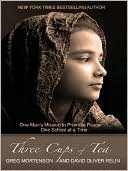
Under the headline An Update On The 'Three Cups Of Tea' Lawsuit, NPR reports news of a class action lawsuit filed by donors to Greg Mortenson's charity as named in his now defamed book, Three Cups of Tea. Then the reporters, led by Melissa Block, call the lawsuit frivolous. Melissa Block begins pushing the frivolous angle when she asks court reporter Gewn Florio, "Gwen, when you talk to lawyers there, are there people who think that there is a reasonable basis for this suit to go forward? It does seem like they're launching pretty novel claims here. Or do they assume that it will be dismissed?"

Why would the case be summarily dismissed? Mortenson set up a fraudulent charity and solicited funds for that charity via marketing efforts built on his book and media appearances. School children donated to this guy's cause; why should they and the rest of his donors not have recourse to the law? Melissa Block keeps pushing the frivolous angle, asking, "Is anybody there in Montana saying this is just a case of lawsuits gone wildly awry, that this should not be settled in a court? That if they felt bad about buying the book or giving their money that's one thing, but this is not the basis of a class-action lawsuit?" To which Florio concedes with disinterest, "Sure, I think people say that, yeah exactly, this is not the way to settle it. That he's been discredited, people will no longer buy the book, things sort of play out in the marketplace." Mortenson is already rich--the marketplace was the vehicle for his fraud; the courts are where justice is supposed to be done, so let them decide the merits of the case.

Thursday, July 07, 2011

The Casey Anthony trial and the desire to punish

The Casey Anthony trial attracted major media attention. In the NPR piece, New Republic: Beyond Whose Reasonable Doubt?, University of Colorado Law Professor Paul Campos discusses belief in the system and how high profile trials like Anthony's figure into that belief. He says that we must decide what constitutes reasonable doubt and render judgment while adhering to the belief that "mistaken acquittals are vastly preferable to wrongful convictions". The price of this jurisprudence of prudent judgement, however, may lead to "deeply disturbing" verdicts, as in the Anthony case, where the defendant likely "has gotten away with murder", thereby challenging our belief in the system. He's counseling us. And with good reason.

Indeed, I think one function of high-profile trials such as this is to show that the system "works". The media inadvertently and advertently promotes the status quo, which requires a measure of belief in the judicial system. So, the pundits screamed when the verdict was read because they think the system should have rendered a guilty verdict. That an injustice has been done may be one reason for the vigor and volume of their response, but I would suggest another reason is at play here, too.

Casey Anthony's behavior defies our expectations of what young mothers are supposed to look like and act like. Pundits wanted to punish the mother not so much for killing her child as for the way she behaved after the death. What constituted evidence also constituted her crimes: Getting the tattoo and going to night clubs.

The concept of a mother who does not cherish her child challenges the ideal of the self-policing individual and the centralized interest in the protection and regulation of life. Media figures apparently salivated in agreement at the prospect of punishing Anthony, building a consensus among the public that the young woman was guilty and deserved punishment.