
Showing posts with label argument. Show all posts
Showing posts with label argument. Show all posts
Saturday, January 05, 2019


Friday, October 18, 2013
about "Believing Is Seeing" by Errol Morris
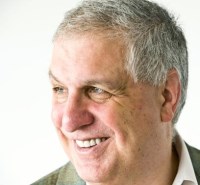 In Believing Is Seeing, Errol Morris investigates our relationship with photos--how we view them and what they mean to us. He uses several well-known photographs to flesh out some solid insights. One of the first insights is that we tend to look for motivations in a picture. What was the photographer trying to say? What is the guilt or innocence of the person in the picture? But Morris dismisses such attempts to infer anything beyond what the picture shows. Photos, he says, merely record data. But because we privilege
vision, we imagine that photos provide a door to the
truth. And in our imagining, we make false inferences and draw hasty, faulty conclusions.
In Believing Is Seeing, Errol Morris investigates our relationship with photos--how we view them and what they mean to us. He uses several well-known photographs to flesh out some solid insights. One of the first insights is that we tend to look for motivations in a picture. What was the photographer trying to say? What is the guilt or innocence of the person in the picture? But Morris dismisses such attempts to infer anything beyond what the picture shows. Photos, he says, merely record data. But because we privilege
vision, we imagine that photos provide a door to the
truth. And in our imagining, we make false inferences and draw hasty, faulty conclusions.Morris also questions and ultimately dismisses the idea that posed photos cannot serve as documentation and are inauthentic; the fact that something is always excluded from view (intentionally or not) while other things are included means that all pictures are posed to some degree. (This vein of discussion mirrors parts of modern rhetorical theory.)
Most of Believing Is Seeing is a super interesting read. My only complaint is that Morris strayed too far into the weeds in the last section when he forensically examines a set of documentary photos and their related documentation from public works projects of the Depression.
Note:
The book's full title is Believing Is Seeing: Observations On the Mysteries of Photography.
Thursday, April 26, 2012
In summary

Applicable if you've:
- tried summing it up
- taken stock
- thought something was important
- felt something needed to be said
Notes:
"Porphyria's Lover"
-by Robert Browning
The rain set early in tonight,
The sullen wind was soon awake,
It tore the elm-tops down for spite,
And did its worst to vex the lake:
I listened with heart fit to break.
When glided in Porphyria; straight
She shut the cold out and the storm,
And kneeled and made the cheerless grate
Blaze up, and all the cottage warm;
Which done, she rose, and from her form
Withdrew the dripping cloak and shawl,
And laid her soiled gloves by, untied
Her hat and let the damp hair fall,
And, last, she sat down by my side
And called me. When no voice replied,
She put my arm about her waist,
And made her smooth white shoulder bare,
And all her yellow hair displaced,
And, stooping, made my cheek lie there,
And spread, o'er all, her yellow hair,
Murmuring how she loved me — she
Too weak, for all her heart's endeavor,
To set its struggling passion free
From pride, and vainer ties dissever,
And give herself to me forever.
But passion sometimes would prevail,
Nor could tonight's gay feast restrain
A sudden thought of one so pale
For love of her, and all in vain:
So, she was come through wind and rain.
Be sure I looked up at her eyes
Happy and proud; at last I knew
Porphyria worshiped me: surprise
Made my heart swell, and still it grew
While I debated what to do.
That moment she was mine, mine, fair,
Perfectly pure and good: I found
A thing to do, and all her hair
In one long yellow string I wound
Three times her little throat around,
And strangled her. No pain felt she;
I am quite sure she felt no pain.
As a shut bud that holds a bee,
I warily oped her lids: again
Laughed the blue eyes without a stain.
And I untightened next the tress
About her neck; her cheek once more
Blushed bright beneath my burning kiss:
I propped her head up as before,
Only, this time my shoulder bore
Her head, which droops upon it still:
The smiling rosy little head,
So glad it has its utmost will,
That all it scorned at once is fled,
And I, its love, am gained instead!
Porphyria's love: she guessed not how
Her darling one wish would be heard.
And thus we sit together now,
And all night long we have not stirred,
And yet God has not said a word!
Wednesday, March 21, 2012
The age of your friends' anxiety
The author of the New York magazine piece "Listening to Xanax" declares this the age of anxiety and, therefore, of anti-anxiety medication: "If the nineties were the decade of Prozac, all hollow-eyed and depressed, then this is the era of Xanax, all jumpy and edgy and short of breath." How did an editor at a major, reputable publication think something was being said here?
First we learn of a kind of situational (as opposed to compulsive) anxiety:
Because this one was so weak, she quickly switches to another intellectually weak premise, focusing now on what is called functional anxiety--something she acknowledges that everyone has and has always had:
 So, her overly dramatic but otherwise mentally healthy, motivated, ambitious, and competitive friends she describes in the language of mental illness. Here, she extinguishes all hope of having made a point: "Not quite a disease, or even a pathology, low-grade anxiety is more like a habit." In other words, something so ordinary I shouldn't have brought it up at all.
And from much ado about nothing, she explores what to do about nothing. First, she briefly describes folks who resist the drug-first approach, completely misconstruing them as shooting to "cure" her successful friends of their healthy habits:
Besides, no one wants to cure you or your stupid friends.
Notes:
First we learn of a kind of situational (as opposed to compulsive) anxiety:
“Situational anxiety” today stems from threats that are both everywhere and nowhere at once. How will the debtor nations in the eurozone ever manage to pay back what they owe? How can Israel disarm Iran’s nuclear program without inciting the messiest international conflict since World War II? How can you be absolutely, 100 percent sure the cantaloupe you had for lunch wasn’t contaminated with listeria that will make you or your kids or one of your guests deathly sick?Oh, anxiety can be scary, she confesses, but it also lives this "second life as a more general mind-set and cultural stance, one defined by an obsession with an uncertain future." Nevermind that the future is always uncertain, flashing warning signs up ahead--more to the point, nobody in the society she's talking about has suffered an anxiety attack or even lost a wink of sleep worrying about the kind of macro political and economic issues she describes. Nobody thinks, "Oh, Lord, what's Iran gonna do? I need a Xanax!"
Because this one was so weak, she quickly switches to another intellectually weak premise, focusing now on what is called functional anxiety--something she acknowledges that everyone has and has always had:
But functional anxiety, which afflicts nearly everyone I know, is a murkier thing. Its sufferers gather in places like New York, where relentlessness and impatience are the highest values, and in industries built on unrelenting deadlines and tightrope deals.This obliterates her initial premise--that there's something unique about this age in terms of anxiety. But she soldiers on. Her sample functionally anxious subject says,
“I use my anxiety to be better at what I do,” says an executive at a boutique PR firm. “A certain amount of anxiety makes me a better employee but a less happy person, and you have to constantly balance that. If I didn’t constantly fear I was about to be fired or outed as a loser, I’m afraid I might be lazy.”
And from much ado about nothing, she explores what to do about nothing. First, she briefly describes folks who resist the drug-first approach, completely misconstruing them as shooting to "cure" her successful friends of their healthy habits:
A cure isn’t what the PR executive with the occasional Klonopin habit wants. “My own personal experience is that there’s a healthy level of anxiety, and I don’t believe ‘healthy’ is the absence of anxiety,” she says. “I live in a world that puts unreasonable demands on me, and sometimes I need help. I wish I could do it without the pills, but I can’t.”Exactly--you're already healthy, and not this imagined poster sufferer in an age of anxiety.
Besides, no one wants to cure you or your stupid friends.
Notes:
- In the meantime, she ignores obvious related issues: differences in drug use by class (and hers is an upper class, to be sure), the history of anxiety and its treatment (in and out of psychology), the rise of diagnoses, the increase in medications and prescriptions, the trend of first prescriptions causing need for a second, exterior sources of existential dread over time, and on and on.
- Worst anecdote she gives: "A friend of mine had dental surgery recently, a procedure she both hates and fears. So proud was she that she’d sworn off Klonopin that she decided to forgo the medication ahead of her dental appointment. “I thought, Don’t be a baby. That’s just weak. You should be able to handle things.” She had a panic attack in the chair and was “a total bitch,” she says, to the dentist. “Oh, wait a second,” she reminded herself as the drill whined and the tooth dust spattered, “there’s a medical reason for these things.” "
- "Its sufferers gather in places like New York"? In places like ... New York?
Saturday, August 20, 2011
The error of his ways
In GQ's "The Impossible, Inevitable Redemption of Michael Vick", Will Leitch interprets the metanarrative PR firms generated for NFL star Michael Vick:
 Then Leitch lays it out:
Leitch first shows us a meek Vick. This version of the man goes on television and in subdued tones says his actions were wrong, he knows they're wrong, and he's learned his lesson. This man goes on 60 Minutes and makes public appearances with reps from the SPCA. He's a boring guy, probably a dumb jock who can't talk things not-football.
Then we see the other side, the star athlete eager to mug and pose for photographers who can put his face in glossy magazine profiles. This guy is an exposure and praise-loving gamer set for showtime.
One man is a fake, slyly blunting our interest in him and discouraging prolonged meditation. The other is the real thing.
We all have multiple personas. We act one way around the boss and another way when out clowning with friends. Having multiple fictions does not make us liars.
Although Michael Vick probably is a liar.
Michael Vick was undisciplined, young, and too loyal to (and trusting of) the people he grew up with. He made mistakes, including but not limited to dogfighting, and eventually his malfeasances were uncovered. He realized the error of his ways and accepted his punishment. While in prison, he "got his mind right," discovered the perspective that eluded him as a free man, and vowed never to repeat the mistakes of his past. He took advantage of his second chance, becoming the quarterback he was always meant to be. His story is an inspiration to all. Particularly to those desiring the finest in athletic gear.
Then Leitch lays it out:I'm not sure if it will strike you as a relief or an outrage that Michael Vick doesn't really believe all of this, but you should know: He doesn't.Leitch argues that Vick does not think his fighting and killing dogs was wrong. Yet, Vick confesses no such thing. So how does Leitch support his argument? Through a rhetorical move: A tale of two Vicks.
Leitch first shows us a meek Vick. This version of the man goes on television and in subdued tones says his actions were wrong, he knows they're wrong, and he's learned his lesson. This man goes on 60 Minutes and makes public appearances with reps from the SPCA. He's a boring guy, probably a dumb jock who can't talk things not-football.
Then we see the other side, the star athlete eager to mug and pose for photographers who can put his face in glossy magazine profiles. This guy is an exposure and praise-loving gamer set for showtime.
One man is a fake, slyly blunting our interest in him and discouraging prolonged meditation. The other is the real thing.
We all have multiple personas. We act one way around the boss and another way when out clowning with friends. Having multiple fictions does not make us liars.
Although Michael Vick probably is a liar.
Thursday, March 17, 2011
Making sense of being more punk than you

In the film, Rose charges that Duke recruited "Uncle Toms". Hill, having played for Duke against Michigan, justifiably feels his blackness challenged. In this reply, Hill infers that his middle-class (probably upper-middle) upbringing by two educated parents is the reason for the insult, and the reason Rose doesn't immediately include him in the society of "real" blacks.
In his defense, Hill briefly chronicles a trend of upward mobility in his family, sharing a generational rags to riches story. He notes that Henry, his middle name, is a family name; he shares one of his mother's sayings; he names a family heirloom; and he thanks an African American History professor he studied under. In other words, Blackness, to Hill, is found not only in struggle, but in the fruits of struggle. There is transference. Hill calls this "tradition".
I'll take great liberty here and assume and summarize Rose's argument. For Rose, his single-parent childhood in Detroit matters. Blackness in part comes from living the struggle. First hand experience matters. That experience is a uniquely Black experience (i.e., growing up poor and White with one parent in Detroit is not the same).

For Hill, Blacks rising out of poverty for their children's betterment is the tradition. For Rose, living in poverty--maybe even staying in poverty--is the tradition.
Hill also defends Duke, claiming their interest lies in finding and shaping excellence. He names other Black Duke players, enlisting them in his defense. Finally he stakes a claim on character. Up to this point, I found Hill's response brilliant, a rhetorical achievement. But, in discussing character, I can't help but wonder if he is implying that people often mistake "acting Black" for lacking character. He might as well call the Fab Five knappy-headed thugs.
The New York Times published Grant's response March 16, 2011:
http://thequad.blogs.nytimes.
Tuesday, February 22, 2011
Our National Tone
Following up on the shooting that killed six people and wounded thirteen others, yesterday the University of Arizona opened the National Institute for Civil Discourse. Civil discourse: We heard these words again and again in the days after the shooting; the President said them at the January memorial speech at the University: "And if, as has been discussed in recent days, their death helps usher in more civility in our public discourse ... "
So these words are what politicians and news media grabbed hold of immediately after this political event. A line from this Reuters article retells the story pretty well: "The rampage renewed ... soul searching over whether the vitriolic tone of U.S. politics had encouraged violence against elected officials." So it is the tone in which words are said that is to be evaluated. The words themselves we can take at face value. This is the silent conclusion to this public dialog on What Caused the Violence in Arizona.
-Remarks by the President at a Memorial Service for the Victims of the Shooting in Tucson, Arizona: http://www.whitehouse.gov/the-press-office/2011/01/12/remarks-president-barack-obama-memorial-service-victims-shooting-tucson
-Arizona university founds civility institute, 02/21/2011: http://www.reuters.com/article/2011/02/21/us-shooting-university-idUSTRE71K67K20110221
So these words are what politicians and news media grabbed hold of immediately after this political event. A line from this Reuters article retells the story pretty well: "The rampage renewed ... soul searching over whether the vitriolic tone of U.S. politics had encouraged violence against elected officials." So it is the tone in which words are said that is to be evaluated. The words themselves we can take at face value. This is the silent conclusion to this public dialog on What Caused the Violence in Arizona.
-Remarks by the President at a Memorial Service for the Victims of the Shooting in Tucson, Arizona: http://www.whitehouse.gov/the-press-office/2011/01/12/remarks-president-barack-obama-memorial-service-victims-shooting-tucson
-Arizona university founds civility institute, 02/21/2011: http://www.reuters.com/article/2011/02/21/us-shooting-university-idUSTRE71K67K20110221
Subscribe to:
Posts (Atom)