Showing posts with label confession. Show all posts

Friday, June 19, 2020

something about "Bel-Ami" by Guy de Maupassant


Bel-Ami, by Guy de Maupassant, is a great read. It is about a young man, Georges, a merciless social climber in Paris circa 1885 (the year of the book's publication). Early in the book, Georges sets his sights on Madeleine, the crafty wife of his supervisor, Forestier. Forestier grows deathly ill, and Georges comes to support Madeleine in the final hours before her husband's death. Moments after Forestier dies, Georges asks Madeleine to join him out on the balcony; there, he makes his move.

"I want you to listen to what I'm going to say and try to understand me. Above all, don't be angry if I talk about such things at a moment like this, but I shall be leaving the day after tomorrow, and when you come back to Paris, it may perhaps be too late. So here goes. As you know, I'm only a poor devil with no money at all who's still making his way. But I've got determination, I think some intelligence, and I've made a start—a good start. With a successful man, you know what you're getting; with someone just beginning, you never know where he'll finish up. That may be a bad thing or it may be a good thing. Anyway, I told you one day in your home that my dearest dream would have been to marry a wife like you. And I want to say that again now. Don't try to answer me. Let me go on. I'm not making you a proposal. That would be an odious thing to do at this time and place. I'm only anxious that you shouldn't fail to know that a word from you can make me a happy man, that you can make me either your friend, your brother if you like, or else even your husband, as you will—that my heart and whole body are all yours. I don't want you to answer me now; I don't want to talk about it any more, here. When we meet again in Paris, you'll let me know what you've decided. Until then, not a word. You agree?"

He had spoken without looking at her, as if he were scattering the words in the darkness in front of him. And she seemed not to have heard him as she, too, stood motionless, staring vaguely ahead at the vast landscape under the pale light of the moon.

For many minutes they remained side by side, elbow to elbow, thinking in silence. Then she murmured: "It's a little cold," and, turning round, went back to the bed. He followed her.

As he came near, he recognized that Forestier really was beginning to smell and he moved his chair away because he would not have been unable to stand the stench for long.

That scene made an impression on me. Georges is motivated by a ravenous hunger for status, but his relationships with powerful women are complicated by his feeling of real affection toward them. That affection is never better expressed in Bel-Ami than in this scene. But the timing is obviously horrific and undermines the connection the reader wants to feel with Georges.


Note: Georges does not experience change or get redeemed. That adds to the book's novelty.

Friday, November 22, 2019

something about "A Drinking Life" by Pete Hamill


A Drinking Life is a memoir by Pete Hamill, a New York-based columnist, journalist, and author featured in publications like the New York Post and The New York Daily News. I expected a deep-dive into alcoholism, but Hamill was never your bottoming-out alcoholic. Drinking, it appears, was something he did while killing time socializing in bars; it was not a preoccupation. This memoir, published in 1995, was born 20 years after his last drink. Hamill came to view alcohol as destructive and decided to quit. His sobriety does not sound like much of a struggle, which explains why addiction and destruction do not seem to be central themes in the arguably mis-titled A Drinking Life. Hamill's life, as relayed by the author, sounds mostly fine—so I found this a little dull and want to say only that there are far more interesting and compelling memoirs out there.

Friday, March 23, 2018

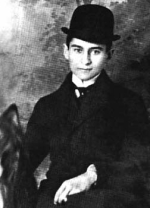
something about Franz Kafka's diaries, 1909-1923

 
I brushed against Kafka's sense of isolation as I read this collection of his diary entries. The experience of reading this is alienating because there is no point of entry; the text and its author seem impenetrable. I was stuck outside, roaming a perimeter while he repeatedly disappeared in himself. But this reading experience is consistent with the themes found in his formally published work: anxiety, absurdity, and, of course, alienation. These entries date from 1910 to 1923, a year before the Czech writer died (probably from complications from tuberculosis) at age 40. I was stirred by his brief descriptions of social awkwardness and family tension. He was often frustrated with himself for not writing or for writing poorly. I do not think this work is all that readable; my attention would fade when he made random notations on dreams and story openings, which he often did.

Note:
Is this an invasion?

Wednesday, June 05, 2013

about "Abnormal: Lectures at the College de France" by Michel Foucault


Abnormal is largely about the concept and perception of the abnormal person--the pervert or rapist or peeping Tom, for example--from the 19th century to present. In this lecture, Foucault begins by saying that, when an individual has power, he often becomes an object of ridicule (i.e., kings were often portrayed as fools by the peasants, at times). Foucault then explains how psychiatric opinions delivered in court conjure the character of a delinquent alongside the accused--a delinquent doppelganger to the author of the crime. So, it follows, the respected expert psychiatrist on the witness stand is also an oaf because he assesses and prescribes moral instruction as if he were a child, and he describes danger as if he himself was irrationally afraid.

Foucault then embarks on an overview of how power works in this discussion, referring to the phenomenon of how plague patients were partitioned off within society to be watched and studied (as opposed to lepers banished from society). But instead of plague victims, it is the abnormal who are watched and studied. The result of this partitioning and watching is the individualization of people--which is not to be confused with exclusion. All this is done for the preservation and productivity of society's healthy individuals, those whose potential is maximized.

Now, Foucault explains that, until the 16th and 17th century, a crime was conceived of as an offense against the sovereign, and punishment for the crime had to be bigger than the crime because it had to supersede the crime. But, later, crime in general was imagined as having a nature, a criminality, which leads to the question, What is the nature of a criminal? In a penal system that favors this question, the criminal's motive must be matched and nullified by the judicial system, and the medical community took it upon themselves to diagnose motives. Psychology supplies motives for motiveless crimes, and otherwise labels criminals as insane, thereby releasing the penal system from its obligation to punish.

A major development in criminology and psychology was the recognition and exploration of the concept of instinct. "Instinct" allowed for a power mechanism--the penal system with its need for knowledge--to engage with knowledge a mechanism--psychiatry and its need for power. The notion of human instinct helps make motiveless crimes intelligible; it also allows for the medical transformation of motiveless acts into pathological acts.

The notion of instinct came to dominate psychiatry, and allowed the field to expand its domain. Psychiatry soon became a form of family intervention; familial relations were pathologized such that antagonistic relations are deemed pathological. After 1850, a political dimension is introduced; much as history became a tool to politicize the past and present, psychiatry came to help distinguish riots from good revolutions by looking at the minds and motives of the leaders of movements. Madness opposed order, opposed family and personal relationships, and opposed stability; it was a characteristic of social immobility. Healthy behaviors and mentalities had to be conventional and voluntary; deviant behaviors and mentalities consisted of automatic and instinctual responses. All conduct was judged along a contimuum of voluntary vs. involuntary, all relative to the norm. Here, psychology grows beyond madness; psychology could now question all behavior, all people.

About the time that the state formalized support of marriage through policy incentives, homes started being built partitioned, with different rooms for each family member, separating families within a single home, separating kids from parents. This distribution of bodies helps dissuade the development of pathological, antagonistic, and/or incestuous relationships between family members. Foucault discusses the prototypes of the abnormal individual, the monster and the masturbator, and explains how the masturbator enabled psychology to become an authority on family, and link sexuality with illness in terms of masturbation or any other realization of the sexual impulse deemed immoral. Psychology's linking of sexuality with instinct opened a field that allows for masturbators and motiveless murderers to exist in the same conceptual space. Here, the sexual instinct is imagined as fragile, capable of becoming distorted and the cause of degeneracy.

Foucault discusses a rape case set in the 1860's that was referred to psychiatry for explanation. The controversial field outlined the offender's physical traits, and linked these to his deficiencies. He was described as having arrested development, rather than an exaggerated instinct or drive; likewise, his morality was arrested, according to the psychiatric experts.

In the early psychiatric conception of criminality, a patient's development goes wrong, and then the person becomes a criminal. But later psychiatry posits that the seeds of criminality are sown in the person's childhood. Psychiatry faced a dilemma when patients became depathologized because the practice no longer had the backing of medicine, and patients were no longer an suffering illness, per say. Psychiatry identified collections of eccentricities and behaviors and called them "conditions" or "syndromes". These collections of traits were previously considered predispositions, and a person could have a predisposition and still be normal (to the extent such a conception existed). But conditions and syndromes came to describe the abnormal, and any physical or mental illness can be associated with any condition or syndrome. Conditions refer to health but are not illness; they are non-health. Conditions are typically a case of arrested (moral) development or regression.

Foucault explains that a condition's causal background is the patient's heredity. In examining a patient's heredity, anything can cause anything. For example, Your uncle was a drunk? That explains your degeneracy today. Similarly--and this is the lecture's main point--a person's use of the sexual instinct for non-reproductive purposes, a person's having sex or masturbating for pleasure, is thought to point to a condition. This diagnosis is moralizing cloaked in medicine. Degeneracy grew increasingly medicalized. Furthermore, if conditions are a result of heredity, then the idea of finding a cure means nothing in psychiatry. So, this reveals that the field is not so much about the health of the patient, but rather about the protection of society from the effects of degeneracy. The heredity-based form of racism that sprang up at the end of the 19th century and reached its nadir with Nazism stems from psychiatry's social defense aspect.

This is a rich, winding lecture that recalls and elaborates on many of Foucault's major themes. Thoroughly enjoyable read.


Saturday, June 30, 2012

Calling


He'd spent most of the past eight years in this confessional. The last to repent before him, some poor woman who carried the stench of congealed sausage fat smeared on brown paper, had trailed away from this cozy, curtained sanctuary months ago. The smell, an hour later. Actually, he was glad. For, you see, he could no longer answer the call of a God so great, he himself being so small. The first time he could not answer happened while staged on the alter. Standing, the flock kneeling before him, his hands just flaked away and his shoulders bolted across the room, fixed to the walls, lead beams bearing the full pull of the Earth, such that he surely could never handle the wine again, or the bread again, the blood and the body. Then his soul bled itself and scarred down the middle at exactly the moment when two other souls should have been joined in matrimony. Weeks later, his eyes froze, their last tears icing the mummy's silence on his lips, so that he could offer no comfort to the dying. And, now? He could no longer forgive, because all was forgiven. Now he could only, need only, give thanks!

Saturday, January 21, 2012

We all were appalled

Right off, last night CNN's Republican debate moderator John King asked Newt Gingrich about his ex-wife's new claim that he asked for an open marriage. Newt answered,
I think the destructive, vicious, negative nature of much of the news media makes it harder to govern this country, harder to attract decent people to run for public office. And I am appalled that you would begin a presidential debate on a topic like that. Every person in here knows personal pain. Every person in here has had someone close to them go through personal things. To take an ex-wife, and make it two days before the Primary, a significant question in a Presidential campaign, is as close to despicable as anything I can imagine.
Despite his admitting to having a weak imagination, this morning's coverage calls Newt's reply brilliantly calculated. What made it a hit was not so much Newt's words but rather (1) the timing of the exchange, (2) Newt's delivery, (3) King's freezing up, and (4) the audience's enthusiasm.

No doubt King thought his opening rhetorical situation a golden opportunity; he hoped to start with fireworks, embarrassing Newt by capitalizing on the big ABC tabloid interview with the ex-wife. But doing so created an even bigger rhetorical situation for Newt, one he seized with his customary bluster by rejecting the question on moral grounds. That he got to do so right in the beginning, at the moment when anticipation and energy were peaking and ratings were highest, only magnified the exchange and created an immediate emotional outlet for the audience, who cheered Newt on as he chastised the media, the moderator.

Here we have a politician who publicly preaches values, from the party that owns family values, caught violating those values, claiming that he is morally above public inquiry into his values and his personal life.

The hypocrisy is plain as day, yet King fumbles on the opportunity, and Gingrich looks brilliant because he gets away with it.

Gingrich holds aloft his righteousness in his staccatoed indignation. He summons the dignity of the moment--a Presidential debate (a Primary debate)--a dignity due to such an event in abstraction, but not often felt in practice.

King could have countered along another route: Gingrich faults "the destructive, vicious, negative nature of much of the news media" while enjoying the destructive, vicious, negative nature of attacks hurled at candidate Romney by him and his Super PAC.

All this aside, what to make of Gingrich's appeal to "personal pain"? What pain? The pain of the divorce? And whose pain? His? The ex-wife's?

The answers don't matter. What matters is, What does the pain speak of? I'd venture that, for Gingrich, "pain" in this context is the pain we inflict and feel ourselves when confronted by personal failings. Gingrich has them in spades, but a candidate can't say so. Instead, "pain" is a code, a signifier of the unspeakable. Pain communicates to us without words and carries its own meaning. I'd venture further and say most his audience understands this, personal failings, even if they don't know it.

And if I'm right about what Gingrich is saying, I'd be tempted to see this as a product of his recent conversion to Catholicism, as his statement has in it an element of Confession.

Saturday, August 20, 2011

The error of his ways

In GQ's "The Impossible, Inevitable Redemption of Michael Vick", Will Leitch interprets the metanarrative PR firms generated for NFL star Michael Vick:
Michael Vick was undisciplined, young, and too loyal to (and trusting of) the people he grew up with. He made mistakes, including but not limited to dogfighting, and eventually his malfeasances were uncovered. He realized the error of his ways and accepted his punishment. While in prison, he "got his mind right," discovered the perspective that eluded him as a free man, and vowed never to repeat the mistakes of his past. He took advantage of his second chance, becoming the quarterback he was always meant to be. His story is an inspiration to all. Particularly to those desiring the finest in athletic gear.
Then Leitch lays it out:
I'm not sure if it will strike you as a relief or an outrage that Michael Vick doesn't really believe all of this, but you should know: He doesn't.
Leitch argues that Vick does not think his fighting and killing dogs was wrong. Yet, Vick confesses no such thing. So how does Leitch support his argument? Through a rhetorical move: A tale of two Vicks.

Leitch first shows us a meek Vick. This version of the man goes on television and in subdued tones says his actions were wrong, he knows they're wrong, and he's learned his lesson. This man goes on 60 Minutes and makes public appearances with reps from the SPCA. He's a boring guy, probably a dumb jock who can't talk things not-football.

Then we see the other side, the star athlete eager to mug and pose for photographers who can put his face in glossy magazine profiles. This guy is an exposure and praise-loving gamer set for showtime.

One man is a fake, slyly blunting our interest in him and discouraging prolonged meditation. The other is the real thing.

We all have multiple personas. We act one way around the boss and another way when out clowning with friends. Having multiple fictions does not make us liars.

Although Michael Vick probably is a liar.