Showing posts with label Rock. Show all posts

Sunday, May 10, 2026

something about "Eyes Of A Stranger" by Payolas

"Eyes of a Stranger" came out in 1982. The lyrics describe the combination of attraction and fear. The song ends like how it started, with only drums—but minus the clave or whatever that is. That "pop" is gone.

The chorus:

    In your lips I sense a danger
    You've got the eyes of a stranger
    In your lips I see a danger
    You've got the eyes of a stranger

From "sense" to "see," he says twice. From a feeling to something more definite. And then he ends the song with the repetition:

    You've got the eyes of a stranger
    You've got the eyes of a stranger
    You've got the eyes of a stranger
    You've got the eyes of a stranger

The meaning of the line changes with the repetition. What was exotic becomes remote. He at one time sensed the danger, which drew him in; now he merely sees a stranger. The former moves your heartbeat; the latter, your feet.

Saturday, July 26, 2025

about Ozzy dying

I am a huge Ozzy Osbourne fan.
 
I attended a Catholic school and wore a uniform through eighth grade. So I remember how bold I felt wearing a “Diary of a Madman” t-shirt to public school in junior high. The front was the album cover, which I was okay with, but the back featured a closeup of Ozzy bearing vampire teeth and wearing a cape—a silly picture, I knew, and I worried the other kids wouldn’t appreciate the spirit of 1982 Ozzy.
 
I also hung an Ozzy poster in my bedroom—Ozzy in a tough-guy pose, a baseball bat resting on his shoulder. I didn’t like the poster, but it was the only one at the store. Ozzy was not a tough guy, and being tough wasn’t part of his music, his message, or him.
 
His wife and manager Sharon, who really is tough, astutely marketed him as the Prince of Darkness, capitalizing on the Sabbath fame. But when I think of Ozzy, I think of a guy who was resilient and wild and free. He loved performing live. He seemed so happy on stage. That was real joy. Fans could see that was all he wanted to do.
 
Life offstage must have been a bore, and drugs and alcohol helped him cope while feeding whatever predispositional craving lurking within.
 
Ozzy was real. He voice was true, his delivery, true—a crazy train, a silly guy who went on stage and sang. The guy on stage in Paris, 1970, was the guy in the late 1980s and on into the 2000s. His confidence grew during those Sabbath years, and he brought loads of enthusiasm and appreciation to his solo career. Watch him live, clapping, cheering on the band, the music, and the crowd, throwing the fans all the love he had in him.

He was the Prince of Darkness, but the world is darker without him.


Friday, April 20, 2018

(posts) "Cowboy Dan," song (minus video) by Modest Mouse


Note: "And I want out desperately / Can't do it, not even if sober! / Can't get that engine turned over!"


Friday, October 20, 2017

(posts) Bon Iver's "29 #Strafford APTS"


Note: Every once in a while I hear a song that is so good I hate the person that wrote it.

Friday, May 19, 2017

Saturday, December 10, 2016

about the Rolling Stone article "Keith Urban's Hard Road"


Keith Urban achieved fame Down Under before relocating to Nashville, USA and hitting it big. Married to famous actress and fellow Aussie Nicole Kidman, he's a huge commercial country-rock success whose own celebrity status grew even larger recently through his casting on hit TV show "American Idol."

The famous musician is the subject of this short Rolling Stone profile with the foreshadowing subtitle, "His rise to fame, paved by talent, looks and drive, has led the country megastar to the darkest of places."

He is a legitimate songwriter and musician, but baby pacifiers have more edge than Keith Urban. The man seems charmed. So it's somewhat compelling to read about him that, "In truth, the hard times were harder than almost anyone except his wife knows, and more desperate, and more frightening, up to the point of should-I-live-or-should-I-die, with him favoring the latter. 'No, man,' he says later on, 'I didn't just walk into this gig.' And then he proceeds to open up a little bit about some of the stuff that happened."

When he opens up, we learn that Urban's darkest places are filled with piles of cocaine. From the profile:

He's going back in time, to 1998, seven years since he released his four hit records in Australia, five years since that girl called him a novelty, another long year away from success. He was at a house out in Franklin, about 20 miles south of Nashville, staring at a big pile of coke, about to embark on another one of his binges, which is how he used to roll–-a few days or weeks off, then blammo.

"I had plenty of stuff," he says. "I didn't seem able to stop. There was no stopping this time. I'd go to sleep, wake up a couple of hours later, go at it again, drinking to take the edge off. I remember thinking, 'I'm probably not going to make it until tomorrow.' And then I thought, 'Fuck it. I really don't care. It'll be a relief to not have to. I'll take an Ambien and at some point I'll pass.' I was taking everything. I remember thinking, 'Oh, good, this is the end of it, yahoo.' I was quite happy about it." He leans back in his chair, smiles and shrugs. "Well, I woke up the next day at lunchtime, in my bed, sweating, going, 'Fuck! Guess I'm not going to get to go this way.' I thought the choice to quit would be taken from me, which would be easier than me trying to do it on my own. There was coke left, so I went at it again."
And that is pretty much it. There is a discrepancy between this shoddy profile's melodramatic setup and this payoff.

How can you foreshadow "the darkest of places" and then omit the details that would really comprise a tragedy, like, how much money was he blowing every day? was his health failing somehow? what symptoms led him to think he was going to die? who was around him? was he alienated? did he have any troubles with the law? what were his days like? is there something particularly seedy about being "at a house out in Franklin, about 20 miles south of Nashville"?

Those kinds of details are missing. Instead we hear his claims that he "had plenty of stuff," didn't care, and was even "quite happy about it." (Buddy, if you have coke left in the morning, maybe you have more self-control than you think.)

Addiction is serious and I do not doubt that he suffered from it. Urban apparently had a coke problem, but that is as far this story goes.

Urban and the author similarly skip past dark places in the subject's childhood. About his father, Urban says:

"My recollection is that he was a physical disciplinarian. Ten years ago, I would have said, 'He never did anything I didn't deserve.' Now I realize it's not about deserving it." He leans forward, says, "I don't recall him ever telling me he loved me as a kid. I'd do a gig I thought was fantastic and the only thing he'd say is, 'When you speak onstage, you've got to slow down.' He never commented on anything else. And the way he disciplined me, he seemed to have forgotten about it as he got older. I don't think he was in denial, he genuinely had no recollection. 'Hitting you? I never did that!'" This comes as a bit of a shock, mainly because Urban has never publicly mentioned it before ...
Is this an allusion to child abuse? Urban uses the word "disciplined," not abuse. There is nothing dark about being disciplined.

The profile promises darkness and pain, but delivers only pithy allusions.


Notes:
I had to reread the article to verify that the author was not being sarcastic. I blame both the author and Urban for the misdirection.


Saturday, October 08, 2016

about Bob Dylan's "Chronicles, Volume One"


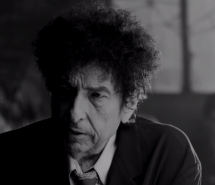
Chronicles, Volume One is a Bob Dylan memoir. Dylan's reflections pass quickly through these 300-plus pages. His prose is loose; he ends his sentences with a comma so that he can tag on an afterthought or rephrasing.

Not a traditional memoir, Chronicles, Volume One offers only bites from the living legend's five-course career. The original idea was to release three volumes. This first one was published in 2004, and there is no sign that the other two are imminent.

Of the bites chronicled here, the best moments come when Dylan documents the people he has known, the songs that shaped him, and the frames of mind he has that have endured. The man is multiplicitous. The people he describes are scene makers rather than scene stealers or celebrities. There is no gossip here. His favorite songs have all aged well. And his states of mind are, as expected, always at odds with the world.


Notes:
Chronicles, Volume One is worth reading if you are a Dylan fan.


Saturday, July 09, 2016

(posts) Hall & Oates performing "She's Gone"


"Rich Girl" and "You Make My Dreams Come True"? Both great songs. But "She's Gone" is my favorite. 


Written by Daryl Hall and John Oates, "She's Gone" appeared on the duo's 1973 album, Abandoned Luncheonette. This video captures them playing it in early 1976.


Friday, May 20, 2016

(posts) "Golden" by My Morning Jacket


My Morning Jacket
  -Golden

Watchin' a stretch of road, miles of light explode
Driftin' off a thing I'd never done before

Watchin' a crowd roll in, out go the lights it begins
A feelin' in my bones I never felt before

People always told me
that bars are dark and lonely
And talk is often cheap and filled with air

Sure sometimes they thrill me

but nothin' could ever chill me
Like the way they make the time just disappear


Feelin' you are here again, hot on my skin again
Feelin good, a thing I'd never known before

What does it mean to feel millions of dreams come real
A feelin' in my soul I'd never felt before

And you always told me

no matter how long it holds me
If it falls apart or makes us millionaires

You'll be right here forever

we'll go through this thing together
And on Heaven's golden shore we'll lay our heads


Note: from the "Late Show With David Letterman"