
Leaving for the day, I looked out the revolving door and noticed the airy drizzle. These were the raindrops swelling up in the heat of your breath, suffocating me on the walk out from the suspended life of a day at the office.
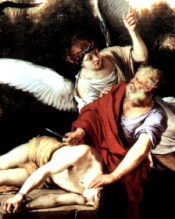 Abraham's trek to the lonely height of Mount Moriah took three days; for three days an ass jostled there, carrying Abraham and his long-wished for, unconditionally loved son. The journey would end in the father's sacrificing Isaac. What if Abraham had resigned himself to the loss, to living the rest of his life having used his own hands to saw through Isaac's throat? And, worse still, what if, having accepted and prepared himself to perform that horrific act, what if God called it off, and let Abraham keep Isaac?
Through faith I don't renounce anything, on the contrary in faith I receive everything ... It takes a purely human courage to renounce the whole of temporality in order to win eternity ... Through faith Abraham did not renounce his claim on Isaac, through his faith he received Isaac.
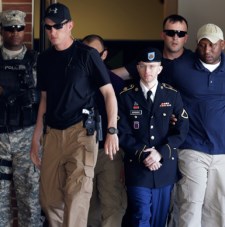 For leaking classified US government information to the website Wikileaks, on July 30, 2013, Army Private First Class Bradley Manning was convicted of 17 charges, including five
counts of espionage and theft. On the heels of this verdict, The New York Times published an article titled "Loner Sought a Refuge, and Ended Up in War". Here, Manning is described as a lifelong outcast. The article further reveals that it was not his crimes that he was being tried for, but his identity:
For leaking classified US government information to the website Wikileaks, on July 30, 2013, Army Private First Class Bradley Manning was convicted of 17 charges, including five
counts of espionage and theft. On the heels of this verdict, The New York Times published an article titled "Loner Sought a Refuge, and Ended Up in War". Here, Manning is described as a lifelong outcast. The article further reveals that it was not his crimes that he was being tried for, but his identity:As prosecutors accused Private Manning of being a self-promoting “anarchist” who was nothing like the tortured man of principle portrayed by his lawyers, supporters around the world celebrated him as a martyr for free speech. But the heated language on both sides tended to overshadow the human story at the center of the case.The article does the sense-making for us. In its narrative, Manning's online connections--first with Wikileaks founder, Julian Assange, then with computer hacker Adrian Lamo--that led to this conviction follow a pattern, and add the apparently unfortunate conclusion to his coherent life's story. However, contrary to what the article says, it is precisely the human story that has been at the center of the case and the center of media coverage from day one: international outlaw, Julian Assange; guilty martyr, Bradley Manning; narcissistic fugitive, Edward Snowden--these are the characters, and they are the story.
 In the wake LaPierre's reading, one line from the statement came to represent the whole of it:
The only way to stop a monster from killing our kids is to be personally involved and invested in a plan of absolute protection. The only thing that stops a bad guy with a gun is a good guy with a gun. Would you rather have your 911 call bring a good guy with a gun from a mile away ... or a minute away?
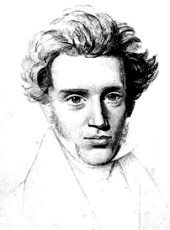 The "Shadowgraphs" essay has some of the more interesting content in this half. Here is a striking, although very historically-situated passage:
The point in reflective sorrow is that the sorrow is constantly in search of its object; the searching is the unrest of sorrow and its life. But this searching is a constant fluctuation, and if the outer were at every moment a perfect reflection of the inner, to represent reflective sorrow would require an entire series of pictures and no one picture would require genuine artistic value, since it would not be beautiful but true. We would have to look at the pictures as we do at the second hand of the watch; the works themselves are invisible, but the inner movement constantly expresses itself in the constant change of the outer. But this change cannot be represented in art, yet it is the whole point.And, soon after, Kierkegaard's fictional author compares the pain of broken engagements to that of a broken marriage; this comparison is especially meaningful coming from Kierkegaard because, prior to Either/Or's publishing, he broke off an engagement and was much scandalized for it publicly, and much tormented by it privately. He reasoned in his journals that he broke the engagement because he did not have faith, supposedly. In Either/Or, he writes:
What must evoke reflective sorrow even more ... is the fact that it is only an engagement that has been broken off. An engagement is a possibility, not something actual, yet just because it is only a possibility, it might seem that the effect of its being broken off would be less, that it is much easier to withstand this blow. And sometimes that may well be true. On the other hand, the fact that it is only a possibility that is destroyed tempts reflection much more to the fore. When something actual is brought to an end, generally the break is far more radical, every nerve is cut asunder and in itself the fracture, regarded as such, remains complete. When a possibility is broken off, the instantaneous pain may not be as great, but then it leaves one or another small ligament whole an unharmed, which becomes a constant source of continued suffering. The destroyed possibility appears transfigured in a higher possibility, while the temptation to conjure up such a new possibility is less when it is something actual that is broken off, because actuality is higher than possibility.Then the book continues with exercises in art appreciation. The focus on seen and unseen aspects of art continue, as the speaker strives to see real works as higher representations. Obviously, Kierkegaard does not regard the aesthetic as the equivalent of hedonism.

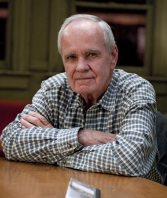 After figuring this out, the boy sees that, though he is his father's burden, he is the one shouldering the world. His humanity still budding, the boy worries for each damned soul they pass.
 Clouds tumbled overhead, an ash avalanche, a silent disaster film, while she, the money counter, stationed herself bedside, gazing upon the ones, fives, tens, twenties, fifties, and hundreds arranged on the comforter, catching dull the morning light like eyes of dead children arranged before the killer. Her husband made noise in the kitchen: microwave beeping, plates knocking. She knew he hungered always for her fear and submission, but tomorrow she would serve him his death. She paid the hitman tonight.
 Billed as "The Uncensored Oral History of Punk", Please Kill Me testifies to punk rock's NYC birth in the mid-1970's. The book organizes quotes from a cast of people who were there--participants and witnesses, and these people describe the scene, say who's who, and, of course, talk about the sex and drugs. But noticeably missing in these quotes is elaboration on the rock and roll.
... while the Court is correct to note (ante, at 8–9) that there are instances in which we have permitted searches without individualized suspicion, “[i]n none of these cases. . . did we indicate approval of a [search] whose primary purpose was to detect evidence of ordinary criminal wrongdoing.” Indianapolis v. Edmond, 531 U. S. 32, 38 (2000).Just how intrusive is the cotton swab? Maybe that's beside the point, as Scalia notes:
And could the police engage, without any suspicion of wrongdoing, in a “brief and . . . minimal” intrusion into the home of an arrestee—perhaps just peeking around the curtilage abit? See ante, at 26. Obviously not.
 And what of the purpose of identifying people? Is identifying someone really so innocent? No, Scalia argues:
At points the Court does appear to use “identifying” in that peculiar sense—claiming, for example, that knowing “an arrestee’s past conduct is essential to an assessment of the danger he poses.” Ante, at 15. If identifying someone means finding out what unsolved crimes he has committed, then identification is indistinguishable from the ordinary law enforcement aims that have never been thought to justify a suspicionless search. Searching every lawfully stopped car, for example, might turn up information about unsolved crimes the driver had committed, but no one would say that such a search was aimed at “identifying” him ...But what if the State really is just identifying people without intending to solve crimes for which no probable cause to search exists?
The truth, known to Maryland and increasingly to the reader: this search had nothing to do with establishing King’s identity.So, all that said, what does the majority's errant ruling promise for the future?
...
DNA testing does not even begin until after arraignment and bail decisions are already made. The samples sit in storage for months, and take weeks to test. When they are tested, they are checked against the Unsolved Crimes Collection—rather than the Convict and Arrestee Collection, which could be used to identify them.The Act forbids the Court’s purpose (identification), but prescribes as its purpose what our suspicionless-search cases forbid (“official investigation into a crime”). Against all of that, it is safe to say that if the Court’s identification theory is not wrong, there is no such thing as error.
The Court disguises the vast (and scary) scope of its holding by promising a limitation it cannot deliver. The Court repeatedly says that DNA testing, and entry into a national DNA registry, will not befall thee and me, dear reader, but only those arrested for “serious offense[s].” Ante, at 28; see also ante, at 1, 9, 14, 17, 22, 23, 24 (repeatedly limiting the analysis to “serious offenses”). I cannot imagine what principle could possibly justify this limitation, and the Court does not attempt to suggest any. If one believes that DNA will “identify” someone arrested for assault, he must believe that it will “identify” someone arrested for a traffic offense. This Court does not base its judgments on senseless distinctions. At the end of the day, logic will out. When there comes before us the taking of DNA from an arrestee for a traffic violation, the Court will predictably (and quite rightly) say, “We can find no significant difference between this case and King.” Make no mistake about it: As an entirely predictable consequence of today’s decision, your DNA can be taken and entered into a national DNA database if you are ever arrested, rightly or wrongly, and for whatever reason.

 With seven hollow vibrations, Our Lady of Sorrows' bell sank into the still-salty street and patched grass yards. I crossed into the big lot, passed the gym and Big Lots, then pulled the door. After grabbing a box each of sandwich and freezer bags--four dollars for both--and waiting the requisite two minutes in line, my turn. The young cashier, a girl no more than 17, here working at Family Dollar, rang me up, taking a five and exact change to cover the $4.36. Hands me my change, then speaks,
Thanks for putting the money in my hand. A lot of people just throw it on the counter.
That's how the big shots do.She comes around and recollects a bunch of mops for sale by the door. Says,
Even though my hand be right here, she adds.She returns to the register. The next has already lined up behind me.
Thank you.
Have a good night, I hear, pushing back into the big lot.Concrete sinks beneath me. Cool air lends the hush.

Most of the big shore places were closed now and there were hardly any lights except the shadowy, moving glow of a ferryboat across the Sound. And as the moon rose higher the inessential houses began to melt away until gradually I became aware of the old island here that flowered once for Dutch sailors' eyes--a fresh, green breast of the new world. Its vanished trees, the trees that had made way for Gatsby's house, had once pandered in whispers to the last and greatest of all human dreams; for a transitory enchanted moment man must have held his breath in the presence of this continent, compelled into an æsthetic contemplation he neither understood nor desired, face to face for the last time in history with something commensurate to his capacity for wonder.
And as I sat there, brooding on the old unknown world, I thought of Gatsby's wonder when he first picked out the green light at the end of Daisy's dock. He had come a long way to this blue lawn and his dream must have seemed so close that he could hardly fail to grasp it. He did not know that it was already behind him, somewhere back in that vast obscurity beyond the city, where the dark fields of the republic rolled on under the night.
Gatsby believed in the green light, the orgastic future that year by year recedes before us. It eluded us then, but that's no matter--tomorrow we will run faster, stretch out our arms farther. . . . And one fine morning----
So we beat on, boats against the current, borne back ceaselessly into the past.
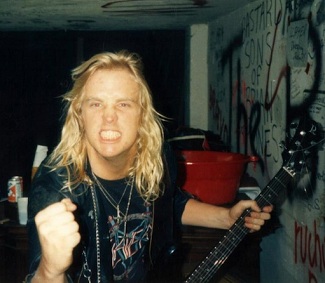
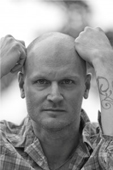 The sleeve and press around Dry calls it a memoir, but the book reads more like fiction. Burroughs aptly boosts his addiction-oriented narrative with wit and crisp prose. Result, the pages turn quickly.
 Foucault took an interest in how concepts of visualization become embedded in institutional practices, and how ethical and moral judgements of things and people changed with those concepts. It is hard to imagine now that people asked different questions in the past; we tend to think we've always been "logical", that being logical is part of our nature. But being "logical" used to be a moral exercise.
