Saturday, April 25, 2015


Saturday, April 18, 2015
about an interplanetary low
 This is a test. In a few minutes the siren will trail off and the
bullhorn will thank us for participating. Tests, drills: these occur
every other day now. Strap on the oxygen mask, help mask others, duck,
preferably under something sturdy.
This is a test. In a few minutes the siren will trail off and the
bullhorn will thank us for participating. Tests, drills: these occur
every other day now. Strap on the oxygen mask, help mask others, duck,
preferably under something sturdy.What good will it do? None. Life here will end. Hard to imagine a time not so long ago when we rocketed ourselves to this place in hopes of making a life together.
Friday, April 10, 2015
about Adam Smith's "The Wealth of Nations"
Properly titled An Inquiry into the Nature and Causes of the Wealth of Nations, this fundamental economic opus is the work of brilliant Scottish polymath, Adam Smith. Published in 1776 at the beginning of the Industrial Revolution, The Wealth of Nations describes the classical liberal, capitalist economy as a largely self-maintaining economic model built on free enterprise and individual pursuits of self-interest.

Smith's work is canonical, but a surprise nevertheless. This encyclopedic monster often reads like an in-depth high-school economics text book. But the dry writing (or dry translation of the writing) masks lots of fascinating bites, like Smith's views on colonialism and slavery, for example. He kicks off by crediting the development of the division of labor as the greatest single factor in nations' increasing productivity.
That one man could organize his thoughts and lay them out like this is a marvel. Nothing short of incredible.
The Wealth of Nations is the cornerstone of modern conservative free-market philosophy. I read a two-volume set produced by a private foundation called Liberty Fund, which, according to their website, seeks "to encourage the study of the ideal of a society of free and responsible individuals. The Foundation (sic) develops, supervises, and finances its own educational activities to foster thought and encourage discourse on enduring issues pertaining to liberty."
Saturday, April 04, 2015

Saturday, March 21, 2015
bloody roots
Some people talk a lot about their humble beginnings so that when you see how they act now, you won't despise them; you'll admire them.
Saturday, March 14, 2015
will she ever stop talking?
There would have been a time for such a word.
Tomorrow, and tomorrow, and tomorrow,
creeps in this petty pace from day to day
to the last syllable of recorded time,
and all our yesterdays have lighted fools
the way to dusty death. Out, out, brief candle!
Life’s but a walking shadow, a poor player
that struts and frets his hour upon the stage
and then is heard no more: it is a tale
told by an idiot, full of sound and fury,
signifying nothing.
Saturday, March 07, 2015

Saturday, February 28, 2015
about "A Land More Kind Than Home" by Wiley Cash
 Wiley Cash might know the kinds of people he writes about in his debut novel, A Land More Kind Than Home, but the voices of his first-person narrators sound affected. To channel small-town North Carolina folk, Wiley carpet bombs the narration's sixth grade-level speech with double negatives and other idiomatic devices. This impression, omnipresent from the outset, hampered my enjoying the read. Beyond that, the action is largely predictable and the characters flat. Three voices narrate the plot: a young boy, an old woman, and a late middle-aged sheriff.
A fundamentalist, snake-handling minister is the villain; the protagonists are individually overmatched against him. But together the confluence of choices people make leave the villain dead and the fallen redeemed. A Land More Kind Than Home isn't a bad book, necessarily. It's just immature.
Saturday, February 21, 2015

Saturday, February 14, 2015
from "I Never sang For My Father"
Death ends a life. But it does not end a relationship, which struggles on in the survivor's mind toward some resolution which it may never find.
Friday, February 06, 2015
about how every song is a ballad

"Punk rock should mean freedom: liking and excepting anything that you like, playing whatever you want, as sloppy as you want, as long as it's good and it has passion."
-Kurt Cobain
Saturday, January 31, 2015
about "[sic]" by Joshua Cody
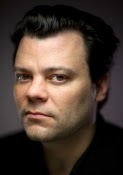
When he was about to receive his doctorate, doctors diagnosed noted young composer Joshua Cody with an aggressive cancer. The memoir-ish [sic] documents without form Cody's life and death struggle; hold the book in your hands, open to just about any page, and be treated to some trivia or personal revelation or philosophical reflection. This nonlinear form was well received by a lot of critics. Not all readers will agree.
I recognize the stakes were profound and, for that, a reader can indulge his author; but Cody really challenged my limits. I got bored and lost interest in Cody's scrapbook of a memoir. The value of this book, for me, anyway, is that, if you're not into "reading" lately, you can keep this book around for a week or so and poke around in it as you wait for sleep.
How can I write this about a memoir written by a dying man? I wait for sleep. Not everyone else does.
Saturday, January 24, 2015
about being recognized

Saturday, January 17, 2015
Friday, January 09, 2015
Saturday, January 03, 2015
something about "The Birth of the Clinic" by Michel Foucault

In The Birth of the Clinic, Michel Foucault mines late 18th and early 19th century changes in medical practice (this, significantly, is around the time of the American and French Revolutions, following on the heels of the Enlightenment). These changes shaped modern medicine.
The discourse on human rights inspired by these revolutions led to an overall concern with society and health; and the move toward egalitarianism pushed physicians (and teaching physicians) out of the the aristocracy and reassigned them to general society.
The new imaginings of hard science dictated that we let truths reveal themselves to us. In The Birth of the Clinic, Foucault feels out what he calls the medical gaze--a way of seeing in which the physician allows the disease to reveal its own truth. The human body gives off signs, and the physician uses his knowledge and observations of the body to translate the reality of the disease.
The physician talks to the patient, observes him, examines him, orders tests and whatnot. Mysticism is abandoned for a discussion of the body; the physician relies less on bookish medical wisdom and instead reads the body. The physician's eye sees in space symptoms and physical signs.
The physician’s observations affect the gaze; the gaze affects the physician. Doctors systematically describe diseases using medical jargon. The physician's power is now his experience rather than his status. The gaze has scientific credibility. And we've successfully achieved truth in spite of the doctor's status, not because of it. (So we think.)
Friday, December 19, 2014
Joey

Probably baby kangaroos shouldn't be called "joeys." Only an "Australian" would come up with that name.
Saturday, December 13, 2014
Friday, December 12, 2014
about relative success
You're saved if your father takes no interest in you. You're ruined if you wish he had.
Friday, December 05, 2014
about "St. George and the Godfather" by Norman Mailer
 St. George and the Godfather unleashes Norman Mailer's critical mind on the characters participating in the 1972 Democratic and Republican National Conventions. That year, the Democrats nominated South Dakota Senator George McGovern, and the Republicans took President Richard M. Nixon.
Mailer describes a stiflingly boring political season, especially when compared to the Presidential races of the previous decade. He indulges his moods in this tract, veering from righteously indignant to contemplative, and all the while he keeps on his mind the ongoing, escalated bombings in South Asia. Mailer is an American original whose complicated, unconventional views can't be duplicated, even though the problems of politics and culture he describes repeat themselves over and over.
Subscribe to:
Posts (Atom)